
Simple Italian Eggplant Pasta
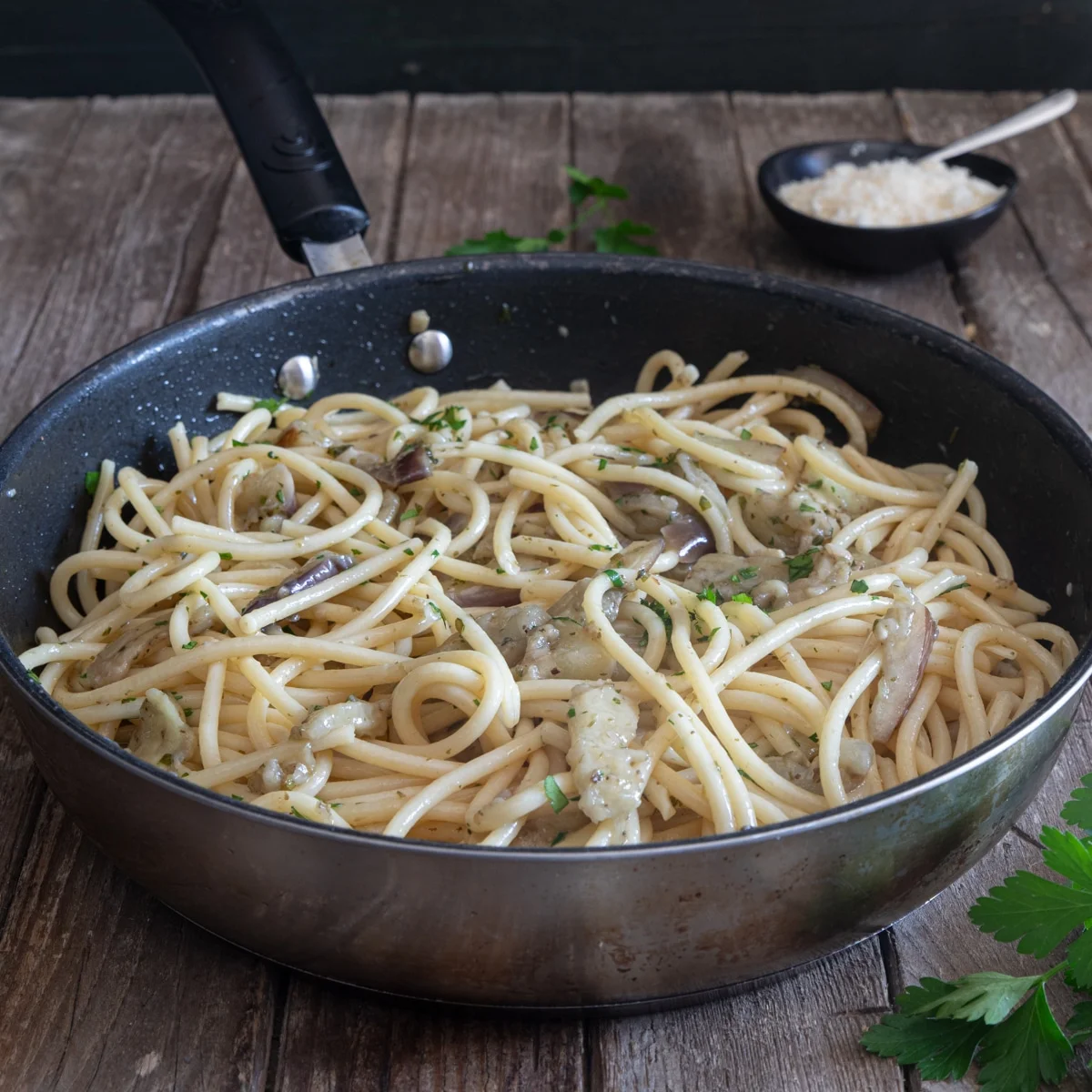
This quick Italian-inspired pasta pairs tender, golden aubergine with garlic, herbs and a little chilli. It is a straightforward way to turn cooked pasta into a satisfying meal in about 35 minutes.
Ingredients
- 2 small to mediumaubergines
- 1 teaspoon (5 ml)salt
- 60 ml (¼ cup)olive oil
- 1–2 clovesgarlic, chopped
- 15 g (¼ cup)fresh Italian parsley, chopped
- 1 teaspoon (5 ml)dried oregano
- 1–2 pinches, if desiredchilli flakes
- 80 ml (⅓ cup)water
- 3 cups cooked (about 450 g)pasta
- To tastesalt for the pasta water
- To taste, if desiredfreshly grated Parmesan
Instructions
- 1
Salt the aubergine
Put the sliced or cubed aubergine in a medium bowl and toss with 1 teaspoon of salt. Leave it for 20 minutes, then drain without rinsing.
- 2
Cook the aubergine
Add the olive oil, garlic, oregano, chilli flakes if using, parsley and drained aubergine to a large pan. Gently combine, then pour in the water. Cook uncovered over low to medium heat for about 15–20 minutes, stirring occasionally. Raise the heat slightly and continue cooking until the water has evaporated and the aubergine is tender and golden. Toss with the 3 cups of cooked pasta and serve straight away with freshly grated Parmesan.
- 3
Cook and finish
While the aubergine cooks, bring a large pan of water to the boil and add a little salt. Cook the pasta until al dente. Add it to the cooked aubergine with half a ladle of pasta water, then toss gently over medium heat for about 1 minute. Serve immediately with freshly grated Parmesan if desired.
What is aubergine pasta?
Aubergine pasta is a simple Italian-style dish built around pasta and cooked aubergine, often seasoned with garlic and herbs. This version uses parsley, oregano and optional chilli for a fragrant, lightly spicy finish.
The aubergine is salted before cooking, then softened in a little water and oil until tender and golden. That gentle cooking gives it time to become silky without needing a complicated sauce.
Nutrition and macros by portion
The nutrition label shows one serving as written: 320 calories, 8g protein, 42g carbs, 15g fat.
| Portion | Adjustment | kcal | Protein | Carbs | Fat |
|---|---|---|---|---|---|
| Lighter | Use less olive oil | 224 kcal | 6g | 29g | 11g |
| This serving | As written | 320 kcal | 8g | 42g | 15g |
| Hungry | Serve a larger portion | 480 kcal | 12g | 63g | 23g |
The pasta supplies most of the carbohydrates, while the olive oil contributes much of the fat; the aubergine and Parmesan add smaller amounts of protein. Pair a serving with a green salad or another non-starchy vegetable for a more balanced plate.
Choosing the ingredients
Aubergine: Small to medium aubergines are easy to slice or cube and cook until tender. Keep the pieces roughly similar in size so they soften at a similar pace.
Pasta: Bucatini suits the dish, but the recipe works with other pasta shapes too. Use cooked pasta for the aubergine pan, or cook it while the aubergine simmers as described in the method.
Herbs and seasoning: Garlic, parsley and oregano give the oil its savoury aroma. Chilli flakes are optional, so leave them out for a gentler flavour.
Why salt the aubergine?
Salting the cut aubergine and leaving it for 20 minutes seasons it and draws out some surface moisture. Drain it well afterwards, but do not rinse, so the seasoning remains.
There is no need to press the pieces hard; simply let excess liquid drain away before they go into the pan.
Cooking the aubergine gently
Start with the oil, aromatics and drained aubergine, then add the measured water. Keeping the pan uncovered and cooking over low to medium heat lets the aubergine soften while you stir occasionally.
Once it is tender, raise the heat slightly to evaporate the remaining water and encourage golden patches. Watch the pan closely at this stage so the garlic does not catch.
Getting the pasta texture right
Cook the pasta until al dente, following the timing on its packet. It should offer a little resistance when bitten, as it will be tossed with the aubergine at the end.
A small amount of pasta water helps the oil and aubergine coat the pasta. Toss gently over medium heat for about 1 minute, just long enough to bring everything together.
Serving the dish
Serve the pasta as soon as it is tossed, with freshly grated Parmesan if you like. A simple green salad or lightly dressed vegetables make an easy side.
If using bucatini, give the pasta a thorough toss so the aubergine and herb oil reach the strands rather than settling at the bottom of the pan.
Recipe notes & tips
- Cut the aubergine into evenly sized pieces so they cook at a similar rate.
- Drain the salted aubergine well without rinsing it.
- Stir occasionally during the gentle simmer to prevent sticking.
- Keep an eye on the pan once the water has evaporated, as the aubergine can brown quickly.
- Reserve pasta water while draining the pasta so it is ready for the final toss.
Variations
- Use bucatini: Its hollow centre and long strands hold the aubergine and herb oil well.
- Change the pasta: Try spaghetti or another shape you have on hand.
- Adjust the heat: Omit the chilli flakes for a mild version or add them to taste.
- Add Parmesan: Finish with freshly grated cheese for a savoury, salty note.
- Use fresh oregano: Substitute chopped fresh oregano for dried, adjusting to taste.
Common mistakes to avoid
- Rinsing the aubergine: Drain it after salting but do not rinse away the seasoning.
- Skipping the drain: Let excess liquid run off so the pan does not start too watery.
- Cooking on high from the start: Keep the heat low to medium while the aubergine softens.
- Letting the pan dry unattended: Stir occasionally, then watch closely as the water evaporates.
- Overcooking the pasta: Stop at al dente so it keeps its texture during the final toss.
How to store
Refrigerate leftovers in a covered container for up to 3 days. Reheat gently in a pan with a small splash of water, stirring until hot; the pasta may soften a little after storage.
Frequently asked questions
Can I use a different pasta shape?
Yes. Spaghetti or another long or short pasta shape can be used in place of bucatini.
Do I need to peel the aubergine?
No, the recipe does not call for peeling. Cut it into slices or cubes and cook until tender.
Can I leave out the chilli?
Yes. The chilli flakes are optional, so omit them for a milder dish.
How do I know when the aubergine is ready?
It should be tender, with the water evaporated and some golden colouring on the pieces.
Can I prepare the aubergine ahead?
You can cook the aubergine ahead and refrigerate it, then reheat it gently while you cook the pasta. Toss the two together just before serving.
Cook it from the original
This recipe comes from anitalianinmykitchen.com. Their page has the author’s own photos, notes and tips — the best place to cook it from.
Open the recipe on anitalianinmykitchen.com