
Soft chocolate and banana cake without butter
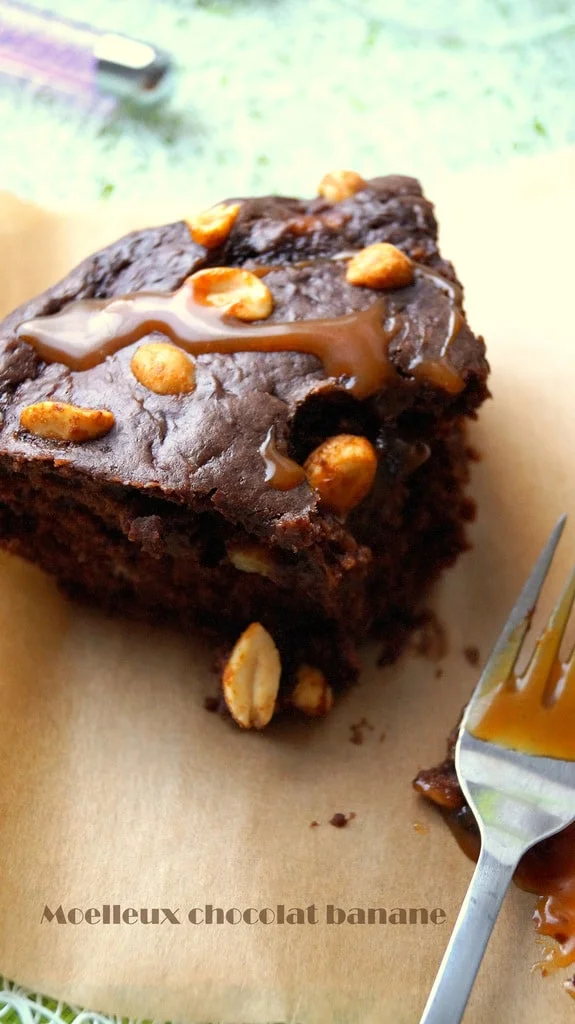
This soft chocolate and banana cake combines ripe fruit, dark chocolate and a little cocoa in an easy, butter-free batter. Salted peanuts and salted butter caramel are optional finishing touches for extra crunch and sweetness.
Ingredients
- 120 gdark dessert chocolate
- 3eggs
- 70 g (50 g in the original cook’s version)sugar
- 1 potnatural yoghurt
- 130 gplain flour
- 6 g, or 1 sachet (7.5 g)bicarbonate of soda or baking powder
- 3bananas
- 1 tablespooncocoa powder
- 1 pinchsalt
- 1 handful (optional)salted peanuts
- To taste (optional)salted butter caramel
Instructions
- 1
Melt the chocolate
Melt the dark chocolate in a bain-marie, keeping water out of the bowl and avoiding excessive stirring. Alternatively, microwave it for 1 minute at 750 W.
- 2
Beat eggs and sugar
Whisk the eggs with the sugar, then add the yoghurt and mix.
- 3
Add chocolate and bananas
Stir in the melted chocolate, followed by the bananas, mashed with a fork.
- 4
Mix dry ingredients
Gradually add the flour mixed with the cocoa and bicarbonate of soda or baking powder. Finish with the pinch of salt.
- 5
Smooth the batter
Mix until the batter is smooth and evenly combined.
- 6
Prepare the tin
Butter and flour a 24 cm round cake tin, or use a cardboard cake mould, then pour in the mixture.
- 7
Add the peanuts
Scatter the salted peanuts over the cake.
- 8
Bake the cake
Bake in a preheated oven at 180°C for 25–30 minutes.
- 9
Cool and turn out
Leave the cake to cool, then turn it out of the tin.
- 10
Serve with caramel
Serve the chocolate and banana cake topped with salted butter caramel, if using.
What is chocolate and banana cake?
This is a soft, simple cake built around the familiar pairing of banana and chocolate. Its American-style home-baking character comes through in the use of everyday ingredients and a round cake tin, rather than a layered or frosted finish.
Bananas mashed into the batter bring sweetness and softness, while dark chocolate and cocoa give it a deeper chocolate flavour. Yoghurt keeps the mixture moist without butter in the batter.
Nutrition and macros by portion
The nutrition label shows one serving as written: 385 calories, 0g protein, 0g carbs, 0g fat.
| Portion | Adjustment | kcal | Protein | Carbs | Fat |
|---|---|---|---|---|---|
| Lighter | Skip peanuts and caramel | 270 kcal | 0g | 0g | 0g |
| This serving | As written | 385 kcal | 0g | 0g | 0g |
| Hungry | Serve a larger slice | 578 kcal | 0g | 0g | 0g |
The bananas, sugar and flour provide most of the carbohydrate, while the chocolate, eggs and yoghurt contribute fat and some protein. For a more balanced plate, serve a slice with fresh fruit and plain yoghurt rather than adding a generous pour of caramel.
Choosing the ingredients
Bananas: Mash them thoroughly with a fork so they are easy to distribute through the batter. Ripe bananas mash more readily and bring a sweeter flavour.
Chocolate and cocoa: Use dark dessert chocolate and unsweetened cocoa for a balanced chocolate taste. The recipe gives a choice of bicarbonate of soda or baking powder; use one, not both.
Yoghurt: A pot of natural yoghurt adds moisture and helps bring the mixture together. The recipe does not specify the pot size, so use a standard single-serving pot.
Melting the chocolate
Bain-marie: Keep the bowl above the water rather than letting it touch the water, and make sure no water splashes into the chocolate. Stir only as needed while it melts.
Microwave: The recipe specifies 1 minute at 750 W. If the chocolate is not fully melted after that, take care when continuing so it does not scorch.
Getting an even batter
Dry ingredients: Mix the flour, cocoa and chosen raising agent before adding them gradually. This helps distribute the cocoa and raising agent through the batter.
Final mixing: Combine everything until smooth and even, without continuing to mix once there are no visible pockets of dry ingredients. This keeps the method straightforward and avoids a dense, overworked mixture.
Checking when it is baked
Timing: Bake at 180°C for 25–30 minutes, as specified. Start checking at the shorter end of the range because ovens and tins can affect how quickly the centre cooks.
Doneness: The cake should look set on top, and a skewer inserted into the centre should come out without wet batter. A few moist crumbs are consistent with a soft cake.
Finishing and serving
Peanuts: Scatter the optional salted peanuts over the batter before baking for a crunchy, salty contrast. Leave them out if you prefer a smooth top.
Caramel: Let the cake cool before turning it out, then add salted butter caramel when serving if desired. It is also good served plain, or alongside yoghurt or fresh fruit.
Recipe notes & tips
- Mash the bananas well so there are no large pieces in the batter.
- Keep water away from the chocolate while melting it over a bain-marie.
- Fold in the dry ingredients gradually to make them easier to combine evenly.
- Use either bicarbonate of soda or baking powder, following the quantity given for your choice.
- Begin checking the cake at 25 minutes so it stays soft rather than drying out.
- Allow the cake to cool before turning it out to help it hold its shape.
Variations
- Extra crunch: Scatter the optional salted peanuts over the batter before baking.
- Caramel finish: Drizzle salted butter caramel over each slice just before serving.
- Less sweet: Use the listed 50 g sugar option instead of 70 g.
- No peanuts: Leave out the peanuts for a smooth-topped cake.
- Baking powder: Use one 7.5 g sachet instead of 6 g bicarbonate of soda.
Common mistakes to avoid
- Water in the chocolate: Keep the bain-marie water below the bowl and prevent splashes.
- Uneven banana pieces: Mash the bananas thoroughly with a fork before adding them.
- Lumps of cocoa: Mix the cocoa with the flour before gradually adding the dry ingredients.
- Using both raising agents: Choose either the bicarbonate of soda or the baking powder.
- Overbaking: Check from 25 minutes and stop once the centre is set and no wet batter remains.
- Turning it out too soon: Let the cake cool before removing it from the tin.
How to store
Once cool, store the cake covered in the fridge and eat within 3 days. Bring a slice to room temperature or warm it briefly before serving; add caramel after reheating.
Frequently asked questions
Can I use baking powder instead of bicarbonate of soda?
Yes. The recipe gives 6 g bicarbonate of soda or one 7.5 g sachet of baking powder; use one option only.
How ripe should the bananas be?
Use bananas that are soft enough to mash easily. Riper fruit will usually make the cake sweeter.
What size tin should I use?
The method specifies a 24 cm round cake tin, or a cardboard cake mould.
How can I tell when the cake is ready?
Bake for 25–30 minutes at 180°C. The top should look set, and a skewer in the centre should not come out with wet batter.
Do the peanuts and caramel have to be included?
No. Both are optional: the peanuts go on before baking, and the caramel is added when serving.
Can I prepare the cake ahead?
Yes. Bake it ahead and keep it covered in the fridge for up to 3 days. Add the caramel when serving.
Cook it from the original
This recipe comes from auxdelicesdupalais.net. Their page has the author’s own photos, notes and tips — the best place to cook it from.
Open the recipe on auxdelicesdupalais.net