
Pancakes
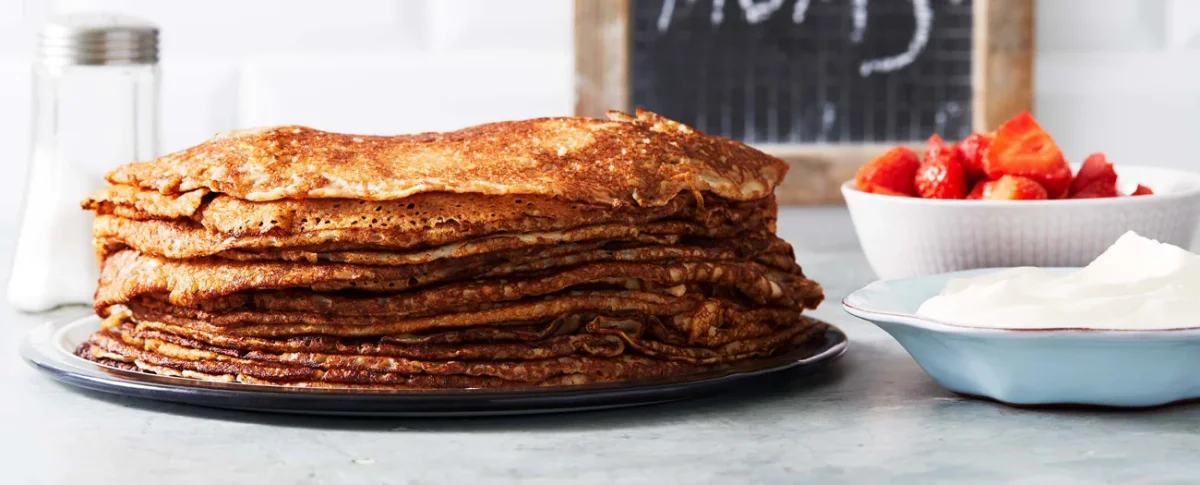
These Swedish-style thin pancakes are made from a simple milk, egg and flour batter, then fried until lightly golden. Serve them with jam, lightly whipped cream or quark, or fill them with savoury mushroom sauce for a main meal.
Ingredients
- 180 g (3 dl)plain flour
- 600 ml (6 dl)milk
- 3eggs
- 2.5 ml (½ tsp)salt
- 45 ml (3 tbsp), for fryingbutter and rapeseed oil
Instructions
- 1
Make the batter
Whisk the flour with half of the milk until smooth. Whisk in the remaining milk, eggs and salt.
- 2
Rest the batter
Leave the batter to rest for about 10 minutes so the pancakes hold together better.
- 3
Fry the pancakes
Heat some of the butter and rapeseed oil in a frying pan, first bringing the pan to a high heat. Pour in batter to make thin pancakes. Turn each pancake when it has set, the edges have loosened and the underside has developed colour.
- 4
Add more fat
Add a little more butter and rapeseed oil to the pan from time to time. A cast-iron pan needs more fat; with a non-stick pan, add fresh fat for roughly every third pancake.
What are Swedish pancakes?
Swedish pancakes are thin, pan-fried pancakes, similar to crêpes and commonly served with sweet toppings or savoury fillings. This basic version uses a straightforward batter of flour, milk and eggs.
Resting the batter helps it hold together in the pan, while frying in a hot pan gives the pancakes their lightly browned surface.
Nutrition and macros by portion
The nutrition label shows one serving as written: 379 calories, 13g protein, 39g carbs, 18g fat.
| Portion | Adjustment | kcal | Protein | Carbs | Fat |
|---|---|---|---|---|---|
| Lighter | Use less frying fat | 265 kcal | 9g | 27g | 13g |
| This serving | As written | 379 kcal | 13g | 39g | 18g |
| Hungry | Serve a larger portion | 569 kcal | 20g | 59g | 27g |
The flour provides most of the carbohydrates, while the eggs contribute protein and the milk adds protein and carbohydrate. The frying fat supplies much of the fat; serve the pancakes with fruit or vegetables alongside to make the plate more balanced.
Getting a smooth batter
Flour first: whisk it with half the milk to make a smooth paste before adding the rest of the liquid. This staged mixing helps avoid lumps.
Eggs and salt: whisk them in with the remaining milk until evenly combined. The batter should be thin enough to spread across the pan.
Why the batter rests
Ten minutes: allow the batter to rest before frying, as directed. It gives the flour time to absorb liquid and helps the pancakes stay intact when turned.
Keep the batter covered while it rests if you need to move it away from the hob, then give it a brief stir before cooking.
Frying thin pancakes
Hot pan: preheat it over high heat before adding batter, then pour in enough to form a thin layer. A quick tilt of the pan can help the batter spread evenly.
Turn cue: wait until the surface has set and the edges loosen, with colour on the underside, before flipping. If the pancake tears, give it a little longer to cook.
Choosing the cooking fat
Cast iron: the recipe notes that this pan needs more fat, so add a little as you go to keep the pancakes from sticking.
Non-stick: fresh fat is needed about once every three pancakes. Use the heat and the pancake’s browning as cues, since pans can behave differently.
Sweet and savoury ways to serve
Sweet: serve the pancakes with jam, lightly whipped cream or quark, or use lemon sugar as a simple filling.
Savoury: fill them with mushroom sauce for a more substantial meal. Add the filling after frying so the pancakes remain easy to handle.
Recipe notes & tips
- Whisk the flour with only half the milk first to make a smooth mixture.
- Rest the batter for about 10 minutes before frying.
- Preheat the pan well so the batter begins cooking as soon as it goes in.
- Make each pancake thin by using a modest amount of batter and spreading it across the pan.
- Wait for the edges to loosen before trying to turn a pancake.
- Add more butter and rapeseed oil as needed, especially when using cast iron.
Variations
- Jam topping: serve the pancakes with your favourite jam.
- Quark and cream: add quark or lightly whipped cream for a creamy topping.
- Lemon sugar: sprinkle with lemon sugar and roll up to serve.
- Mushroom filling: fill the pancakes with mushroom sauce for a savoury meal.
Common mistakes to avoid
- Lumpy batter: whisk the flour with half the milk first, then add the rest gradually.
- Skipping the rest: leave the batter for about 10 minutes so the pancakes hold together better.
- Turning too soon: wait until the pancake has set and its edges have loosened.
- Pan not hot enough: preheat it on high before adding the batter.
- Not enough fat: add a little more during frying, particularly with a cast-iron pan.
How to store
Refrigerate leftover pancakes in a covered container and use within 2 days. Reheat briefly in a frying pan over medium heat or in the microwave until warmed through.
Frequently asked questions
How long should the batter rest?
Rest it for about 10 minutes, as specified in the method. This helps the pancakes hold together better.
How do I know when to turn a pancake?
Turn it once it has set, the edges have loosened from the pan and the underside has browned.
Can I make these pancakes savoury?
Yes. The recipe suggests filling them with mushroom sauce to make a main meal.
How often should I add more frying fat?
Add a little more as needed. The recipe notes that cast iron uses more, while a non-stick pan usually needs fresh fat for about every third pancake.
What can I serve with Swedish pancakes?
Try jam, lightly whipped cream, quark or lemon sugar. For a savoury option, fill them with mushroom sauce.
Cook it from the original
This recipe comes from arla.se. Their page has the author’s own photos, notes and tips — the best place to cook it from.
Open the recipe on arla.se