
Pasta Primavera
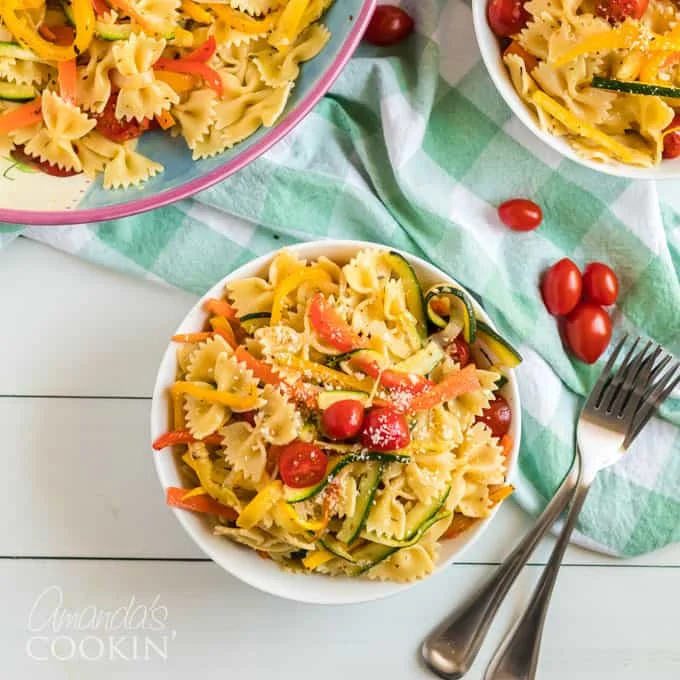
Pasta Primavera combines bowtie pasta with a colourful mix of roasted vegetables, cherry tomatoes and Parmesan. It is a satisfying weeknight meal, with the oven doing much of the work while the pasta cooks.
Ingredients
- 3 largecarrots, cut into thin strips
- 2 mediumcourgettes, cut into thin strips
- 2 mediumyellow squash, cut into thin strips
- 1 mediumonion, cut into thin strips
- 1 largeyellow pepper, cut into thin strips
- 1 largered pepper, cut into thin strips
- 60 ml (¼ cup)olive oil
- to tastekosher salt and freshly ground black pepper
- 1 tablespoondried Italian seasoning
- 454 g (1 pound)farfalle (bowtie pasta) or penne
- 15cherry tomatoes, halved
- 50 g (½ cup)freshly grated Parmesan cheese
Instructions
- 1
Heat oven and water
Preheat the oven to 230°C (450°F). Bring a large pot of water to the boil.
- 2
Season vegetables
Put all the vegetables except the tomatoes on a large, sturdy baking sheet. Drizzle with the oil, then add the dried herbs, salt and pepper. Toss until everything is coated.
- 3
Roast the vegetables
Transfer half the vegetable mixture to a second baking sheet. Roast until the carrots are tender and the vegetables are starting to brown, about 20 minutes in total. Turning or stirring them after the first 10 minutes can help, but is not essential.
- 4
Cook the pasta
While the vegetables roast, cook the pasta until al dente, about 7–8 minutes. Drain it, reserving 240 ml (1 cup) of the pasta water.
- 5
Toss and serve
Combine the pasta and roasted vegetables in a large bowl. Add the cherry tomatoes and just enough reserved pasta water to loosen and moisten the mixture. Adjust the salt and pepper to taste, sprinkle with the freshly grated Parmesan and serve straight away.
What is Pasta Primavera?
Pasta Primavera is an American pasta dish built around vegetables and pasta, often finished with cheese. Its name means “spring pasta”, though this version uses a generous mix of vegetables that can be enjoyed throughout the year.
Roasting the vegetables gives them browned edges and concentrated flavour, while a little pasta water helps bring the ingredients together without making the dish heavy.
Nutrition and macros by portion
The nutrition label shows one serving as written: 466 calories, 16g protein, 72g carbs, 13g fat.
| Portion | Adjustment | kcal | Protein | Carbs | Fat |
|---|---|---|---|---|---|
| Lighter | Use less olive oil | 326 kcal | 11g | 50g | 9g |
| This serving | As written | 466 kcal | 16g | 72g | 13g |
| Hungry | Add a larger pasta portion | 699 kcal | 24g | 108g | 20g |
The pasta supplies most of the carbohydrates, while olive oil and Parmesan contribute much of the fat; Parmesan and pasta provide some protein. Pair a serving with a leafy salad or another non-starchy vegetable for a more varied plate.
Why roast the vegetables?
Carrots, courgettes, yellow squash, onion and peppers all go onto the trays together, but they need room to roast rather than steam. Splitting them between two baking sheets helps with that, especially at this high oven temperature.
The carrots are the key doneness check: they should be tender, and the other vegetables should be beginning to brown.
Cutting and seasoning
Even strips: cut the vegetables into similar-sized pieces so they roast at roughly the same pace. Keep the carrots thin, as they take longer to soften than the courgettes and peppers.
Herb coating: toss the vegetables thoroughly with olive oil, dried Italian seasoning, salt and pepper before they go into the oven. The tomatoes are held back so they stay fresh and juicy in the finished bowl.
Getting the pasta right
Pasta shape: farfalle or penne both work well, catching bits of vegetables and seasoning in their folds or openings. Cook the pasta until al dente, using the packet as a guide if its timing differs from the stated 7–8 minutes.
Reserved water: scoop out the pasta water before draining. Add it gradually at the end; its starch helps loosen the mixture and coat the pasta.
Serving and texture
The best balance is tender pasta with vegetables that still have some shape, rather than a soft, uniform mixture. Add only enough pasta water to moisten everything, then fold in the halved tomatoes and finish with Parmesan.
Serve immediately while the pasta is warm and the cheese can mingle with the vegetables. A simple green salad or crusty bread can round out the meal.
Timing the meal
Start boiling the water as the oven heats so the pasta can cook while the vegetables roast. The method allows the two main parts to finish at about the same time.
Keep the two baking sheets in mind when planning oven space. If they cannot fit side by side, roast them in succession and cook the pasta nearer the end.
Recipe notes & tips
- Cut the vegetables into evenly sized thin strips so they roast at a similar pace.
- Use two baking sheets to give the vegetables space to brown.
- Stir or turn the vegetables after 10 minutes if you want more even browning.
- Reserve the pasta water before draining; it is difficult to replace once poured away.
- Add the reserved water a little at a time to avoid making the pasta watery.
- Grate the Parmesan shortly before serving for the freshest flavour.
Variations
- Add garlic: toss a little minced garlic with the vegetables before roasting.
- Use seasonal vegetables: swap in similarly sized strips of vegetables that roast in about the same time.
- Change the pasta: use penne in place of farfalle, as allowed in the recipe.
- Add fresh herbs: finish with chopped basil or parsley for a fresh note.
- Make it sharper: add a little extra Parmesan at the table.
Common mistakes to avoid
- Crowding one tray: the vegetables may steam instead of brown; divide them between two baking sheets.
- Cutting carrots too thick: they may stay firm while the other vegetables soften; slice them into thin strips.
- Overcooking the pasta: it can become soft when tossed with the hot vegetables; drain it when al dente.
- Forgetting the pasta water: the mixture can be dry; reserve a cup before draining.
- Adding all the pasta water at once: the dish can turn soupy; stir in only enough to moisten it.
- Roasting the tomatoes: they lose the fresh contrast in this recipe; add them after the vegetables are cooked.
How to store
Refrigerate leftovers in an airtight container for up to 3 days. Reheat gently in a pan or microwave with a small splash of water to loosen the pasta; the vegetables will be softer after reheating.
Frequently asked questions
Can I use penne instead of farfalle?
Yes. Penne is listed as an alternative and works well with the roasted vegetables.
Do I need to stir the vegetables while they roast?
No, it is not essential, but turning or stirring them after the first 10 minutes can help them brown more evenly.
How do I know when the vegetables are done?
The carrots should be tender, and the vegetables should be starting to brown. The total roasting time is about 20 minutes.
Why save pasta water?
A little reserved water loosens and moistens the pasta and vegetables. Add it gradually until the mixture is no longer dry.
Can I make this ahead?
It is best served immediately, but you can roast the vegetables ahead and refrigerate them. Cook the pasta and combine everything shortly before serving.
Can I leave out the cherry tomatoes?
You can, though they add a fresh, juicy element to the finished dish. If omitting them, taste and adjust the seasoning before serving.
Cook it from the original
This recipe comes from amandascookin.com. Their page has the author’s own photos, notes and tips — the best place to cook it from.
Open the recipe on amandascookin.com