
Italian Pork Roll-Ups
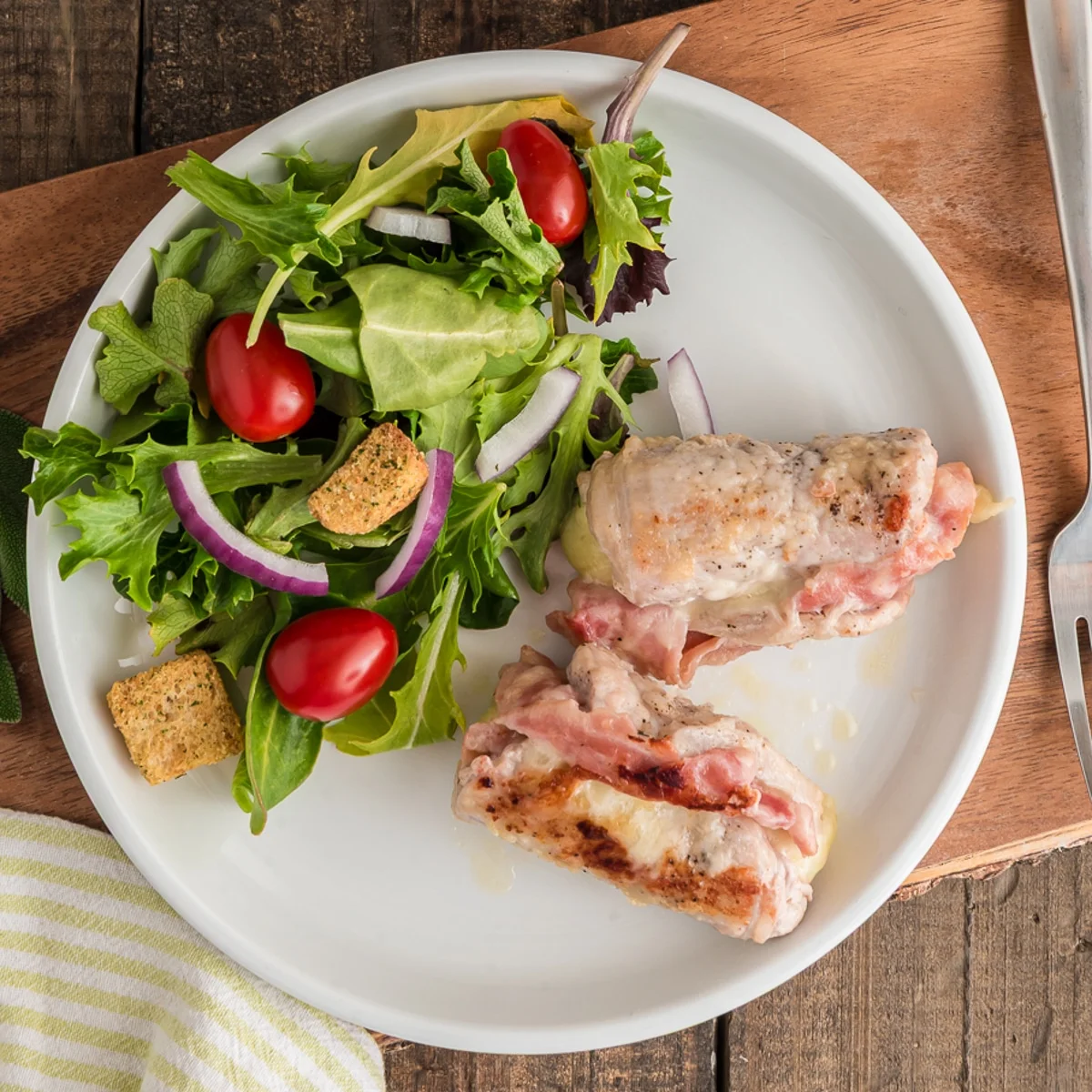
These Italian-inspired pork roll-ups wrap thin pork slices around prosciutto or ham and cheese, then brown in butter, olive oil and sage. They cook quickly in a white-wine or vegetable-broth pan sauce, making them a practical centrepiece for a weeknight meal or small gathering.
Ingredients
- 4thin slices of pork
- 2–3 dashesblack pepper
- 1–2 pinchessalt
- 4 slicesprosciutto di Parma or cooked ham
- 4–8 slicescheese (fontina, Gruyère, firm mozzarella or Swiss cheese)
- 30 g (¼ cup)plain flour, for dredging
- 4–8toothpicks
- 21 g (1½ tablespoons)butter
- 3–4fresh sage leaves
- 15 ml (1 tablespoon)olive oil
- 120 ml (½ cup)good-quality dry white wine or vegetable broth
Instructions
- 1
Fill and roll
Lightly pound the pork slices. Season with pepper and, depending on whether you are using prosciutto or ham, salt. Top each slice with a slice of prosciutto or ham and one or two sticks of cheese, then roll it up and secure with a toothpick.
- 2
Dredge the rolls
Spread the flour on a plate and coat each roll-up in it.
- 3
Brown and braise
Melt the butter in a medium pan with the olive oil and sage. Add the roll-ups and brown them on all sides. Pour in the wine and cook over high heat for 2–3 minutes, then reduce the heat to medium, cover and cook for 2–3 minutes. Serve immediately.
What are Italian pork roll-ups?
They are thin pieces of pork rolled around a savoury filling, a format found in Italian cooking as involtini. This version uses prosciutto or cooked ham with cheese, then finishes the rolls in a quick pan sauce.
The filling seasons the pork from within, while sage, butter and olive oil bring an aromatic richness to the cooking juices. It is a compact, fast-cooking dish suited to a meal that feels a little more special without a long preparation.
Nutrition and macros by portion
The nutrition label shows one serving as written: 442 calories, 40g protein, 7g carbs, 25g fat.
| Portion | Adjustment | kcal | Protein | Carbs | Fat |
|---|---|---|---|---|---|
| Lighter | Use less cheese | 309 kcal | 28g | 5g | 18g |
| This serving | As written | 442 kcal | 40g | 7g | 25g |
| Hungry | Add potatoes or bread | 663 kcal | 60g | 11g | 38g |
The pork and cheese provide most of the protein, while the flour contributes most of the carbohydrate. Butter, olive oil, cheese and prosciutto or ham account for much of the fat; serve with vegetables or salad to round out the plate.
Choosing the filling
Pork: Thin slices are easier to fill and roll, and cook quickly. If the slices are uneven, pound them gently to an even thickness without tearing them.
Cured meat: Prosciutto di Parma is salty, so use little or no extra salt with it; cooked ham may need a pinch. Choose cheese that melts well, and cut thicker slices into sticks that fit inside the pork.
Keep the rolls secure
Toothpicks: Tuck the filling in as you roll so it is less likely to escape, then fasten each roll with a toothpick. Remember to remove the picks before eating.
Flour: A light coating helps the rolls brown and gives the pan juices a little body. Shake off any excess so the flour does not form a thick layer.
Brown before adding liquid
Searing: Let the butter melt with the oil and sage, then brown the rolls on each side. Work in batches if the pan is crowded; the pork needs contact with the hot pan to colour rather than steam.
Sauce: Add the wine or vegetable broth after browning and let it cook over high heat for 2–3 minutes. Lower the heat, cover and cook for a further 2–3 minutes as directed.
Check the texture and doneness
Pork: The slices should be cooked through but still tender, not left in the pan longer than necessary. If the slices are noticeably thicker than expected, check the centre before serving and continue cooking briefly if needed.
Cheese: Some melted cheese may escape during cooking; that is normal. Spoon the pan juices over the rolls when serving.
Serve it with
A simple green salad or steamed vegetables bring freshness alongside the rich cheese and pan sauce. For a more substantial plate, add potatoes, rice or crusty bread to catch the juices.
Serve the roll-ups straight from the pan while the cheese is soft and the sauce is hot.
Recipe notes & tips
- Pound the pork gently so the slices are even without breaking.
- Taste the filling combination in mind before salting, as prosciutto can be quite salty.
- Cut the cheese into narrow sticks so the rolls are easier to close.
- Use a pan large enough to brown the rolls without crowding them.
- Have the wine or broth ready before you start browning, as the final cooking stages are quick.
- Remove all toothpicks before serving.
Variations
- Swap the cheese: Use fontina, Gruyère, firm mozzarella or Swiss cheese as listed.
- Choose cooked ham: Use ham instead of prosciutto and adjust the added salt to taste.
- Use vegetable broth: Replace the white wine with vegetable broth for a different pan sauce.
- Add herbs: Include an extra sage leaf in the pan if you want a more pronounced sage aroma.
- Change the side: Serve with rice, potatoes or bread to make the meal more filling.
Common mistakes to avoid
- Over-salting: Prosciutto is already salty, so season the pork lightly or leave out the salt.
- Tearing the pork: Pound gently and stop once the slices are even enough to roll.
- Loose filling: Roll the pork snugly around the cheese and fasten it with a toothpick.
- Crowding the pan: Brown the roll-ups in batches so they colour rather than steam.
- Skipping the browning: Colour the rolls before adding wine or broth to build flavour in the pan.
- Overcooking: Thin pork cooks quickly, so check it after the stated covered cooking time.
How to store
Refrigerate leftovers in a covered container and eat within 3 days. Reheat gently in a covered pan with a splash of water or broth until piping hot, taking care not to cook the pork for longer than needed.
Frequently asked questions
Can I use vegetable broth instead of white wine?
Yes. The recipe lists vegetable broth as an alternative; use the same amount and follow the same cooking steps.
Which cheese works best?
Fontina, Gruyère, firm mozzarella and Swiss cheese are all suitable options. Cut the cheese into sticks that fit inside the pork slices.
Should I salt the pork if I use prosciutto?
Use little or no extra salt, since prosciutto can be salty. With cooked ham, add a pinch if needed.
How do I stop the filling from falling out?
Keep the cheese tucked inside as you roll, and secure each roll-up with a toothpick. Remove the toothpicks before serving.
What can I serve alongside the roll-ups?
A green salad or vegetables make a fresh side. Potatoes, rice or bread are good choices if you want something more substantial or want to catch the pan sauce.
Cook it from the original
This recipe comes from anitalianinmykitchen.com. Their page has the author’s own photos, notes and tips — the best place to cook it from.
Open the recipe on anitalianinmykitchen.com