
Italian Veal Piccata
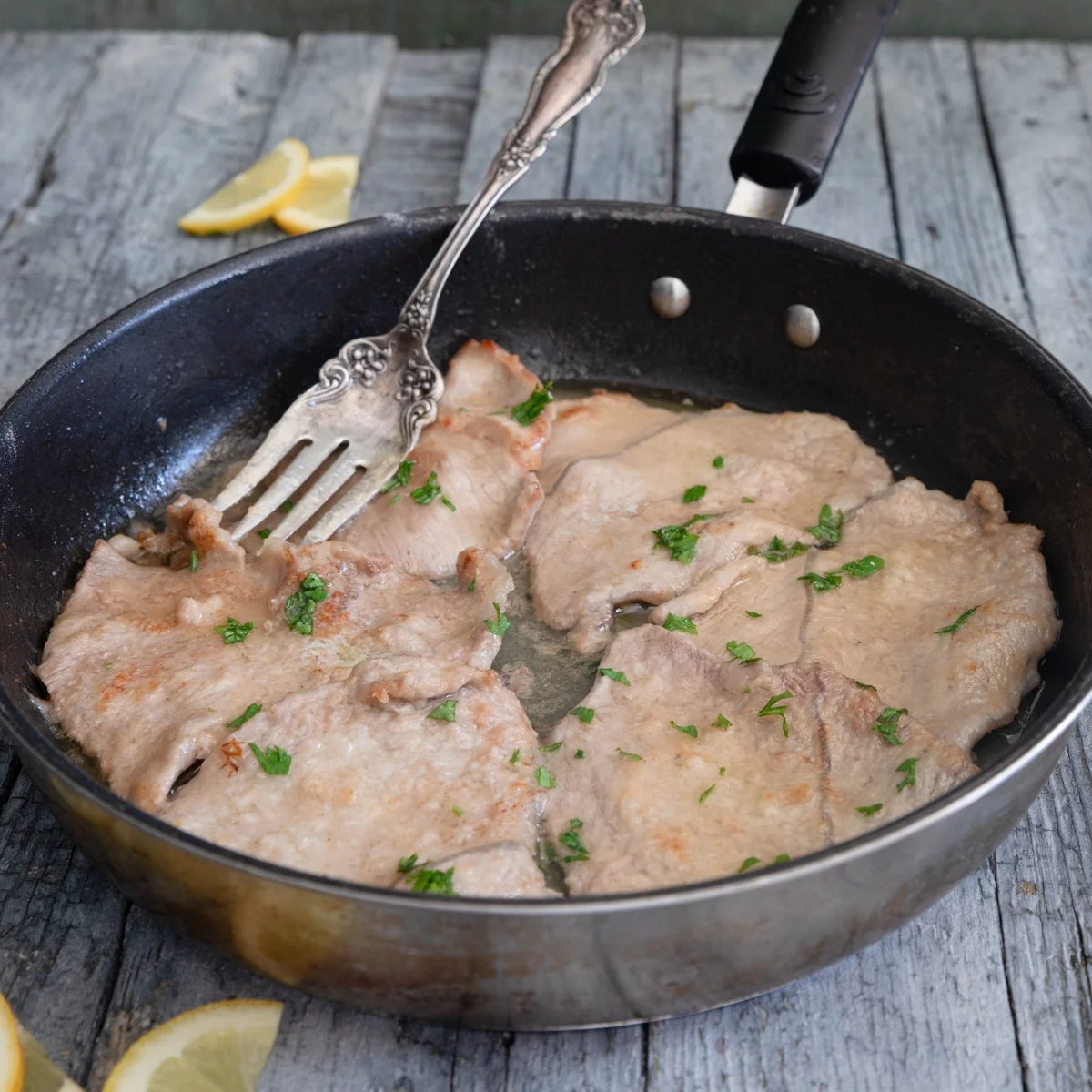
Italian veal piccata pairs thin, flour-dredged veal cutlets with a quick butter and lemon pan sauce. It is a good choice when you want a bright, savoury dinner that comes together in about 25 minutes.
Ingredients
- 255 g (9 oz)veal
- 40–60 g (⅓–½ cup)plain flour
- 56–70 g (4–5 tablespoons), dividedbutter
- 1 mediumlemon
- 30 ml (2 tablespoons)lemon juice
- 45 ml (3 tablespoons), warmwater
- 2–4 g (½–1 tablespoon), finely choppedparsley
- 1.25 g (¼ teaspoon)salt
Instructions
- 1
Flatten the veal
Put the veal between two sheets of baking parchment and pound it with a meat mallet or rolling pin until it is about 6 mm (¼ inch) thick.
- 2
Mix the lemon
Stir the lemon juice and warm water together in a small bowl, then set the mixture aside.
- 3
Flour the cutlets
Spread the flour on a plate. Coat each piece of veal, then shake off any excess.
- 4
Brown the veal
Melt 3–4 tablespoons of the butter in a large pan. Add the veal and cook over high heat for 5 minutes, turning it often to brown both sides. Pour in the lemon juice mixture and cook for 1–2 minutes, until reduced.
- 5
Finish the sauce
Scatter over the chopped parsley and salt, then add 1 tablespoon of butter in small pieces. Once the butter has melted, serve the veal with the pan’s lemon sauce and more chopped parsley if desired.
What is veal piccata?
Piccata is an Italian-style preparation in which thin pieces of meat are lightly coated in flour and finished with a lively pan sauce. Veal is a traditional choice, and its mild flavour works well with lemon and butter.
This version keeps the method simple: the cutlets brown quickly, while lemon juice and water lift the browned juices from the pan. A final piece of butter gives the sauce a smooth finish.
Nutrition and macros by portion
The nutrition label shows one serving as written: 297 calories, 20g protein, 15g carbs, 18g fat.
| Portion | Adjustment | kcal | Protein | Carbs | Fat |
|---|---|---|---|---|---|
| Lighter | Use less butter | 208 kcal | 14g | 11g | 13g |
| This serving | As written | 297 kcal | 20g | 15g | 18g |
| Hungry | Serve with pasta | 446 kcal | 30g | 23g | 27g |
The flour supplies most of the carbohydrate, while the butter accounts for much of the fat; veal provides the protein. Pair a serving with vegetables or salad for a balanced plate, and add bread or potatoes if you want a more substantial meal.
Choosing and preparing the veal
Thin cutlets: The recipe starts with 255 g of veal, cut into six pieces. Flattening them to about 6 mm helps them cook quickly and evenly.
Even thickness: Cover the meat with parchment before pounding to keep it contained. Use gentle, even strokes so the pieces do not tear.
Getting a light flour coating
Flour amount: The recipe gives a range of 40–60 g, so begin with the smaller amount and add more if needed. A thin, even coating is enough to help the cutlets brown and give the sauce a little body.
Shake off excess: Too much loose flour can scorch in the butter and make the sauce pasty. Coat the veal just before it goes into the pan.
Cooking the cutlets
Hot pan: Melt the first 3–4 tablespoons of butter before adding the veal, then brown the cutlets over high heat for the stated 5 minutes, turning often. Work in batches if the pieces do not fit in a single layer.
Doneness: The recipe relies on thin cutlets and a short cooking time. Check that the veal is cooked through before serving; avoid leaving it in the pan longer than needed, as thin pieces can dry out.
Building the lemon butter sauce
Deglaze: Add the lemon juice and warm water after browning, and let the mixture reduce for 1–2 minutes. Stir or scrape the pan gently to bring the browned juices into the sauce.
Finish gently: Add the remaining tablespoon of butter in small pieces with the parsley and salt. Let it melt into the sauce, then serve promptly with the pan juices spooned over the veal.
What to serve with it
Simple sides: Serve the veal with a green salad or cooked vegetables to complement the buttery, sharp sauce. Bread, potatoes or pasta can help catch any sauce left on the plate.
Lemon balance: The sauce is bright and rich at the same time, so mild, simply prepared sides work especially well. Add extra chopped parsley at the table if desired.
Recipe notes & tips
- Flatten the cutlets to a consistent thickness so they cook at the same rate.
- Start with the smaller amount of flour and add more only if the plate runs short.
- Shake excess flour from each cutlet before frying.
- Have the lemon juice and warm water mixed before the veal finishes browning.
- Keep the cutlets in a single layer for better browning, cooking in batches if necessary.
- Serve as soon as the final butter has melted into the sauce.
Variations
- Extra lemon: Add finely grated lemon zest for a more pronounced citrus aroma.
- More parsley: Scatter additional chopped parsley over the cutlets just before serving.
- Capers: Stir capers into the pan sauce for a briny accent.
- Poultry swap: Use thin chicken cutlets in place of veal and cook them through before adding the sauce.
- Olive oil: Replace some of the butter used for browning with olive oil, keeping butter for the sauce finish.
Common mistakes to avoid
- Uneven cutlets: Pound the veal to an even 6 mm thickness so thinner edges do not overcook.
- Excess flour: Shake the cutlets well before frying to avoid a heavy coating and a pasty sauce.
- Crowded pan: Cook in batches if needed; overcrowding makes it harder for the veal to brown.
- Overcooking: Follow the short cooking time and check the thin cutlets promptly for doneness.
- Watery sauce: Let the lemon and water mixture reduce for 1–2 minutes before adding the finishing butter.
- Butter added too early: Reserve the final tablespoon for the end so it melts into the reduced sauce.
How to store
Refrigerate leftovers in an airtight container for up to 2 days. Reheat gently in a covered pan over low heat with a small splash of water; avoid prolonged heating, which can toughen the veal.
Frequently asked questions
Can I prepare the veal ahead of time?
You can flatten the cutlets ahead and keep them covered in the refrigerator. Dredge them in flour just before cooking for the best coating.
How thin should the veal be?
The recipe specifies about 6 mm (¼ inch). Similar thickness across the pieces helps them brown and cook evenly.
Can I use bottled lemon juice?
Yes, use the stated 30 ml. Fresh lemon juice is also suitable, and the lemon can be served alongside if you want a brighter finish.
How do I know when the sauce is reduced?
After 1–2 minutes, it should look less watery and lightly coat the pan. Add the final butter once it has reduced.
Can I make this without veal?
Thin chicken cutlets can be used instead. Make sure they are cooked through, since their cooking time may differ from thin veal.
What should I serve with veal piccata?
A green salad or vegetables make a fresh accompaniment. Bread, potatoes or pasta are useful for serving with the lemon butter sauce.
Cook it from the original
This recipe comes from anitalianinmykitchen.com. Their page has the author’s own photos, notes and tips — the best place to cook it from.
Open the recipe on anitalianinmykitchen.com