
Fish stew
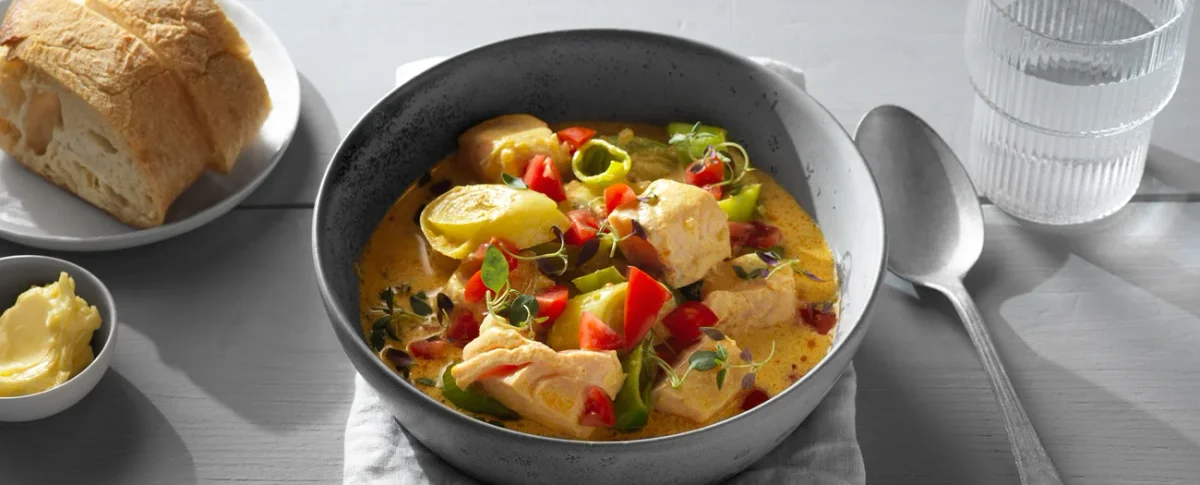
This tomato-rich fish stew combines white fish and salmon with vegetables, cream, saffron and a gentle chilli kick. A fresh parsley-and-dill gremolata brings a bright finish to the rich, warming broth.
Ingredients
- 1.5 litreswater
- 2 cubesfish stock
- 1leek
- 1yellow onion
- 2celery sticks
- 2carrots
- 400 gpotatoes
- 1 tbspbutter
- 1 tspdill seeds
- 2 tbsptomato purée
- 300 gplum tomatoes
- 300 mlwhipping cream
- 100 mlmango chutney
- 1 tbspsambal oelek
- 1 packetsaffron
- 1/2lemon
- 300 ghaddock fillet
- 300 gsalmon fillet
- to tastesalt and freshly ground black pepper
- 1 bunchflat-leaf parsley
- 1 bunchdill
- 1 clovegarlic
- 100 mlolive oil
- 1/2lemon
- to tastesalt and black pepper
Instructions
- 1
Make the stock
Bring the water and fish stock cubes to the boil.
- 2
Prepare the vegetables
Trim the leek and cut it into strips. Peel and finely chop the onion.
- 3
Cut the vegetables
Rinse the celery and cut it into 3 cm cubes. Peel the carrots, halve them lengthways and cut them into 3 cm cubes. Halve the potatoes.
- 4
Soften the vegetables
Heat the butter in a large, wide saucepan. Add the onion and vegetables and fry for 5 minutes.
- 5
Toast the seeds
Dry-toast the dill seeds in a hot frying pan, then crush them with a pestle and mortar. Add the seeds and tomato purée to the stew and fry for 5 minutes.
- 6
Add tomatoes and liquid
Cut the tomatoes into evenly sized cubes and add them to the pan. Pour in the fish stock and cream.
- 7
Simmer the stew
Bring the stew to the boil, then simmer over a medium heat for about 15 minutes.
- 8
Season the broth
Stir in the mango chutney, sambal oelek, saffron and juice from half a lemon.
- 9
Cook the fish
Cut the fish into pieces and simmer them in the stew until cooked through.
- 10
Adjust the seasoning
Taste and season with salt and freshly ground black pepper.
- 11
Prepare the gremolata
Coarsely chop the parsley and dill.
- 12
Chop the garlic
Peel and finely chop the garlic clove.
- 13
Mix the gremolata
Combine the herbs and garlic with the zest and juice of a lemon and the olive oil.
- 14
Season the gremolata
Season to taste with salt and black pepper.
- 15
Finish and serve
Top the fish stew with prawns and drizzle over the gremolata.
What is fish stew?
Fish stew is a one-pot dish in which fish cooks gently in a seasoned, spoonable broth. This version has a tomato-and-cream base, with saffron, mango chutney and sambal adding fragrant, sweet and spicy notes.
The recipe draws on familiar Nordic ingredients such as dill, potatoes and fish, while the gremolata gives it a fresh, herb-forward finish. Its mix of haddock and salmon offers contrasting textures in each bowl.
Nutrition and macros by portion
The nutrition label shows one serving as written: 919 calories, 39g protein, 45g carbs, 65g fat.
| Portion | Adjustment | kcal | Protein | Carbs | Fat |
|---|---|---|---|---|---|
| Lighter | Use less cream and oil | 643 kcal | 27g | 31g | 46g |
| This serving | As written | 919 kcal | 39g | 45g | 65g |
| Hungry | Add more potatoes | 1379 kcal | 59g | 68g | 98g |
The potatoes, vegetables, chutney and cream contribute most of the carbohydrates; butter, cream and olive oil account for much of the fat. Haddock and salmon provide the protein, with salmon also contributing fat. Serve with extra vegetables or a side salad to balance the creamy stew.
Build the vegetable base
Cut evenly: Similar-sized pieces of celery, carrot and tomato cook at a more consistent rate. The recipe halves the potatoes, so check their tenderness as the stew simmers.
Soften first: Frying the onion and vegetables in butter gives them time to soften before the liquid goes in. Use a wide saucepan so the vegetables have room to cook evenly.
Bring out the dill and tomato
Toast the seeds: Dry-toasting dill seeds briefly in a hot pan helps release their aroma. Keep them moving and take them off the heat once fragrant so they do not scorch.
Fry the purée: Cooking the tomato purée with the toasted seeds for 5 minutes lets it blend into the vegetable base before the stock and cream are added.
Balance the broth
Saffron and lemon: Saffron brings a distinctive aroma, while lemon juice adds brightness to the creamy tomato broth. Add the saffron and lemon at the stage given, then taste before making final seasoning adjustments.
Sweet and spicy: Mango chutney brings sweetness and sambal oelek adds heat. If you prefer a milder bowl, use less sambal and taste as you go.
Cook the fish gently
Add it late: The fish goes in after the vegetables have simmered, so it has less time to break apart. Cut the fillets into similar-sized pieces for more even cooking.
Check the centre: The fish is ready when it is opaque and flakes easily. Keep the stew at a gentle simmer rather than a vigorous boil.
Finish with gremolata
Chop the herbs: Coarsely chopped parsley and dill keep the topping lively and textured. Finely chopped garlic spreads more evenly through the oil and lemon.
Add it at the end: Drizzle the gremolata over the stew just before serving, so its fresh flavour stands apart from the cooked broth. The method also mentions prawns as a topping, but they are not listed in the supplied ingredients.
Serve it hot
Serve the stew as soon as the fish is cooked, with the gremolata over each portion. Crusty bread is a handy accompaniment for the tomato-and-cream broth.
The listed simmer alone takes about 15 minutes, while the stated total time is 20 minutes. Prepare the vegetables and gremolata efficiently if you want to keep close to that overall time.
Recipe notes & tips
- Cut the vegetables into even pieces so they cook at a similar rate.
- Toast the dill seeds briefly and remove them from the heat as soon as they smell fragrant.
- Stir the stew gently after adding the fish to help keep the pieces intact.
- Taste the broth after adding the sambal before deciding whether it needs more heat.
- Make the gremolata while the vegetables simmer to keep preparation moving.
Variations
- Choose seasonal fish: Swap in another fish you enjoy, keeping the pieces a similar size.
- Adjust the chilli: Use less sambal oelek for a gentler stew or add more for extra heat.
- Add prawns: Include prawns as the method suggests, although they are not in the supplied ingredient list.
- Change the herbs: Use parsley and dill in the gremolata, or favour whichever fresh herb you have more of.
- Serve with bread: Offer crusty bread alongside to mop up the broth.
Common mistakes to avoid
- Boiling the fish hard: A rolling boil can break up the pieces; keep the stew at a gentle simmer.
- Scorching the dill seeds: Toast them briefly in a hot pan and take them off as soon as they become fragrant.
- Adding fish too early: Wait until the stew has simmered so the fish does not spend too long cooking.
- Cutting uneven pieces: Similar-sized fish and vegetables are easier to cook evenly; aim for consistent cuts.
- Overdoing the sambal: Start with the listed amount and taste the broth before adding any extra.
How to store
Cool leftovers promptly and refrigerate in a covered container for up to 2 days. Reheat gently in a saucepan until piping hot, avoiding a hard boil so the fish is less likely to break apart.
Frequently asked questions
Can I use different fish?
Yes. The recipe invites you to choose fish you like and mix types according to the season. Cut the fish into similar-sized pieces and add it towards the end.
How do I know when the fish is cooked?
The pieces should be opaque and flake easily when checked. Simmer gently and check the thickest piece.
Can I make the stew less spicy?
Use less sambal oelek, then taste the broth before adding more. Mango chutney and saffron will still flavour the stew.
Are prawns included in the recipe?
The method says to top the stew with prawns, but no quantity of prawns appears in the supplied ingredients. Add them only if you have them and want to follow that garnish suggestion.
Can I prepare the gremolata ahead?
You can chop and combine it shortly before serving, but it is best added at the end so its fresh lemon and herb flavours stand out.
Can I freeze leftovers?
The fish may become softer after freezing and reheating. Refrigerating leftovers and reheating them gently is preferable for the best texture.
Cook it from the original
This recipe comes from arla.se. Their page has the author’s own photos, notes and tips — the best place to cook it from.
Open the recipe on arla.se