
Tuscan soup (minestra di pane)
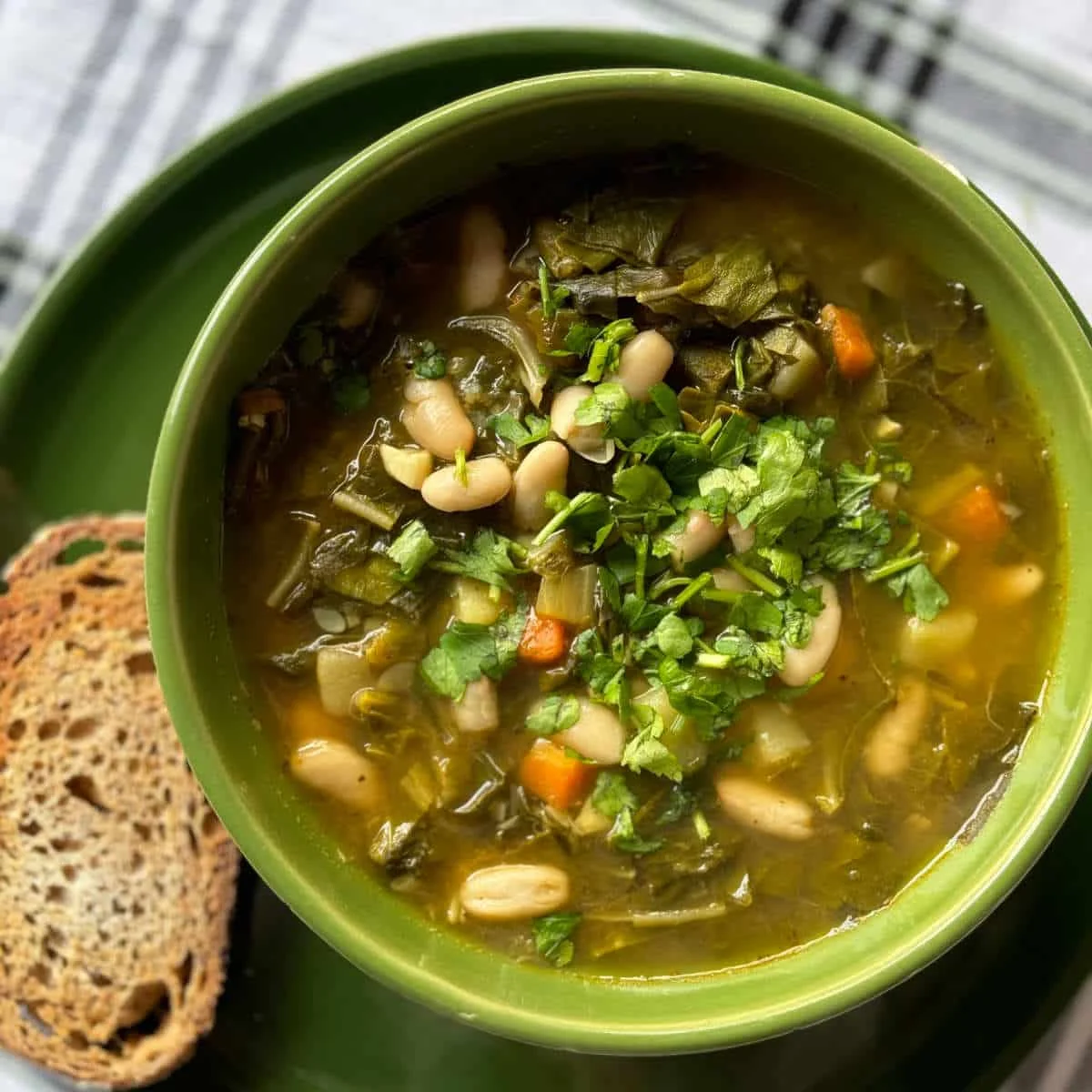
Tuscan soup, or minestra di pane, layers stale bread with a slow-cooked vegetable and cannellini bean soup. It is a generous, rustic dish that makes good use of day-old bread and turns it into a filling meal.
Ingredients
- 8 slicesstale Tuscan bread, thinly sliced
- 500 gcannellini beans
- 1 bunchSwiss chard, cut into fine strips
- 1Tuscan black cabbage or kale, cut into fine strips
- 3carrots, finely diced
- 2 mediumpotatoes, cut into small cubes
- 2courgettes, finely diced
- 2 clovesgarlic, pressed
- 1 largeonion, finely chopped
- 2tomatoes, peeled, deseeded and diced
- 1 stickcelery, finely diced
- 4 tablespoonsextra-virgin olive oil
- 3 tablespoonsflat-leaf parsley, chopped
- to tastesalt
- to tasteblack pepper
Instructions
- 1
Cook the beans
Cook the cannellini beans for 45 minutes.
- 2
Soften the onion
Heat 4 tablespoons of extra-virgin olive oil in a large casserole. Add the chopped onion and fry over a medium heat for 2 minutes, stirring often.
- 3
Add the vegetables
Stir in the celery, carrots and potato cubes. Fry for 5 minutes, stirring often, then add the courgettes and mix well.
- 4
Cover and cook
Cover the casserole and cook over a medium-low heat for 20 minutes.
- 5
Add the greens
Add the Swiss chard, sliced cabbage and garlic. Season with salt, mix well, cover and continue cooking.
- 6
Blend half the beans
Immediately purée half of the cooked beans. Add the purée and the bean cooking water to the vegetables in the casserole.
- 7
Stir in tomatoes
Add the tomatoes and mix well.
- 8
Simmer the soup
Cover and simmer gently for 1 hour and 30 minutes, then add the remaining whole beans and the parsley.
- 9
Season and finish
Adjust the seasoning and add pepper. Cover and simmer gently for 15 minutes.
- 10
Layer bread and soup
In a bowl, arrange layers of bread, alternating them with the vegetable soup.
- 11
Let the bread soak
Leave the dish to rest until the bread is completely soaked, then serve.
What is minestra di pane?
Minestra di pane means bread soup: a Tuscan dish in which slices of stale bread are layered with a substantial vegetable and bean soup. Bread-based soups have long been part of cooking across Tuscany, with local ingredients and names varying from place to place.
Here, puréed cannellini beans thicken the broth while whole beans and a slow-cooked mix of vegetables make it hearty. The bread softens as it rests, so each serving is more like a spoonable casserole than a thin soup.
Nutrition and macros by portion
The nutrition label shows one serving as written: 600 calories, 26g protein, 95g carbs, 13g fat.
| Portion | Adjustment | kcal | Protein | Carbs | Fat |
|---|---|---|---|---|---|
| Lighter | Use less bread | 420 kcal | 18g | 67g | 9g |
| This serving | As written | 600 kcal | 26g | 95g | 13g |
| Hungry | Add another bread layer | 900 kcal | 39g | 143g | 20g |
Cannellini beans and bread provide most of the carbohydrates, with the beans also contributing protein; olive oil supplies much of the fat. For a more balanced plate, serve a portion with a fresh salad or extra non-starchy vegetables.
Build flavour with the beans
Bean cooking water: reserve it for the casserole, as the method uses it alongside the puréed beans to form the soup base.
Two textures: purée half the beans and keep the rest whole. The purée adds body, while the whole beans give each bowl more substance.
Cut the vegetables evenly
Fine dice: cut the carrots, celery and courgettes into small, similar-sized pieces so they cook at a comparable pace.
Thin greens: slice the chard and cabbage into fine strips. They will be easier to eat once cooked down and layered with the bread.
Give the soup time
Slow simmer: the long covered cook lets the vegetables soften and the flavours mingle. Keep the heat gentle rather than letting the soup boil hard.
Final simmer: add the whole beans and parsley near the end, then cook for another 15 minutes as directed. Check the seasoning before layering.
Choose and layer the bread
Stale slices: day-old bread is useful because it can absorb the soup without immediately falling apart. Thin slices make it easier to build even layers.
Soaking time: alternate bread and soup in the bowl, then let it rest until the bread is thoroughly saturated. The exact time depends on how dry the bread is.
Serve it simply
This soup is filling enough to serve as a main course. A crisp green salad or lightly dressed seasonal vegetables make a fresh contrast to the soft, savoury layers.
Serve it warm after the bread has soaked up the soup. If it thickens while standing, loosen individual portions with a little water when reheating.
Recipe notes & tips
- Use stale bread that is firm enough to hold its shape as it soaks.
- Stir the onion and diced vegetables regularly during the initial frying so they cook evenly.
- Keep the casserole covered during the long simmer, as directed.
- Reserve the bean cooking water before puréeing the beans.
- Taste the soup before layering, since the bread will absorb some of its seasoning.
Variations
- Use kale: substitute kale for the Tuscan black cabbage if it is easier to find.
- Try different greens: use another sturdy leafy green in place of the chard.
- Adjust the bread: use fewer slices for a soupier result or more for a thicker, bread-led dish.
- Add herbs: include another fresh herb alongside the parsley for a different finish.
- Make it peppery: add extra black pepper at the table.
Common mistakes to avoid
- Skipping the bean water: it is part of the soup base, so reserve it after cooking the beans.
- Cutting uneven pieces: large chunks may take longer to soften; dice the vegetables to a similar size.
- Boiling too vigorously: a hard boil can make the vegetables break down unevenly; keep the soup at a gentle simmer.
- Using very fresh bread: it may turn mushy quickly; choose stale bread if possible.
- Serving before the bread soaks: give the layered soup time to rest until the bread is fully saturated.
How to store
Refrigerate leftovers in a covered container and use within 3 days. Reheat gently in a saucepan or microwave until hot throughout, adding a little water if the bread has made the soup too thick.
Frequently asked questions
Can I use kale instead of Tuscan black cabbage?
Yes. The recipe gives kale as an alternative; slice it into fine strips before adding it.
Do I need to soak the dried beans first?
The supplied method says to cook the beans for 45 minutes but does not specify soaking. Follow the instructions on your beans’ packaging if they require soaking or a different cooking time.
Can I use tinned cannellini beans?
You can, but the method relies on bean cooking water. If using tinned beans, drain and rinse them, and use water to loosen the purée as needed.
How do I know when the soup is ready?
The vegetables should be tender after the long, gentle simmer, and the whole beans should be heated through after the final 15 minutes.
Why does the bread go into the serving bowl rather than the casserole?
Layering it in the bowl lets the bread soak up the soup while keeping the process easy to portion. Leave it to rest until completely saturated before serving.
Cook it from the original
This recipe comes from 196flavors.com. Their page has the author’s own photos, notes and tips — the best place to cook it from.
Open the recipe on 196flavors.com