
Easy Skillet Chicken Cacciatore
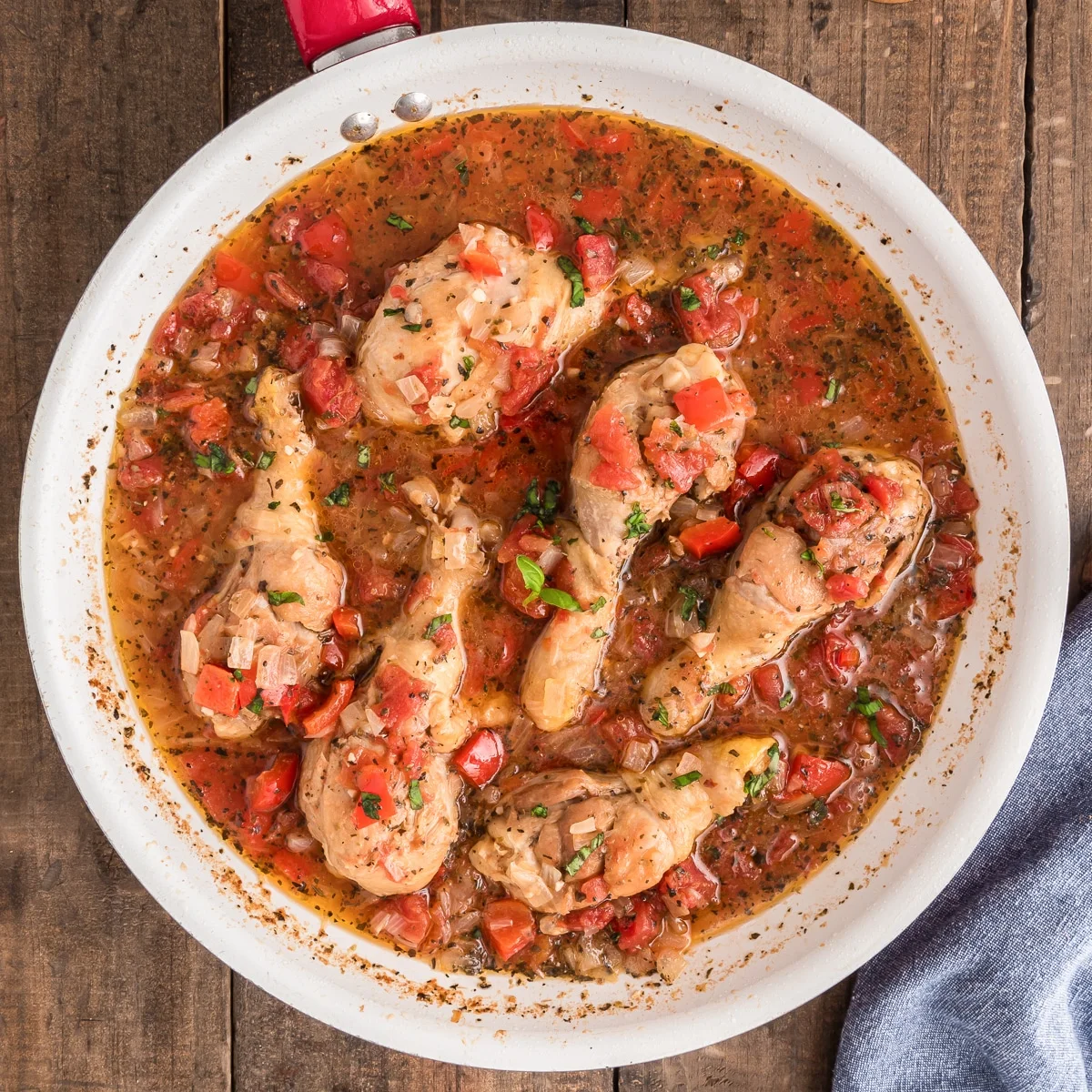
This stovetop chicken cacciatore simmers chicken with tomatoes, onion, pepper and herbs in one skillet. It makes a hearty Italian-inspired dinner without needing to turn on the oven.
Ingredients
- 4–6 pieceschicken (legs or breasts; remove the skin if desired)
- 1 teaspoonsalt
- 1–2 dashes, to tastepepper
- 30 ml (2 tablespoons)olive oil
- 1 mediumonion, chopped
- 1–2 clovesgarlic, minced
- 1 largepepper, chopped
- 400 g (14 ounces)diced tomatoes, with their juice and no other additions
- 240 ml (1 cup)water or chicken broth
- 1bay leaf
- 1 teaspoonoregano
- 1 teaspoon or 4–5 leavesbasil, dried or fresh
- 1–2 dashes, if desiredhot pepper flakes
Instructions
- 1
Brown the chicken
Season the chicken with a little salt and pepper. Heat the olive oil in a large pan over medium-high heat, add the chicken and brown one side. Turn it over and move it to one side of the pan.
- 2
Add the vegetables
Add the chopped onion and garlic to the pan and cook until the onion is translucent. Add the pepper, tomatoes, water or chicken broth, bay leaf, oregano, basil, hot pepper flakes if using, and ½ teaspoon salt. Bring the mixture to a boil.
- 3
Simmer until tender
Cover the pan and simmer for 20 minutes. Remove the lid and continue cooking for about 25 minutes, stirring occasionally, until the chicken is tender and the sauce has thickened. After about 30 minutes, taste the sauce and add salt if needed. The chicken is cooked when its internal temperature reaches 74°C (165°F). Serve immediately.
What is chicken cacciatore?
Cacciatore means “hunter-style” in Italian and is used for dishes of meat cooked with vegetables and herbs. Chicken cacciatore is commonly made with a tomato-based sauce.
This version uses a skillet and a short list of familiar ingredients. Browning the chicken first and then simmering it in the sauce builds flavour in the same pan.
Nutrition and macros by portion
The nutrition label shows one serving as written: 253 calories, 1g protein, 9g carbs, 7g fat.
| Portion | Adjustment | kcal | Protein | Carbs | Fat |
|---|---|---|---|---|---|
| Lighter | Use less olive oil | 177 kcal | 1g | 6g | 5g |
| This serving | As written | 253 kcal | 1g | 9g | 7g |
| Hungry | Serve with pasta | 380 kcal | 2g | 14g | 11g |
The chicken provides most of the protein, while the tomatoes, onion and pepper contribute carbohydrates. Olive oil is the main source of fat in the listed ingredients. Pair a serving with extra vegetables or a modest portion of bread, pasta or rice to make a balanced plate.
Why brown the chicken first?
Browning: Give the chicken time to colour on one side before turning it. This step adds savoury flavour to the pan, which carries into the sauce.
Pan space: Move the browned pieces aside to make room for the onion and garlic. If the pan is crowded, brown the chicken in batches.
Building the tomato sauce
Aromatics: Cook the onion until translucent before adding the other sauce ingredients. The garlic cooks alongside it, so keep an eye on the pan to prevent it from scorching.
Tomatoes and liquid: Use the diced tomatoes with their juice, then add water or chicken broth. The uncovered simmer later in the method allows the sauce to reduce.
How to tell when it is done
Chicken: Cook it until tender and check that the thickest part reaches 74°C (165°F). Pieces can vary in size, so use the temperature and tenderness cues rather than relying on the clock alone.
Sauce: After removing the lid, simmer until the sauce has thickened to your liking. Stir occasionally and taste after about 30 minutes of cooking to see whether it needs more salt.
Choosing the chicken and herbs
Chicken: The recipe allows legs or breasts, with the skin removed if desired. Pieces with different sizes may finish cooking at different times, so check each as needed.
Basil: Use a teaspoon of dried basil or 4–5 fresh leaves. The recipe also allows either water or chicken broth, depending on what you have available.
Serving suggestions
Serve the chicken straight from the pan with some of the tomato sauce spooned over it. Bread, pasta or rice can help make the sauce part of the meal.
For a simple side, add a green salad or cooked vegetables. Keep any additional seasoning in mind, especially if serving with salted bread or pasta.
Recipe notes & tips
- Pat the chicken dry before browning so the surface can colour more readily.
- Keep the heat at a steady medium-high for browning, then lower it to maintain a gentle simmer.
- Stir the sauce from time to time once the lid is off to help it reduce evenly.
- Check the thickest part of the chicken with a food thermometer, especially when the pieces vary in size.
- Taste the sauce before adding more salt, particularly if you used broth.
Variations
- Use chicken broth: Choose it instead of water for a fuller-tasting sauce.
- Adjust the heat: Add hot pepper flakes gradually or leave them out.
- Choose fresh basil: Use 4–5 fresh leaves instead of dried basil.
- Use skinless chicken: Remove the skin before cooking if you prefer.
- Serve with pasta: Spoon the tomato sauce over pasta alongside the chicken.
Common mistakes to avoid
- Crowding the pan: The chicken may steam instead of browning; cook it in batches if needed.
- Turning too soon: Let one side brown before flipping so it has time to colour.
- Boiling too hard: Lower the heat after bringing the sauce to a boil so it simmers gently.
- Skipping the temperature check: Check the thickest part of the chicken reaches 74°C (165°F).
- Adding salt without tasting: Broth can already be salty; taste the sauce before seasoning further.
How to store
Refrigerate leftovers in a covered container and eat within 3–4 days. Reheat until steaming hot throughout, adding a splash of water if the sauce has become too thick.
Frequently asked questions
Can I use chicken breasts instead of legs?
Yes. The recipe allows either breasts or legs. Check each piece for tenderness and doneness, as cooking time can vary with size and cut.
Can I use water instead of chicken broth?
Yes. The recipe lists either water or chicken broth. Broth will give the sauce a different, generally fuller, savoury flavour.
How do I know when the chicken is cooked?
Check that the thickest part reaches 74°C (165°F). The recipe also describes the chicken as tender when done.
Why remove the lid for the final part of cooking?
Cooking uncovered lets the sauce reduce and thicken while the chicken finishes simmering.
Can I leave out the hot pepper flakes?
Yes. They are optional, so omit them for a milder sauce.
Cook it from the original
This recipe comes from anitalianinmykitchen.com. Their page has the author’s own photos, notes and tips — the best place to cook it from.
Open the recipe on anitalianinmykitchen.com