
Roman Pastry - Ciavattoni
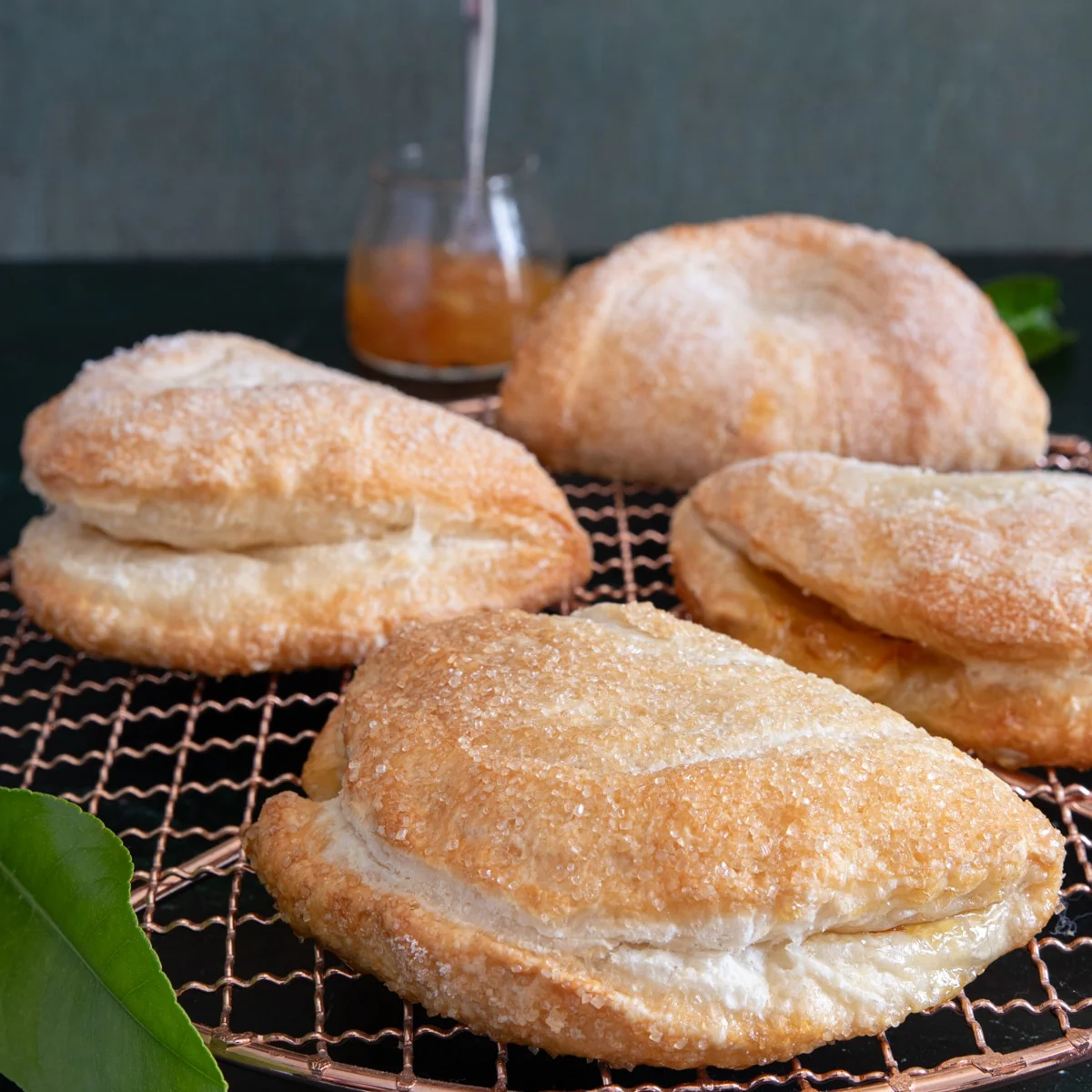
Ciavattoni are Roman pastries made by rolling puff pastry into flaky layers, filling it with jam or hazelnut cream, and baking until golden. This home version uses just three ingredients and is a lovely choice for a sweet breakfast or an afternoon treat.
Ingredients
- 3 sheetspuff pastry
- 6 tablespoonsjam or hazelnut cream (your choice of jam)
- 2–3 tablespoonsgranulated sugar (or brown sugar, if preferred)
Instructions
- 1
Stack and roll
Gently roll out each pastry sheet, then stack them one on top of another. The sheets used here were 34 × 51 cm (14 × 20 inches). Press the edges together to seal, then roll the stack tightly from a short end. Cut it into 6 even slices.
- 2
Shape the pastry
Scatter granulated sugar over a flat surface. Turn each slice in the sugar to coat both sides, then roll it into an oval about 6.75 × 4.75 cm and ⅛ thick.
- 3
Add the filling
Put 2 heaped teaspoons of jam or hazelnut cream on the bottom half of each oval and spread it gently. Fold the top half over the filling and seal the edges well, using a finger dipped in water if needed. Arrange the pastries on a baking sheet lined with parchment paper.
- 4
Heat the oven
Preheat the oven to 190°C (375°F).
- 5
Chill and bake
While the oven heats, chill the pastries. Bake for about 25 minutes, until puffed and golden brown. Transfer to a wire rack and leave to cool until warm or at room temperature.
What are ciavattoni?
Ciavattoni are sweet pastries associated with Rome, made from folded or layered pastry and a soft filling. Their crisp, flaky exterior contrasts with the jam or hazelnut cream inside.
This version builds layers by stacking three sheets of ready-made puff pastry, rolling them into a log and slicing it. Sugar on the work surface adds a light coating as the slices are shaped.
Nutrition and macros by portion
The nutrition label shows one serving as written: 790 calories, 10g protein, 71g carbs, 52g fat.
| Portion | Adjustment | kcal | Protein | Carbs | Fat |
|---|---|---|---|---|---|
| Lighter | Use less filling | 553 kcal | 7g | 50g | 36g |
| This serving | As written | 790 kcal | 10g | 71g | 52g |
| Hungry | Serve an extra pastry | 1185 kcal | 15g | 107g | 78g |
Most of the carbohydrates come from the puff pastry, sugar and filling, while the pastry contributes much of the fat. The pastry and hazelnut cream filling also provide some protein. For a more balanced plate, serve one ciavattoni with fresh fruit or plain yoghurt.
Choosing the filling
Jam: Choose a flavour you enjoy, and spread it gently over the pastry so it reaches the folded edge without spilling out.
Hazelnut cream: This makes a richer, chocolate-hazelnut-style filling. Either option works in the same quantity and method.
Building the layers
Stacking the sheets before rolling creates the pastry's layered spiral. Seal the edges of the sheets together, then roll firmly from the short end so the log holds its shape for slicing.
Even slices help the pastries bake at a similar pace. Cut carefully so the rolled layers stay together.
Sealing the pastries
Filling: Keep it on the lower half of each oval and spread it gently, leaving room around the edges for sealing.
Edges: Fold the pastry over and press the edges closed. A little water on your finger can help the pastry adhere; check the seam before placing each one on the tray.
Getting the right bake
Chilling the shaped pastries while the oven heats gives them time to firm up before baking. Keep them on the lined baking sheet so they are ready to go into the oven.
Look for pastry that is puffed and golden brown after about 25 minutes. Since ovens can vary, use those visual cues alongside the stated baking time.
Serving and cooling
Let the pastries rest on a wire rack until warm or at room temperature. The rack allows air to circulate around the base as they cool.
Serve them as they are with coffee or tea. Their sweet filling also pairs well with fresh fruit if you want something alongside.
Recipe notes & tips
- Keep the pastry sheets cold enough to handle while you stack and roll them.
- Press the stacked sheet edges together before rolling to help the layers stay joined.
- Coat each slice on both sides with the sugar on the work surface.
- Use a little water on your finger when sealing the pastry edges.
- Chill the shaped pastries while the oven preheats, as directed.
- Cool the baked pastries on a wire rack before serving.
Variations
- Use jam: Choose your favourite jam for a fruity centre.
- Try hazelnut cream: Use it instead of jam for a richer filling.
- Swap the sugar: Use brown sugar in place of granulated sugar, as suggested.
- Mix the fillings: Use jam in some pastries and hazelnut cream in the rest.
- Serve with fruit: Add fresh fruit on the side for a bright contrast.
Common mistakes to avoid
- Loose sheet edges: Press them together before rolling so the stack holds.
- Uneven slices: Cut the rolled pastry into 6 even pieces for more consistent pastries.
- Overfilled ovals: Keep to 2 heaped teaspoons per pastry so the edges can close.
- Open seams: Press the edges firmly together, using a damp finger if needed.
- Skipping the chill: Chill the shaped pastries while the oven preheats, before baking.
- Rushing the cooling: Use a wire rack and let the pastries cool until warm or at room temperature.
How to store
Store cooled pastries in an airtight container at room temperature and eat within 1 day for the best flaky texture. Reheat briefly in an oven until warm; avoid the microwave if you want to keep the pastry crisp.
Frequently asked questions
Can I use jam or hazelnut cream?
Yes. The recipe allows either filling, so use your preferred choice. You can also make different pastries with each.
How much filling goes in each pastry?
The method calls for 2 heaped teaspoons per oval. Spread it gently over the lower half, leaving the edges clear for sealing.
Why should I chill the pastries before baking?
The recipe calls for chilling them while the oven preheats. This firms the shaped pastries before they go into the hot oven.
How do I know when the ciavattoni are ready?
Bake for about 25 minutes, until the pastry is puffed and golden brown.
Can I prepare the pastries ahead?
You can shape and chill them while the oven preheats, as the method describes. For the best texture, bake and serve them fresh.
How should I serve ciavattoni?
Let them cool on a wire rack until warm or at room temperature. They are good on their own with coffee or tea.
Cook it from the original
This recipe comes from anitalianinmykitchen.com. Their page has the author’s own photos, notes and tips — the best place to cook it from.
Open the recipe on anitalianinmykitchen.com