
French Bread Recipe
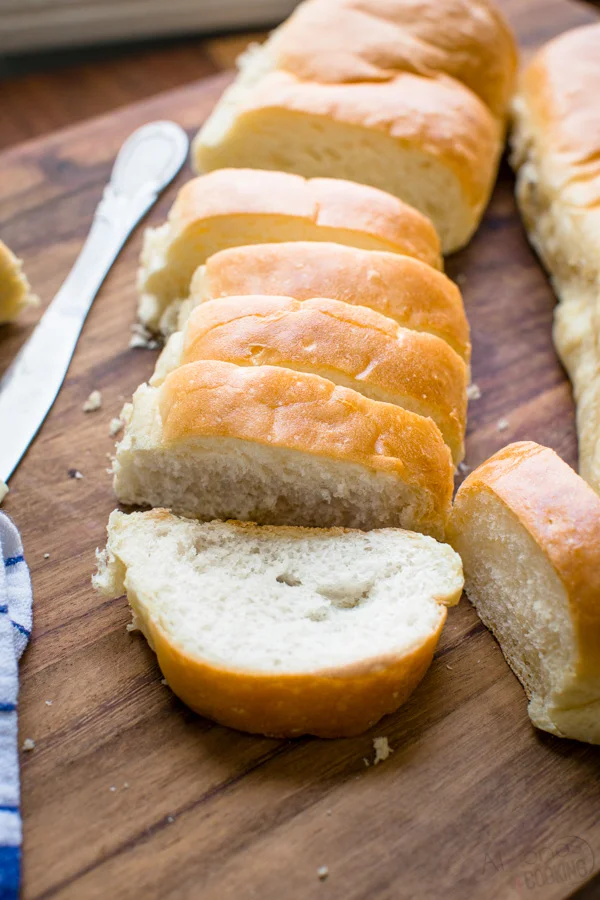
This American-style French bread has a crisp crust and a soft, light crumb, making it useful for sandwiches, toast, garlic bread or bread stuffing. Shape the dough into four loaves and choose a gentler or deeper-golden bake to suit how you plan to serve it.
Ingredients
- 946 ml (4 cups)warm water
- 4 tbspdried yeast
- 2 tbspsalt
- 6 tbspsugar
- 180 ml (12 tbsp)sunflower oil (or olive oil)
- 1,375 g (11 cups)bread flour
Instructions
- 1
Activate the yeast
In a large mixing bowl, dissolve the yeast in the warm water.
- 2
Knead the dough
Add the remaining ingredients and knead by hand for 5 minutes, until you have a soft dough. If it sticks to your hands, dust in a little extra flour until it comes together.
- 3
Let the dough rise
Leave the dough to rise until doubled in size, about 1 hour.
- 4
Shape the loaves
Divide the dough into 4 equal pieces and shape each into a small rectangle, about 28 × 13 cm (11 × 5 inches). Roll each piece up like a Swiss roll, pinching the seam closed.
- 5
Score and rise
Set the loaves seam-side down on a lined baking tray, about 5 cm (2 inches) apart. All four can fit on an 46 × 33 cm (18 × 13-inch) tray when placed horizontally. Make 3–4 diagonal slashes in each loaf, then leave them to rise until doubled.
- 6
Bake the bread
Bake on the middle shelf in an oven preheated to 175°C (350°F) for a softer crust, or 220°C (425°F) for a deep-golden crust, for 25–30 minutes. The bread is done when its internal temperature reaches 88°C (190°F).
What is French bread?
French bread is a long, crusty loaf with a tender interior, often enjoyed sliced for sandwiches or toast. This recipe is an American home-baking take rather than a claim to a traditional French method: it uses oil and sugar for a soft, adaptable crumb.
Four shaped loaves make it handy to serve fresh, freeze for later or use in different ways. The choice of oven temperature lets you aim for a softer crust or a darker, crispier finish.
Nutrition and macros by portion
The nutrition label shows one serving as written: 85 calories, 2g protein, 14g carbs, 2g fat.
| Portion | Adjustment | kcal | Protein | Carbs | Fat |
|---|---|---|---|---|---|
| Lighter | Serve a smaller slice | 59 kcal | 1g | 10g | 1g |
| This serving | As written | 85 kcal | 2g | 14g | 2g |
| Hungry | Serve a larger slice | 128 kcal | 3g | 21g | 3g |
The bread’s carbohydrates come mainly from the flour and sugar, while most of its fat comes from the oil; it provides only a modest amount of protein from the flour. Pair a slice with eggs or another protein-rich food and some vegetables for a more balanced plate.
Choosing the ingredients
Bread flour: its higher protein content helps give the dough structure. Measure carefully, since adding too much flour can make the loaves dense.
Oil: sunflower oil keeps the flavour mild, while olive oil gives the bread a more distinctive savoury note. Either works in the recipe.
Getting the dough right
Warm water: use water that feels warm rather than hot when you dissolve the yeast. Very hot water can interfere with the yeast.
Flour: knead for the full 5 minutes, then judge the dough by feel. Add extra flour sparingly; the dough should be soft and manageable, not stiff.
Shaping and scoring
Rolling: form each portion into a rectangle, roll it up evenly and pinch the seam closed. Place the loaf seam-side down so it stays tucked underneath.
Slashes: make 3–4 diagonal cuts in each loaf before its second rise. Keep the cuts neat and shallow rather than pressing down on the dough.
Rising and timing
First rise: the method allows about 1 hour, but use the doubled-in-size cue to decide when the dough is ready. Room temperature can affect how quickly it rises.
Second rise: leave the shaped loaves until doubled before baking. This rise comes in addition to the stated 25–30 minutes of baking time.
Choosing the crust
Softer crust: bake at 175°C (350°F), as directed, for a gentler finish. This suits bread you plan to use for sandwiches or French toast.
Deeper colour: bake at 220°C (425°F) for a more golden crust, checking for doneness within the stated 25–30-minute window. The internal temperature target is 88°C (190°F).
Ways to serve it
Fresh slices: serve the bread with scrambled eggs, or spread it with butter and jam. It also works well as a base for garlic bread or French bread pizza.
Stale bread: once it has dried out, cut it into croutons or use it in bread stuffing. Let the loaf cool before slicing so its soft crumb has time to set.
Recipe notes & tips
- Dissolve the yeast fully in the warm water before adding the other ingredients.
- Add any extra flour a little at a time so the dough stays soft.
- Pinch each rolled loaf's seam closed and set it seam-side down on the tray.
- Leave enough space between loaves for them to rise without touching.
- Use the internal temperature cue as well as the crust colour to check doneness.
- Let baked loaves cool before slicing for a cleaner cut.
Variations
- Use olive oil: swap it for the sunflower oil for a more pronounced flavour.
- Make garlic bread: spread slices with garlic butter before serving.
- Prepare croutons: cut stale bread into cubes and bake until crisp.
- Make bread stuffing: tear stale slices into pieces for a stuffing base.
- Serve as French toast: slice the cooled loaf and use it in your preferred French toast method.
Common mistakes to avoid
- Water too hot: use warm, not hot, water when dissolving the yeast.
- Too much extra flour: add it gradually so the dough does not become stiff.
- Loose seams: pinch the rolled dough closed to help keep each loaf's shape.
- Skipping the second rise: let the shaped loaves double before putting them in the oven.
- Relying only on colour: check that the centre reaches 88°C (190°F).
How to store
Once completely cool, store the bread in an airtight bag or container at room temperature and use within a few days. Reheat slices briefly in a toaster or warm the loaf in the oven; freeze extra loaves for longer storage.
Frequently asked questions
Can I use olive oil instead of sunflower oil?
Yes. The recipe lists olive oil as an alternative; it will give the bread a more noticeable flavour.
How do I know when the dough has risen enough?
Follow the recipe's cue and wait until it has doubled in size, for both the first rise and the rise after shaping.
Why does the recipe give two oven temperatures?
Use 175°C (350°F) for a softer crust or 220°C (425°F) for a deeper-golden crust. Both options use the same stated baking time of 25–30 minutes.
How can I check whether the bread is baked through?
The recipe gives an internal temperature of 88°C (190°F) as the doneness cue.
What can I do with leftover or stale bread?
Use stale bread for croutons or bread stuffing. Fresh slices are also suited to sandwiches, toast, garlic bread and French bread pizza.
Can I freeze the loaves?
Yes. Cool them completely, wrap or seal them well, and freeze. Thaw before serving, then warm in the oven if you like.
Cook it from the original
This recipe comes from alyonascooking.com. Their page has the author’s own photos, notes and tips — the best place to cook it from.
Open the recipe on alyonascooking.com