
Whole Wheat Pelmeni
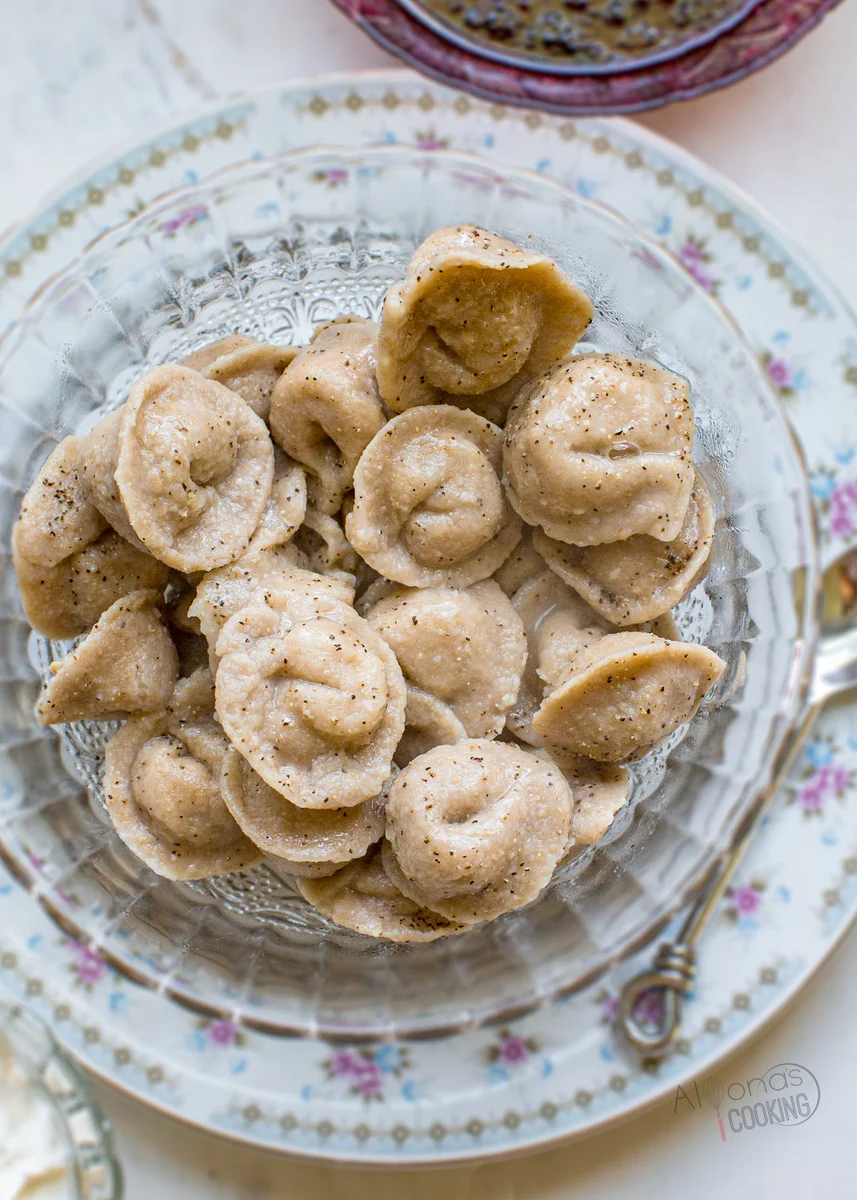
These Russian pelmeni are small, savoury dumplings made with a wholemeal dough and a seasoned chicken filling. They take time to shape by hand, but a glass makes neat dough rounds without a specialist dumpling maker.
Ingredients
- 300 gwater
- 700 gwhite wholemeal flour
- 2eggs
- 5 ml (1 tsp)salt
- 30 ml (2 tbsp)sunflower oil
- 1,245 g (2¾ lb)minced chicken
- 4 clovesgarlic, crushed
- 1onion
- 30 ml (2 tbsp)sea salt
- 7.5 ml (1½ tsp)black pepper
Instructions
- 1
Make the dough
Combine the water, flour, eggs, salt and sunflower oil in a stand mixer bowl. Knead for 6–8 minutes, until the dough is smooth and firm. Cover and leave it to rest for 1–2 hours.
- 2
Mix the filling
Combine the minced chicken, crushed garlic, onion, sea salt and black pepper, mixing thoroughly by hand. Cover and set aside.
- 3
Roll and cut
Roll the dough into a thin rectangle about 3 mm (⅛ inch) thick. Cut out rounds with a glass about 6 cm (2½ inches) wide.
- 4
Fill the rounds
Put a heaped teaspoon of filling in the centre of each dough round. Fold it into a half-moon and seal the edges.
- 5
Shape the dumplings
Bring the two corners of each half-moon together to form a wonton-like shape.
- 6
Arrange on a tray
Set the dumplings on a floured tray and continue shaping the rest.
- 7
Boil the pelmeni
Bring 1.9–2.8 litres (2–3 quarts) of water to the boil in a large pot. Add the pelmeni and bring the water back to the boil, then cook for 5–8 minutes from that point.
- 8
Serve the dumplings
Lift the pelmeni out with a slotted spoon. Toss with butter, white distilled vinegar and black pepper to taste, and serve with sour cream.
What are pelmeni?
Pelmeni are Russian dumplings traditionally made from a thin dough wrapped around a savoury filling. Their small, sealed shape makes them easy to boil and serve in a bowl.
Wholemeal flour gives this version a heartier dough, while chicken provides a mild, savoury centre. The dough rests before shaping, and a glass is all you need to cut the rounds.
Nutrition and macros by portion
The nutrition label shows one serving as written: 110 calories, 8g protein, 12g carbs, 4g fat.
| Portion | Adjustment | kcal | Protein | Carbs | Fat |
|---|---|---|---|---|---|
| Lighter | More vegetables, fewer dumplings | 77 kcal | 6g | 8g | 3g |
| This serving | As written | 110 kcal | 8g | 12g | 4g |
| Hungry | Add a larger portion | 165 kcal | 12g | 18g | 6g |
The flour supplies most of the carbohydrates, while the chicken is the main source of protein. Fat comes from the chicken and sunflower oil, with butter and sour cream adding more if used to serve. Balance a portion with vegetables or salad on the side.
The wholemeal dough
Flour choice: White wholemeal flour brings a wholegrain character while keeping the dough lighter in colour than many wholemeal flours. It may take a little more effort to roll than dough made with white flour.
Resting: The 1–2 hour rest gives the dough time to relax after kneading, making it easier to roll thinly without springing back.
Getting the chicken filling ready
Mixing: Combine the chicken with the garlic, onion, salt and pepper until the seasoning is evenly distributed. Keep the mixture covered while you prepare the dough rounds.
Portioning: A heaped teaspoon is the guide for each round. Keeping the filling away from the edges leaves space to seal the dough securely.
Sealing and shaping
Thin rounds: Aim for dough about 3 mm thick so it wraps around the filling without becoming bulky. A glass roughly 6 cm wide provides a simple cutter.
Firm edges: Fold each round into a half-moon and press the edges together, then bring the corners down to form the final shape. If filling gets on the edges, wipe it away before sealing.
Boiling and checking doneness
Batch size: Add the dumplings to boiling water without packing the pot too tightly; if needed, cook them in batches so they have room to move.
Timing: Once the water returns to the boil, cook for 5–8 minutes as directed. Check that the chicken filling is cooked through before serving, especially with larger dumplings.
Serving ideas
Classic finish: The recipe suggests tossing the drained pelmeni with butter, vinegar and black pepper, then serving them with sour cream. Add these to taste.
On the side: A crisp salad or simply cooked vegetables can bring freshness alongside the rich dumplings. Serve promptly while the dough is tender.
Recipe notes & tips
- Keep the dough covered while shaping so its surface does not dry out.
- Flour the work surface and tray lightly to help prevent sticking.
- Use a consistent heaped teaspoon of filling so the dumplings cook at a similar rate.
- Seal each round carefully before bringing its corners together.
- Cook in batches if the pot is crowded.
- Taste the serving additions separately and add them to the dumplings to suit.
Variations
- Pork filling: Replace the chicken with minced pork for a different savoury filling.
- Mixed meat: Combine chicken with another minced meat, keeping the total filling amount similar.
- More garlic: Increase the garlic for a stronger, more aromatic filling.
- Herb finish: Scatter chopped fresh herbs over the cooked dumplings before serving.
- Tangy serving: Add a little more white distilled vinegar at the table.
Common mistakes to avoid
- Dry dough: Keep it covered during the long rest and while you work.
- Thick rounds: Roll the dough to about 3 mm so the wrapper cooks through without overwhelming the filling.
- Overfilled rounds: Use a heaped teaspoon and leave clear edges for sealing.
- Loose seals: Remove any filling from the rim and press the edges together firmly.
- Crowded pot: Cook in batches so the dumplings have room in the boiling water.
- Guessing doneness: Check that the chicken filling is cooked through before serving.
How to store
Refrigerate cooked pelmeni promptly in a covered container and use within 2 days; reheat until piping hot. Uncooked dumplings can be frozen on a tray until firm, then transferred to a freezer container and cooked from frozen, allowing extra boiling time and checking that the filling is cooked through.
Frequently asked questions
Can I make pelmeni without a dumpling maker?
Yes. Cut the dough rounds with a glass, fill each one, seal it into a half-moon and bring the corners together by hand.
How thin should I roll the dough?
The recipe calls for a thickness of about 3 mm (⅛ inch). This gives you a wrapper that can be folded around the filling.
Can I prepare the dumplings ahead?
You can shape them ahead and freeze them on a tray before storing them in a freezer container. Boil from frozen and allow extra time, checking the chicken is cooked through.
How long should the pelmeni boil?
Cook them for 5–8 minutes after the water returns to the boil. Check that the chicken filling is cooked through before serving.
What should I serve with pelmeni?
The recipe suggests butter, white distilled vinegar and black pepper, with sour cream on the side. A simple salad or vegetables also work alongside them.
Why does the dough need to rest?
The recipe rests the covered dough for 1–2 hours so it relaxes after kneading. That makes it easier to roll and shape.
Cook it from the original
This recipe comes from alyonascooking.com. Their page has the author’s own photos, notes and tips — the best place to cook it from.
Open the recipe on alyonascooking.com