
Amish White Bread
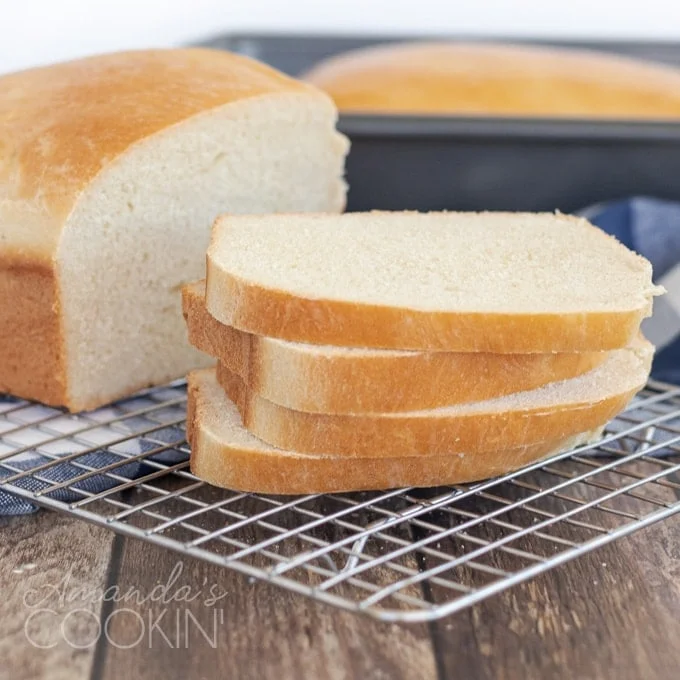
Amish white bread is a soft, lightly sweet bread baked as two loaves. Make it to serve warm alongside a roast dinner or stew, or slice it for sandwiches and toast.
Ingredients
- 240 ml (1 cup)warm water, about 43°C (110°F)
- 240 ml (1 cup)warm milk, about 43°C (110°F)
- 1½ teaspoonssalt
- 67 g (⅓ cup)sugar
- 60 ml (¼ cup)vegetable oil
- 1½ tablespoons (2 envelopes)active dried yeast
- 720 g (6 cups)bread flour
Instructions
- 1
Proof the yeast
In a large bowl, dissolve the sugar in the warm water, then stir in the yeast. Leave it until it looks foamy and creamy.
- 2
Add wet ingredients
Stir the warm milk, salt and oil into the yeast mixture.
- 3
Mix and knead
Add the flour one cup at a time, using a mixer fitted with a dough hook or a wooden spoon. Knead until the dough is smooth.
- 4
Let dough rise
Put the dough in a well-oiled bowl and turn it so the top is coated. Cover with a clean towel and leave to rise for about 1 hour.
- 5
Divide the dough
Punch down the dough, knead it a few times, then divide it in half.
- 6
Shape and prove
Shape the halves into loaves and place them in two greased 23 × 13 cm (9 × 5-inch) loaf tins. Cover and leave for 30 minutes, or until the dough has risen about 2.5 cm (1 inch) above the tins.
- 7
Bake the loaves
Bake at 175°C (350°F) for 30 minutes. Immediately remove the loaves from the tins and put them on cooling racks. Brush the tops with a little melted butter straight away to keep the crust soft.
What is Amish white bread?
This is a soft, slightly sweet American-style yeasted loaf, made here as two tins of bread. The name refers to a familiar home-baking style associated with Amish kitchens; this version uses milk, sugar and oil for a tender crumb.
Two rises give the dough time to expand before baking, while the final brush of butter helps keep the crust soft. The loaves suit a dinner table as well as everyday toast and sandwiches.
Nutrition and macros by portion
The nutrition label shows one serving as written: 180 calories, 5g protein, 31g carbs, 4g fat.
| Portion | Adjustment | kcal | Protein | Carbs | Fat |
|---|---|---|---|---|---|
| Lighter | Serve a thinner slice | 126 kcal | 4g | 22g | 3g |
| This serving | As written | 180 kcal | 5g | 31g | 4g |
| Hungry | Serve an extra slice | 270 kcal | 8g | 47g | 6g |
The flour supplies most of the carbohydrates, while the milk and flour contribute protein. Oil and milk provide much of the fat; serve a slice with a protein-rich main and vegetables for a more balanced plate.
Choosing the ingredients
Warm liquids: The water and milk should feel warm, not hot. Keeping them around 43°C helps activate the yeast without overheating it.
Bread flour: Its higher protein content helps give the dough structure. Add it gradually so you can judge how the dough comes together.
Getting the yeast started
Yeast foam: After stirring the yeast into the sugared water, wait for a creamy foam to form. This is the method’s visual cue that the yeast has begun working.
Temperature: If the liquid is too hot, it can damage the yeast; if it is cool, the foaming may take longer. Use a thermometer if you are unsure.
Kneading and rising
Smooth dough: Knead until the dough feels cohesive and smooth rather than rough and shaggy. A mixer with a dough hook or a wooden spoon followed by hand-kneading both work.
First rise: Coat the dough with oil, cover the bowl and leave it for about 1 hour. After shaping, allow another 30 minutes, checking that the dough rises about 2.5 cm above the tins.
Shaping and baking
Even halves: Divide the dough in half so the loaves are similar in size and bake at the same rate. Shape each piece into a loaf before placing it in a greased tin.
Soft crust: Bake at 175°C for 30 minutes, then remove the loaves from their tins straight away. Brush with melted butter while they are still hot from the oven.
Serving the bread
Warm slices: Serve the bread with roast beef or beef stew, as suggested, or alongside another meal that benefits from a soft loaf for soaking up gravy.
Everyday use: Let the loaves cool before slicing for sandwiches or toast. A serrated knife helps cut clean slices without compressing the crumb.
Recipe notes & tips
- Measure the warm liquids carefully so they are near 43°C.
- Add the flour a cup at a time, stopping to check how the dough feels.
- Oil the bowl well so the dough does not stick as it rises.
- Grease both tins before shaping the loaves.
- Check the rise by looking for dough about 2.5 cm above the tin rims.
- Brush the tops with melted butter as soon as the loaves come out of their tins.
Variations
- Honey sweetness: Replace the sugar with honey, mixing it into the warm water.
- Seeded tops: Sprinkle seeds over the shaped loaves before their final rise.
- Wholemeal blend: Replace part of the bread flour with wholemeal flour, adding it gradually as the dough may feel different.
- Herb loaf: Knead dried herbs into the dough for a savoury variation.
- Soft sandwich slices: Keep the butter finish and allow the loaves to cool fully before slicing.
Common mistakes to avoid
- Overheated liquid: Very hot water or milk can harm the yeast; aim for about 43°C.
- Skipping the foam check: Wait for the yeast mixture to look creamy and foamy before adding the other ingredients.
- Adding flour too quickly: Mix it in one cup at a time so the dough is easier to bring together.
- Rushing the rise: Give the dough the full rise times and use the stated height cue after shaping.
- Leaving loaves in the tins: Remove them immediately after baking so the bottoms do not stay trapped in the tins.
- Delaying the butter: Brush the tops just after removing the loaves from the tins to help keep the crust soft.
How to store
Once completely cool, store the loaves wrapped or in an airtight container at room temperature for a few days. Reheat slices in a toaster, or warm a loaf briefly in the oven; freeze any bread you will not use in that time.
Frequently asked questions
How warm should the water and milk be?
The recipe specifies about 43°C (110°F). They should be warm rather than hot.
How can I tell if the yeast is ready?
After it is stirred into the sugared water, it should become foamy and creamy. If it does not, check that the yeast is active and that the liquid was not too hot.
Can I knead the dough by hand?
Yes. The method allows either a mixer with a dough hook or a wooden spoon and hand-kneading.
When is the second rise finished?
After about 30 minutes, the dough should have risen roughly 2.5 cm (1 inch) above the loaf tins.
Why brush the loaves with butter?
The recipe uses melted butter on the hot loaves to help keep their crust soft.
Can I freeze the bread?
Yes. Cool the loaves completely, wrap them well and freeze. Thaw before serving or toast slices from frozen.
Cook it from the original
This recipe comes from amandascookin.com. Their page has the author’s own photos, notes and tips — the best place to cook it from.
Open the recipe on amandascookin.com