
Balsamic Vinaigrette
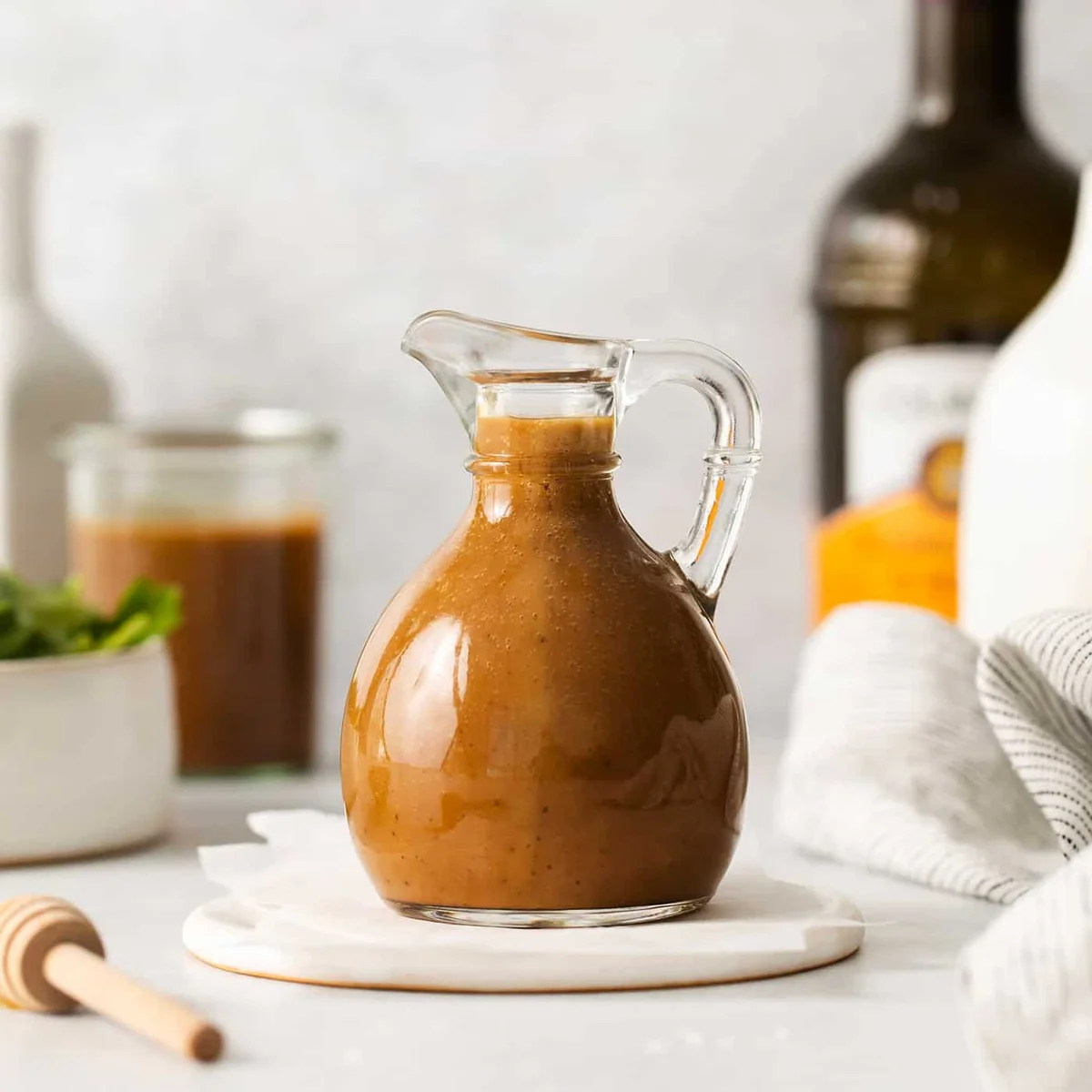
This quick balsamic vinaigrette combines tangy vinegar, extra-virgin olive oil, honey and Dijon mustard into a bold, lightly sweet dressing. Shake it in a jar for a few minutes, then spoon it over salads or use it as a simple finishing sauce.
Ingredients
- 120 ml (1/2 cup)balsamic vinegar
- 160 ml (2/3 cup)extra-virgin olive oil
- 1 tablespoon (about 10 g)minced shallot
- 45 ml (3 tablespoons)honey
- 10 ml (2 teaspoons)Dijon mustard
- 1.25 ml (1/4 teaspoon)Morton kosher salt
- 2.5 ml (1/2 teaspoon)ground black pepper
Instructions
- 1
Combine ingredients
Put all the ingredients in a pint jar and seal it tightly. Shake vigorously until combined. Alternatively, blitz with an immersion blender until completely smooth, emulsified and lightly thickened.
What is balsamic vinaigrette?
Balsamic vinaigrette is a sharp-sweet dressing built around balsamic vinegar and oil. This American-style version adds honey for sweetness, Dijon to help bind the mixture and shallot for a savoury edge.
The proportions make a richly flavoured dressing that is quick to mix at home. Shaking or blending brings the ingredients together without a long preparation.
Nutrition and macros by portion
The nutrition label shows one serving as written: 80 calories, 0g protein, 4g carbs, 7g fat.
| Portion | Adjustment | kcal | Protein | Carbs | Fat |
|---|---|---|---|---|---|
| Lighter | Use less dressing | 56 kcal | 0g | 3g | 5g |
| This serving | As written | 80 kcal | 0g | 4g | 7g |
| Hungry | Serve over a larger salad | 120 kcal | 0g | 6g | 11g |
The olive oil supplies most of the fat, while the honey and balsamic vinegar contribute most of the carbohydrates; this dressing provides very little protein. Pair it with a salad that includes a protein-rich ingredient, such as beans or eggs, to make the plate more substantial.
Why these ingredients work
Balsamic vinegar: its sweet acidity gives the dressing its distinctive tang and dark, rounded flavour.
Olive oil: extra-virgin olive oil softens the vinegar and gives the vinaigrette its silky body.
Honey and mustard: honey balances the sharpness, while Dijon helps the oil and vinegar stay combined for longer.
Shake or blend
Jar shaking: make sure the lid is secure, then shake vigorously so the oil disperses through the vinegar and the dressing looks unified.
Immersion blending: blend until smooth, emulsified and lightly thickened, as directed. This gives the shallot a finer texture throughout.
Check the texture
A freshly shaken vinaigrette should look cohesive, though it may separate if left to stand. Give it another shake before serving if a layer of oil forms on top.
The blended version should be smooth and lightly thickened. Avoid expecting a permanently stable dressing; the ingredients can separate over time.
Adjust the flavour
Taste the finished dressing with a leaf or other salad ingredient, since the food it accompanies affects how sharp or sweet it seems. If needed, adjust the balance in small increments, keeping the listed ingredients and their roles in mind.
The shallot and black pepper add savoury depth, so distribute them well by shaking or blending before you pour.
Ways to serve it
Toss the vinaigrette with leafy salads just before serving, or drizzle it over sliced tomatoes and other fresh vegetables. It also works as a dressing for grain-based salads.
Start with a light coating, then add more to taste so the salad remains fresh rather than weighed down.
Recipe notes & tips
- Use a jar with a tightly fitting lid to make shaking straightforward.
- Measure the honey carefully so its sweetness stays balanced against the vinegar.
- Shake again just before dressing the salad if the mixture has separated.
- Blend thoroughly if you prefer a smooth texture without pieces of shallot.
- Dress the salad shortly before serving to keep the leaves from becoming soggy.
Variations
- More shallot: Add a little extra minced shallot for a stronger savoury note.
- Herb finish: Stir in finely chopped fresh herbs after blending for a fresh, aromatic variation.
- Peppery version: Add more ground black pepper for a sharper finish.
- Sweeter dressing: Increase the honey slightly if you prefer a softer, sweeter balance.
- Smoother texture: Use the immersion blender to incorporate the shallot throughout.
Common mistakes to avoid
- Loose jar lid: Check that it is sealed before shaking to prevent leaks.
- Insufficient shaking: Shake vigorously until the oil and vinegar are combined.
- Skipping the re-shake: The dressing can separate while standing, so shake it again before serving.
- Adding too much at once: Dress the salad gradually and stop when the leaves are lightly coated.
- Expecting a lasting emulsion: Separation is normal; simply shake or blend again.
How to store
Keep the vinaigrette in a sealed jar in the fridge and use it within about a week. The oil may firm up when chilled, so let the jar sit briefly at room temperature and shake well before serving.
Frequently asked questions
Can I make this vinaigrette without a blender?
Yes. Put the ingredients in a pint jar, seal it tightly and shake vigorously until combined.
Why has my dressing separated?
Oil and vinegar can separate after standing. Shake the jar again before using, or briefly blend the dressing.
Can I make it ahead?
Yes. Prepare it in the jar, refrigerate it and shake again before serving.
What salads go well with balsamic vinaigrette?
Use it with leafy salads, sliced tomatoes, fresh vegetables or grain-based salads. Add it gradually so the ingredients are lightly coated.
Can I adjust the sweetness?
Yes. The honey provides sweetness, so you can adjust it slightly to suit your taste while keeping the vinegar and oil in balance.
Cook it from the original
This recipe comes from afarmgirlsdabbles.com. Their page has the author’s own photos, notes and tips — the best place to cook it from.
Open the recipe on afarmgirlsdabbles.com