
Zuppa Toscana (Minestra di Pane)
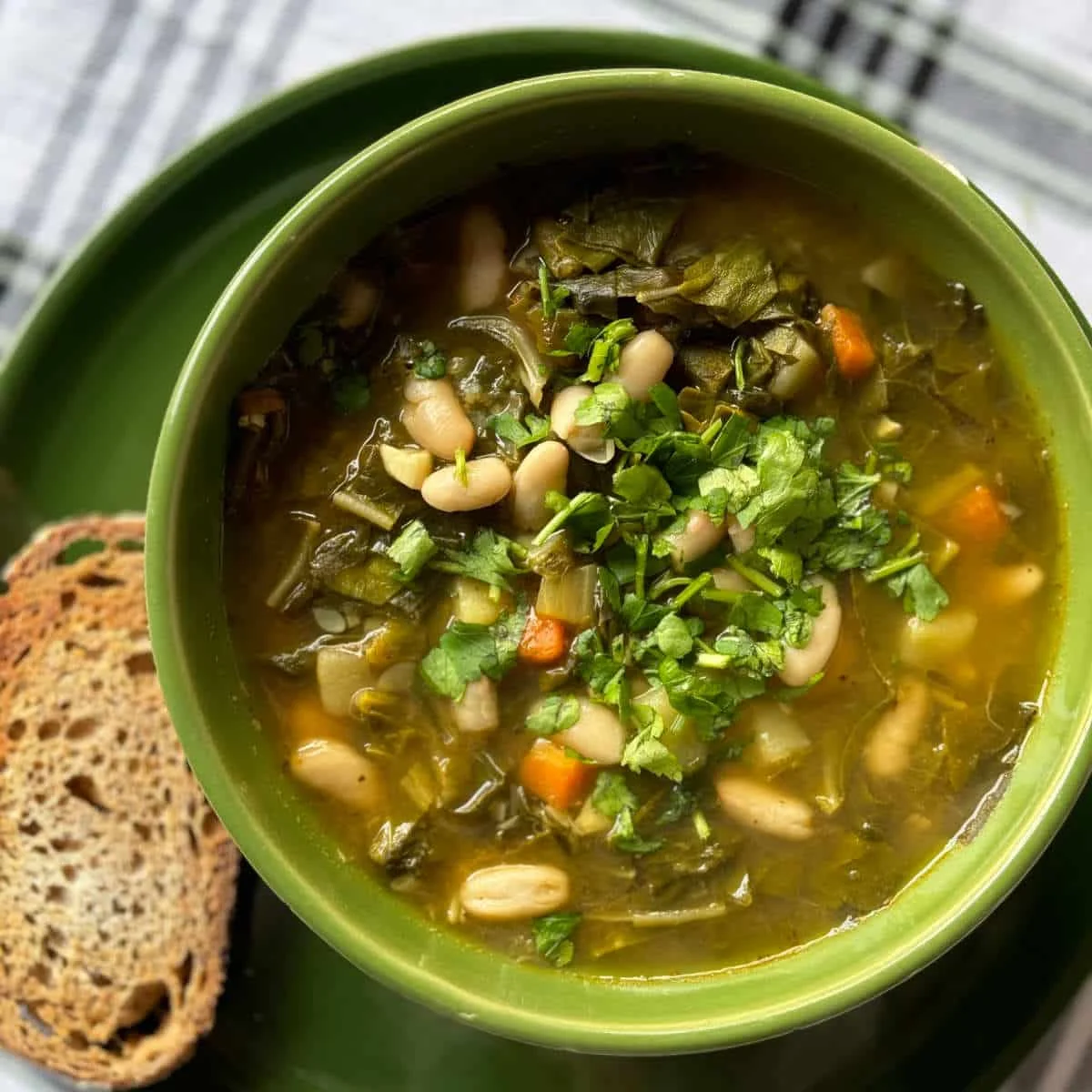
Zuppa Toscana, also known as minestra di pane, is a hearty Tuscan soup of vegetables, beans and stale bread. The bread soaks up the slow-cooked broth, turning a simple vegetable soup into a comforting meal.
Ingredients
- 8 slicesstale Tuscan bread, cut into thin slices
- 454 g (16 oz)cannellini beans
- 1 bunchchard, cut into thin strips
- 1Tuscan black cabbage, or 1 kale, cut into thin strips
- 3carrots, cut into fine brunoise
- 2 mediumpotatoes, cut into small cubes
- 2courgettes, cut into brunoise
- 2 clovesgarlic, pressed
- 1 largeonion, finely chopped
- 2tomatoes, peeled, seeded and diced
- 1 stalkcelery, cut into brunoise
- 60 ml (4 tablespoons)extra-virgin olive oil
- 45 ml (3 tablespoons)flat-leaf parsley, chopped
- to tastesalt
- to tastepepper
Instructions
- 1
Cook the beans
Cook the cannellini beans for 45 minutes.
- 2
Brown the onion
Heat 60 ml (4 tablespoons) of extra-virgin olive oil in a saucepan. Add the chopped onion and brown it over a medium heat for 2 minutes, stirring frequently.
- 3
Add vegetables
Add the celery, carrots and diced potatoes. Sauté for 5 minutes, stirring often, then add the courgettes and mix well.
- 4
Cook covered
Cover the pan and cook over a low to medium heat for 20 minutes.
- 5
Add leafy greens
Add the chard, sliced cabbage and garlic. Season with salt, mix well, cover and continue cooking.
- 6
Thicken with beans
Immediately purée half of the cooked beans, then add the purée and the bean cooking water to the vegetables in the stewpot.
- 7
Add tomatoes
Add the tomatoes and mix well.
- 8
Simmer the soup
Cover and simmer over a low heat for 1 hour 30 minutes. Add the remaining whole beans and the parsley.
- 9
Season and finish
Adjust the seasoning and add pepper. Cover and simmer for 15 minutes.
- 10
Layer bread and soup
Arrange the bread in layers in a bowl, alternating each layer with the vegetable soup.
- 11
Soak before serving
Leave the soup to stand until the bread is completely soaked, then serve.
What is minestra di pane?
Minestra di pane, or zuppa toscana, is a Tuscan bread-and-vegetable soup with variations found across the region. Stale bread is layered with the soup so it softens and absorbs the cooking juices.
This version combines beans, leafy greens and a range of vegetables, with puréed beans helping to give the broth body.
Nutrition and macros by portion
The nutrition label shows one serving as written: 66 calories, 4g protein, 14g carbs, 0g fat.
| Portion | Adjustment | kcal | Protein | Carbs | Fat |
|---|---|---|---|---|---|
| Lighter | Use less bread | 46 kcal | 3g | 10g | 0g |
| This serving | As written | 66 kcal | 4g | 14g | 0g |
| Hungry | Add another bread layer | 99 kcal | 6g | 21g | 0g |
The beans, bread and potatoes provide most of the carbohydrates, while the beans also contribute protein. Olive oil supplies nearly all the added fat; pair a serving with a fresh salad or extra vegetables for a more rounded plate.
The beans and their cooking liquid
Bean base: cooking half of the beans to a purée gives the soup a thicker texture, while the rest remain whole for contrast.
Cooking water: the method uses the water from cooking the beans in the vegetable mixture, adding it along with the purée.
Cut the vegetables evenly
Small pieces: the carrots, courgettes and celery are cut into brunoise, while the potatoes are cubed. Keeping the pieces small helps them cook through during the simmer.
Leafy greens: slice the chard and black cabbage or kale into thin strips so they are easy to eat in a spoonful.
Allow time for the simmer
Slow cooking: after the first covered cook, the soup simmers for 1 hour 30 minutes. Keep the heat low so it simmers gently rather than boiling hard.
Final addition: stir in the remaining whole beans and parsley before the last 15-minute simmer.
Choose bread that will hold up
Stale slices: the recipe calls for stale Tuscan bread, which can soak up the soup without immediately falling apart. Slice it thinly for even layering.
Soaking: give the assembled bowl enough time for the bread to become completely soaked before serving.
Season and serve
Taste at the end: salt is added while the greens cook, then the seasoning is adjusted before the final simmer. Add pepper at that stage too.
For a balanced plate, serve the soup with a simple salad or another fresh vegetable side.
Recipe notes & tips
- Have all the vegetables chopped before starting, as several are added in quick succession.
- Keep the beans' cooking water to add to the soup along with the purée.
- Use kale if Tuscan black cabbage is not available.
- Stir the vegetables as directed to help them cook evenly.
- Let the bread soak thoroughly before serving so it takes on the soup's flavour.
Variations
- Use kale: replace the Tuscan black cabbage with the stated alternative.
- Change the bread: use another stale, sturdy loaf sliced thinly.
- Adjust the greens: vary the balance of chard and cabbage to suit what you have.
- Make it more brothy: add some of the reserved bean cooking water if the soup needs loosening.
- Serve individually: layer bread and soup in separate bowls just before serving.
Common mistakes to avoid
- Discarding the bean water: keep it for the soup, as the method adds it with the bean purée.
- Skipping the purée: purée half the beans so they help give the soup body.
- Slicing the bread too thickly: thin slices are easier to layer and soak through.
- Cooking at a rolling boil: keep the long simmer gentle over low heat.
- Serving straight away: allow time for the bread to become completely soaked.
How to store
Store leftover soup in a covered container in the fridge and use within 3 days. Reheat gently in a saucepan, stirring occasionally; the bread will continue to absorb the broth, so loosen with a little water if needed.
Frequently asked questions
Can I use kale instead of Tuscan black cabbage?
Yes. The recipe gives kale as an alternative; cut it into thin strips as you would the cabbage.
Can I use tinned cannellini beans?
The method starts by cooking dried beans and uses their cooking water. Tinned beans can be used, but the cooking-water step will be different; add water as needed to the soup.
Why is stale bread used?
Stale bread is better able to absorb the soup as it rests. Slice it thinly and give it time to soak completely.
How do I know when the vegetables are done?
They cook through during the long, gentle simmer. Check that the potato pieces are tender before serving.
Can I prepare this soup ahead?
You can cook the soup ahead and layer it with the bread when you are ready to serve. If already assembled, expect the bread to soften further as it stands.
Cook it from the original
This recipe comes from 196flavors.com. Their page has the author’s own photos, notes and tips — the best place to cook it from.
Open the recipe on 196flavors.com