
Cassava Pone
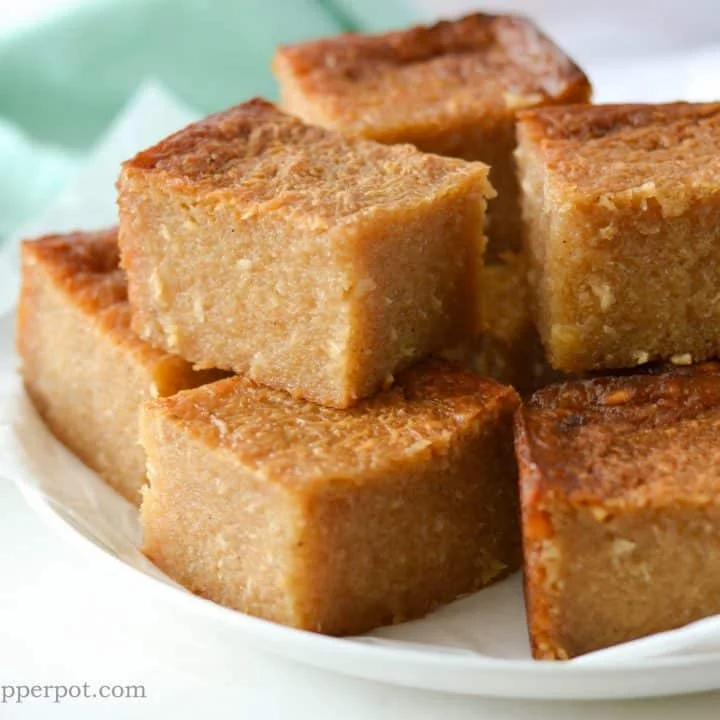
Guyanese cassava pone is a rich, warmly spiced bake with a golden top and a soft, gooey centre. This version combines grated cassava and coconut with brown sugar, butter and evaporated milk for a comforting dessert to serve with a refreshing drink.
Ingredients
- 1.36 kg (3 lb)peeled and grated cassava, or thawed frozen grated cassava
- 80 g (1 cup)grated coconut, or thawed frozen grated coconut
- 5 ml (1 teaspoon)ground cinnamon
- 2.5 ml (1/2 teaspoon)freshly grated nutmeg
- 2.5 ml (1/2 teaspoon)black pepper
- 10 ml (2 teaspoons)vanilla extract
- 10 ml (2 teaspoons)almond extract or Caribbean mixed essence
- 300 g (1 1/2 cups)brown sugar
- 85 g (6 tablespoons)softened butter, or non-dairy butter for a vegan option
- 710 ml (3 cups)evaporated milk, or coconut milk for a vegan option
- 5 g (1 teaspoon)butter, for greasing the baking pan
Instructions
- 1
Heat and grease
Preheat the oven to 177°C (350°F). Grease a baking pan with the teaspoon of butter; use a 25 cm (10-inch) pan for thicker pone or a 23 × 33 cm (9 × 13-inch) pan for a thinner bake.
- 2
Prepare fresh ingredients
If using fresh cassava and coconut, peel and grate them, then place them in a large mixing bowl.
- 3
Thaw frozen ingredients
If using frozen grated cassava or coconut, thaw them completely first. Add 1.36 kg (3 lb) of cassava and 1 cup (80 g) of coconut to a large, deep mixing bowl.
- 4
Add flavourings
Add the brown sugar, softened butter, cinnamon, freshly grated nutmeg, black pepper, vanilla extract and almond extract or mixed essence to the cassava and coconut.
- 5
Mix the ingredients
Stir everything together with a whisk or wooden spoon until evenly combined.
- 6
Add the milk
Pour in the evaporated milk, or coconut milk for the vegan option, and gently mix until the liquid is incorporated.
- 7
Bake until golden
Pour the mixture into the prepared pan and bake for about 60 minutes to a little over an hour. For a browner top, grill at 274°C (525°F) for 3–5 minutes, checking frequently. The pone is ready when a tester comes out mostly clean and the top is golden brown; a little stickiness on the tester is normal.
What is cassava pone?
Cassava pone is a traditional Guyanese bake made from grated cassava, often enriched with coconut and sweetened with sugar. It is known for its dense, moist texture rather than the light crumb of a cake.
This version layers in cinnamon, nutmeg, black pepper and extracts for a fragrant, gently spiced flavour. The milk and butter help the cassava bake into a soft, gooey centre beneath its golden top.
Nutrition and macros by portion
The nutrition label shows one serving as written: 460 calories, 9g protein, 80g carbs, 12g fat.
| Portion | Adjustment | kcal | Protein | Carbs | Fat |
|---|---|---|---|---|---|
| Lighter | Smaller slice, fruit alongside | 322 kcal | 6g | 56g | 8g |
| This serving | As written | 460 kcal | 9g | 80g | 12g |
| Hungry | Larger slice | 690 kcal | 14g | 120g | 18g |
Cassava and brown sugar provide most of the carbohydrates, while butter, coconut and evaporated milk contribute much of the fat; the milk also supplies most of the protein. Balance a slice with fresh fruit or serve a smaller piece after a meal with plenty of vegetables.
Choosing the cassava
Fresh cassava: Peel it thoroughly and grate it before mixing. Use the peeled weight specified in the recipe.
Frozen cassava: Thaw it completely before measuring and mixing so it combines evenly with the other ingredients. If it seems very wet, let excess liquid drain away before adding it.
Coconut and spice
Coconut: Freshly grated or thawed frozen coconut adds texture and a mild, rich flavour. Make sure frozen coconut is fully thawed before it goes into the bowl.
Spices: Cinnamon and nutmeg bring warmth, while black pepper gives the mix a subtle savoury edge. Vanilla and almond extract, or Caribbean mixed essence, round out the aroma.
Getting the texture right
Mix the dry flavourings and softened butter through the cassava and coconut before adding the milk. Once the milk goes in, stir gently until everything is combined rather than beating the mixture.
Cassava pone should stay moist and a little sticky inside. A tester coming out completely dry can mean it has baked longer than needed, so look for a mostly clean tester and a golden surface.
Choosing a baking pan
A 25 cm (10-inch) pan makes a thicker pone, while a 23 × 33 cm (9 × 13-inch) pan spreads the mixture into a thinner layer. The thinner version may need less time, so start checking around the 60-minute mark.
The optional grill step colours the top quickly. Keep a close eye on it during the 3–5 minutes under the grill, as the sugar can darken fast.
Serving cassava pone
Let the pone settle briefly after baking so the soft centre is easier to portion. Serve it on its own or alongside a refreshing drink, as suggested for this recipe.
Its sweetness and rich texture also pair well with unsweetened tea or coffee. Cut smaller pieces if serving it as part of a larger dessert spread.
Recipe notes & tips
- Thaw frozen cassava and coconut fully before combining them.
- Use softened butter so it mixes through the grated ingredients more easily.
- Choose the smaller pan if you prefer a thicker, gooier centre.
- Start checking the pone at about 60 minutes, especially in the larger pan.
- Watch the top continuously if using the grill to brown it.
Variations
- Vegan version: Replace the butter with non-dairy butter and use coconut milk instead of evaporated milk.
- Frozen ingredients: Use thawed frozen grated cassava and coconut in place of fresh.
- Mixed essence: Use Caribbean mixed essence instead of almond extract for a different aromatic note.
- Thinner bake: Use a 23 × 33 cm (9 × 13-inch) pan for a shallower pone.
- Thicker bake: Use a 25 cm (10-inch) pan for a deeper, gooier result.
Common mistakes to avoid
- Using frozen ingredients while still icy: Thaw them fully first so the mixture combines evenly.
- Overmixing after adding milk: Stir gently just until the liquid is incorporated.
- Expecting a dry tester: Cassava pone is meant to remain a little sticky inside; take it out when the tester is mostly clean.
- Grilling without watching: The sugary top can brown quickly, so check it often during the 3–5 minutes.
- Using a different pan without checking: A thinner layer can bake sooner, so begin checking around 60 minutes.
How to store
Once cool, cover and refrigerate the pone for up to 4 days. Reheat individual portions gently in the microwave or warm them in a low oven until heated through.
Frequently asked questions
Can I use frozen grated cassava?
Yes. Thaw it completely before using the 1.36 kg (3 lb) quantity in the recipe.
Can I make this recipe vegan?
Yes. Use non-dairy butter and coconut milk in place of the butter and evaporated milk.
How do I know when cassava pone is done?
The top should be golden brown and a tester inserted into the centre should come out mostly clean. A little stickiness is normal.
Can I use a 9 × 13-inch pan?
Yes. It makes a thinner pone than a 10-inch pan, so check for doneness from around the 60-minute mark.
Why is the centre still sticky?
Cassava pone is naturally soft and a little gooey inside. The tester does not need to come out completely dry.
Can I brown the top more?
Yes. Grill it at 274°C (525°F) for 3–5 minutes, checking it frequently to prevent the top from getting too dark.
Cook it from the original
This recipe comes from alicaspepperpot.com. Their page has the author’s own photos, notes and tips — the best place to cook it from.
Open the recipe on alicaspepperpot.com