
Honey-Soy Salmon
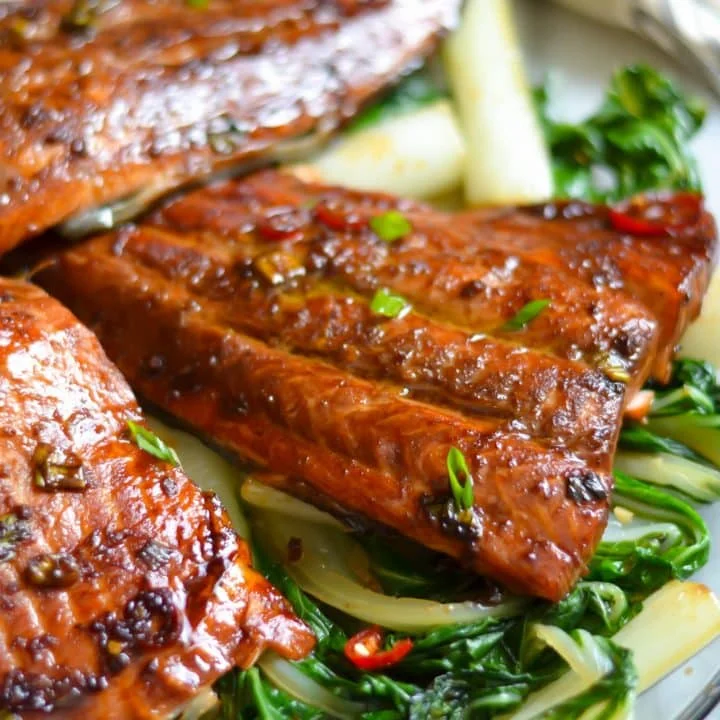
Salmon is marinated in a sweet, savoury mixture of soy sauce, honey, citrus, ginger and garlic, then baked until tender. It’s a straightforward oven-baked main with plenty of punchy marinade for basting.
Ingredients
- 1.81 kg (4 lb)salmon fillets or steaks
- 180 ml (¾ cup)soy sauce
- 15 ml (3 tsp)sesame oil
- 60 ml (¼ cup)honey
- 1 orange, zested (about 10 ml / 2 tsp zest)orange
- 3–4 clovesgarlic, minced
- 5 cm (2-inch) pieceginger, grated
- 15 ml (1 tbsp)brown sugar
- 1, or to tastered chilli pepper
Instructions
- 1
Prepare the fish
Clean the fish and pat it dry. Put it in a large zip-lock bag.
- 2
Mix the marinade
Whisk together all the ingredients. Pour the mixture into the bag, seal it securely and massage the marinade over the fish.
- 3
Marinate the salmon
Refrigerate the fish for at least 1 hour.
- 4
Heat the oven
Preheat the oven to 190°C (375°F).
- 5
Bake the salmon
Arrange the fish in a glass dish or pan. Bake for 20 minutes, basting frequently with the sauce in the pan. Remove it from the oven and cover with foil to keep the top from drying out.
What is honey-soy salmon?
Honey-soy salmon is a baked fish dish flavoured with a sweet and savoury marinade. Soy, ginger and garlic give it an East Asian-inspired profile, while orange zest adds a bright citrus note.
This version relies on a simple marinade and oven cooking rather than a separate glaze. Basting the fish with the pan sauce helps keep the surface coated as it cooks.
Nutrition and macros by portion
The nutrition label shows one serving as written: 900 calories, 91g protein, 17g carbs, 59g fat.
| Portion | Adjustment | kcal | Protein | Carbs | Fat |
|---|---|---|---|---|---|
| Lighter | Smaller salmon portion | 630 kcal | 64g | 12g | 41g |
| This serving | As written | 900 kcal | 91g | 17g | 59g |
| Hungry | Add rice and greens | 1350 kcal | 137g | 26g | 89g |
Salmon supplies most of the protein and fat, while honey and brown sugar contribute most of the carbohydrates; soy sauce is the main source of sodium. Balance the generous salmon portion with vegetables, and add rice or another grain according to appetite.
Why the marinade works
Soy sauce: brings savoury depth and saltiness, so there is no need to add extra salt to the listed ingredients.
Honey and brown sugar: balance the soy with sweetness and help the sauce cling to the fish.
Orange, ginger and garlic: add fresh, aromatic notes; grate the ginger finely so it disperses through the marinade.
Marinating the fish
Even coating: seal the bag well and gently massage the marinade around the fish so it reaches all sides.
Chill time: refrigerate for at least 1 hour as directed. Keep the fish cold while it marinates, and avoid reusing any marinade that has touched raw fish unless it is cooked thoroughly.
Basting during baking
Pan sauce: arrange the fish in a dish that can hold the marinade and juices, then spoon the sauce over the fish frequently during the 20-minute bake.
Gentle handling: use a spoon or brush carefully so the fillets or steaks stay intact. The recipe does not give a separate internal temperature or visual doneness cue, so check the fish before serving.
Choosing salmon portions
Fillets or steaks: either cut works with the marinade. Pieces of different thickness may cook at different rates, so check thinner pieces first.
Dish size: choose a glass dish or pan that holds the fish without crowding it and leaves room for the sauce.
What to serve with it
Rice is a natural partner for the savoury-sweet sauce, while steamed greens or roasted vegetables add colour and contrast.
For a lighter-feeling plate, serve a smaller piece of salmon with plenty of vegetables. If using rice, spoon on only as much pan sauce as you want.
Recipe notes & tips
- Pat the salmon dry before putting it in the bag so the marinade coats it evenly.
- Use a large bag with a secure seal to make it easier to massage the marinade over the fish.
- Turn or reposition the fish carefully if some parts are not covered by the marinade.
- Baste frequently during the 20-minute bake, as directed.
- Cover the salmon with foil after baking to help keep the top from drying out.
Variations
- More citrus: add a little extra orange zest to sharpen the fragrant flavour.
- Extra heat: use more red chilli to make the marinade spicier.
- Milder flavour: reduce the chilli or leave it out.
- Lime swap: use lime zest in place of the orange zest for a different citrus note.
- Fresh finish: scatter sliced spring onions over the salmon just before serving.
Common mistakes to avoid
- Skipping the drying step: wet fish can dilute the marinade; pat it dry before bagging.
- Short marinating time: the recipe calls for at least 1 hour, so allow time for the fish to sit in the fridge.
- Loose bag seal: marinade can leak; check the seal before placing the bag in the fridge.
- Forgetting to baste: the recipe calls for frequent basting, so spoon the pan sauce over the fish as it bakes.
- Leaving the fish uncovered after baking: cover it with foil to help prevent the top from drying out.
How to store
Refrigerate leftovers in a covered container within 2 hours and use within 3 days. Reheat gently in the oven or microwave until hot throughout; avoid prolonged heating, which can dry out the salmon.
Frequently asked questions
Can I marinate the salmon for longer than 1 hour?
The recipe specifies a minimum of 1 hour. Keep the fish refrigerated while it marinates, and avoid leaving it in the marinade for an extended period because the salty sauce can affect its texture.
Can I use salmon fillets instead of steaks?
Yes. The ingredients allow for either fillets or steaks; check thinner pieces earlier as they may cook faster.
What temperature should the oven be?
Preheat it to 190°C (375°F), as specified in the method.
How long does the salmon bake?
Bake it for 20 minutes, basting frequently with the sauce in the pan. The recipe does not specify a separate doneness temperature.
Can I prepare the marinade ahead?
You can whisk the marinade ingredients together in advance and keep them covered in the fridge. Add it to the fish when you are ready to start the marinating time.
Cook it from the original
This recipe comes from alicaspepperpot.com. Their page has the author’s own photos, notes and tips — the best place to cook it from.
Open the recipe on alicaspepperpot.com