
Small Batch Guyanese Oil/Paratha Roti
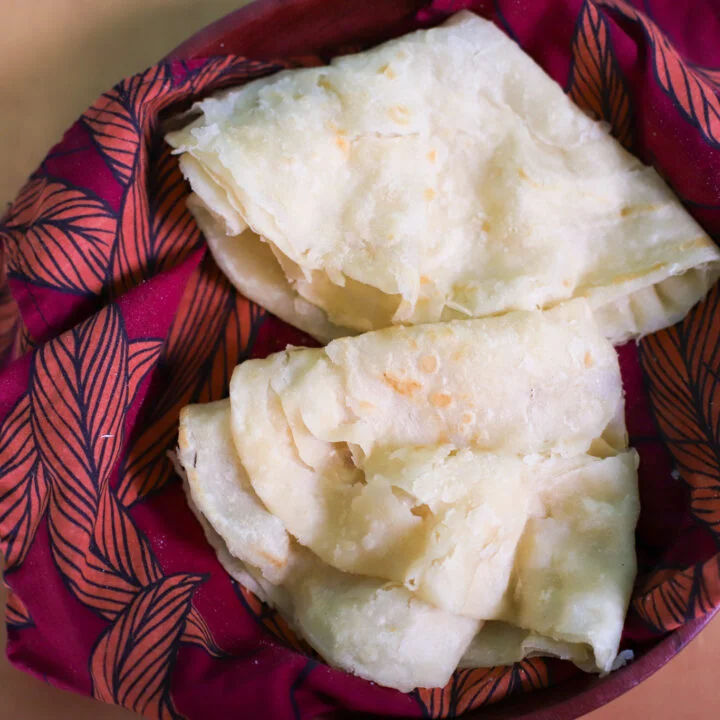
Guyanese oil roti, also called paratha roti, is a soft flatbread with delicate, flaky layers. This small-batch recipe makes two, so you can enjoy it fresh without making a large quantity.
Ingredients
- 1 cup (about 125 g)plain flour
- 1/4 teaspoonbaking powder
- 1/4 teaspoon (optional)unsalted butter
- 1/2 cup (120 ml)very warm water
- 4 teaspoonsneutral oil, such as vegetable, safflower, grapeseed or rapeseed oil
- 1 teaspoonsoftened unsalted butter
- 1/4 cup (about 31 g)plain flour, for dusting
Instructions
- 1
Mix the dough
Combine the flour and baking powder in a bowl. If using the optional butter, rub it into the flour until evenly distributed. Add the very warm water gradually, mixing as you go, until large pieces of dough form.
- 2
Knead and rest
Bring the pieces together into a ball and knead for about 3–4 minutes, until the dough is slightly smooth. Cover with a damp paper towel and leave to rest for at least 25 minutes.
- 3
Divide the dough
Cut the dough into 2 equal pieces.
- 4
Roll the dough
Roll one piece into a thin circle about 1/4 inch (6 mm) thick.
- 5
Coil and rest
Mix the softened butter with the oil in a small bowl. Brush or spread about 1 teaspoon of the mixture, or enough to cover the roti, over its surface. Sprinkle with some of the dusting flour, roll it into a log, then coil the log into a spiral. Leave it to rest for 10 minutes. Around the 5-minute mark, heat a skillet or tawa over medium-low heat. Flatten the spiral and roll it into a round about 1/4 inch (6 mm) thick or 6–7 inches (15–18 cm) wide.
- 6
Cook the roti
Place the roti on the hot cooking surface. When small bubbles form, flip it and lightly brush or dab it with oil. Flip again and cook both sides until lightly golden and cooked through.
- 7
Release the layers
Once cooked, gently clap the roti between your hands, protecting them with a kitchen towel if needed. Alternatively, shake it in a lidded container to loosen the flaky layers.
What is Guyanese oil roti?
Oil roti, also known as paratha roti, is a layered flatbread associated with Guyanese cooking and the wider Caribbean. Its spiral shaping and oil between the layers help create a soft, flaky texture.
Small batch: This version makes two rotis, with a simple dough and a short resting period before cooking. The coiled shape builds layers without requiring special equipment.
Nutrition and macros by portion
The nutrition label shows one serving as written: 350 calories, 8g protein, 60g carbs, 10g fat.
| Portion | Adjustment | kcal | Protein | Carbs | Fat |
|---|---|---|---|---|---|
| Lighter | Use less oil mixture | 245 kcal | 6g | 42g | 7g |
| This serving | As written | 350 kcal | 8g | 60g | 10g |
| Hungry | Make a larger batch | 525 kcal | 12g | 90g | 15g |
The flour provides most of the carbohydrates, while the oil and butter contribute most of the fat. There is little protein in the roti itself, so serve it with dhal, beans or another protein-rich dish and add vegetables to balance the plate.
Getting the dough right
Warm water: Add it gradually so you can bring the flour together without making the dough overly wet. Stop once large pieces form and gather into a ball.
Kneading: Work the dough for about 3–4 minutes, just until it feels slightly smooth. The 25-minute rest gives it time to relax before rolling.
Building the flaky layers
Oil mixture: Combine the softened butter and neutral oil so they are easy to spread across the rolled dough. A light, even coating helps separate the layers as the roti cooks.
Spiral: Roll the coated dough into a log, then coil it like a bun. After the 10-minute rest, flatten and roll the coil into a round again.
Rolling and cooking
Thickness: Aim for about 1/4 inch (6 mm) when rolling, as directed in the method. Dust the surface as needed to prevent sticking, but use the flour sparingly.
Heat: Start warming the skillet or tawa at medium-low while the shaped dough rests. Small bubbles are the cue to turn the roti; cook both sides until lightly golden and cooked through.
Serving the roti
Texture: Clapping or shaking the cooked roti loosens its layers and makes it easier to pull apart. Use a kitchen towel if clapping by hand to protect your hands from the heat.
Pairings: Serve warm alongside a curry, stew or dhal, or enjoy it as part of a meal with vegetables and a source of protein.
Recipe notes & tips
- Add the warm water gradually so the dough is easier to bring together.
- Cover the dough during its 25-minute rest to keep the surface from drying out.
- Spread the oil mixture evenly so it reaches across the rolled dough.
- Use only enough dusting flour to stop the dough sticking as you roll.
- Begin heating the skillet or tawa about 5 minutes into the shaped dough's 10-minute rest.
- Let the cooked roti cool slightly before clapping it, or use a kitchen towel.
Variations
- Use rapeseed oil: Choose it as a neutral alternative to vegetable, safflower or grapeseed oil.
- Skip the optional butter: Leave it out of the dough while keeping the butter and oil mixture for layering.
- Serve with dhal: Pair the warm roti with dhal for a traditional-style meal.
- Add a curry: Use the roti to scoop up a curry or stew.
- Make more: Multiply the ingredients to prepare additional rotis for a group.
Common mistakes to avoid
- Adding water all at once: Add it gradually so the dough comes together without becoming too wet.
- Skipping the first rest: Leave the covered dough for at least 25 minutes to make it easier to roll.
- Coating unevenly: Spread the oil mixture across the whole surface to help form layers.
- Rolling without dusting: Use a little of the reserved flour if the dough sticks to the work surface.
- Cooking on high heat: Keep the skillet or tawa at medium-low so the roti can cook through without over-browning.
- Clapping while too hot: Protect your hands with a kitchen towel or shake the roti in a container instead.
How to store
These rotis are best served warm. Refrigerate leftovers in an airtight container for up to 3 days and reheat in a skillet over low heat until warmed through.
Frequently asked questions
Can I make the dough ahead?
The method calls for resting the dough for at least 25 minutes before dividing it. For the best texture, shape and cook the roti after that rest.
What can I use instead of a tawa?
Use a skillet or frying pan, as in the method. Choose a pan that gives the roti room to cook flat.
How do I know when to flip the roti?
Flip it when small bubbles form on the surface. Continue turning it until both sides are lightly golden and it is cooked through.
Do I have to use the optional butter in the dough?
No. The 1/4 teaspoon of butter in the dough is optional; the separate butter and oil mixture is used to coat the rolled roti.
How do I loosen the layers?
Gently clap the cooked roti between your hands, using a kitchen towel for protection, or shake it in a lidded container.
Cook it from the original
This recipe comes from alicaspepperpot.com. Their page has the author’s own photos, notes and tips — the best place to cook it from.
Open the recipe on alicaspepperpot.com