
Dill Pickles
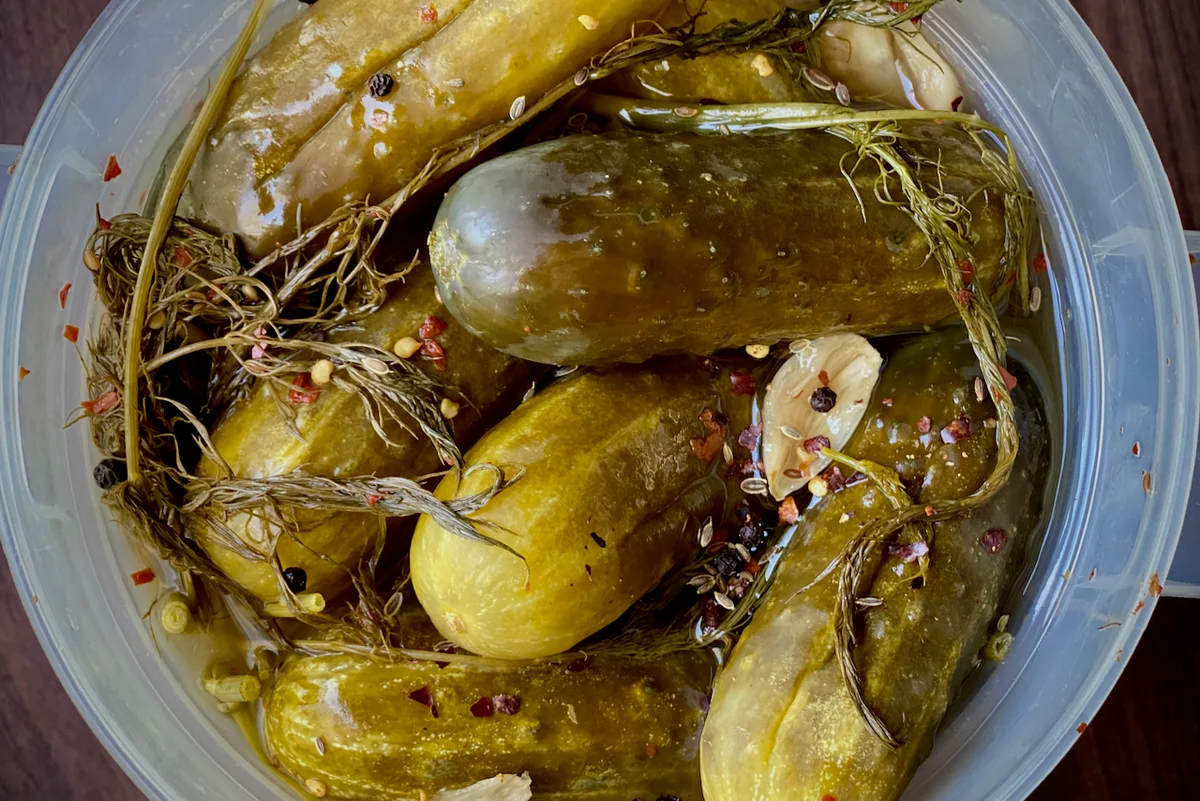
These dill pickles ferment in a salty brine with garlic, dill and a little chilli. Allow several days for their tangy flavour to develop, then chill them before serving.
Ingredients
- 144 g (1/2 cup)pickling salt
- 3.8 litres (1 gallon)filtered water
- 1.36 kg (3 pounds), 10–15 cm (4–6 inches) longpickling cucumbers
- 15 ml (1 tablespoon)black peppercorns
- 15 ml (1 tablespoon)red pepper flakes
- 2 cloves, crushedgarlic
- 5 ml (1 teaspoon)dill seed
- 1 large bunchfresh dill
Instructions
- 1
Dissolve the salt
Stir the salt into the water in a pitcher until it has dissolved.
- 2
Prepare cucumbers
Rinse the cucumbers thoroughly and snip off the stem at the blossom end. Set them aside.
- 3
Pack the crock
Put the peppercorns, pepper flakes, garlic, dill seed and fresh dill into a 3.8-litre (1-gallon) crock. Add the cucumbers, then pour in enough brine to cover them completely. Pour any remaining water into a 3.8-litre (1-gallon) zip-top plastic bag and seal it. Set the bag on the cucumbers so they stay submerged. Leave the crock in a cool, dry place for 3 days.
- 4
Check fermentation
After 3 days, look for bubbles rising to the top of the crock as a sign that fermentation has started. Check daily after that and skim off any scum. If scum collects on the plastic bag, rinse it off and put the bag back on top of the pickles.
- 5
Chill the pickles
The pickles are fermented when they taste sour and bubbles have stopped rising, usually after 6 to 7 days. Cover the crock loosely and refrigerate for 3 days, skimming daily or as needed. Keep them refrigerated for up to 2 months and skim as needed. Discard them if they soften or develop an off odour.
What are dill pickles?
Dill pickles are cucumbers flavoured with dill and preserved in brine. This version relies on fermentation for its sour taste rather than vinegar.
The method pairs whole cucumbers with dill, garlic and pepper, then keeps them under the brine while they ferment. Small, firm cucumbers help the finished pickles stay pleasantly crisp.
Nutrition and macros by portion
The nutrition label shows one serving as written: 30 calories, 2g protein, 6g carbs, 1g fat.
| Portion | Adjustment | kcal | Protein | Carbs | Fat |
|---|---|---|---|---|---|
| Lighter | Serve fewer pickles | 21 kcal | 1g | 4g | 0g |
| This serving | As written | 30 kcal | 2g | 6g | 1g |
| Hungry | Larger pickle portion | 45 kcal | 3g | 9g | 1g |
The cucumbers contribute most of the carbohydrates, while the dill, garlic and spices add little in comparison; there is very little fat or protein in the ingredients. Salt is the main source of sodium, though the amount that ends up in each pickle depends on how much brine it absorbs. Pair a modest serving with a protein-rich main and unsalted vegetables or grains.
Choosing the ingredients
Cucumbers: Pickling cucumbers around 10–15 cm long fit neatly in the crock and are suited to being preserved whole. Rinse them well and remove the blossom end stem as directed.
Salt and water: Pickling salt dissolves into a clear brine, while filtered water forms the base. Mix until no salt remains undissolved before adding it to the crock.
Aromatics: Fresh dill and dill seed give the pickles their characteristic flavour. Garlic, peppercorns and red pepper flakes add savoury and gently spicy notes.
Keeping cucumbers submerged
Layer the aromatics in the crock first, then add the cucumbers and pour over enough brine to cover them. The sealed water-filled bag acts as a weight to hold the cucumbers below the surface.
Check that the bag remains in place when you inspect the crock. Keeping the cucumbers submerged is central to the method.
Watching for fermentation
After the first 3 days, look for bubbles rising in the crock; this is the recipe’s sign that fermentation has begun. The timing can vary, so use the bubbles and the taste rather than relying on the calendar alone.
Once fermentation starts, inspect the crock daily and skim away any scum that forms. Rinse the plastic bag if scum collects on it, then return it to its position.
How to tell when they are ready
The recipe gives two cues for completion: the pickles taste sour and bubbles have stopped rising. This typically takes 6 to 7 days.
After that, refrigerate the loosely covered crock for 3 days before serving. The extra chilling period is part of the method, not the active fermentation stage.
Serving ideas
Serve the pickles alongside sandwiches, burgers or a savoury lunch plate for a sharp, crunchy contrast. They also work well chopped into potato salad or used as a relish-style topping.
Keep them chilled until serving, and use a clean utensil to lift them from the crock.
Recipe notes & tips
- Use cucumbers of a similar size so they fit together and ferment at a more even pace.
- Dissolve the salt fully before pouring the brine into the crock.
- Make sure the cucumbers are completely covered by brine and held down by the weighted bag.
- Keep the crock in a cool, dry place during the initial 3 days.
- Skim the crock daily after fermentation begins, and rinse the bag if scum forms on it.
- Use sourness and stopped bubbling as the readiness cues before moving the crock to the refrigerator.
Variations
- More heat: Increase the red pepper flakes for a spicier batch.
- Milder flavour: Reduce the red pepper flakes for gentler heat.
- Extra garlic: Add more crushed garlic for a stronger savoury note.
- Dill-forward: Use a generous bunch of fresh dill for a more pronounced herbal aroma.
Common mistakes to avoid
- Cucumbers above the brine: They are not fully submerged; reposition the water-filled bag to hold them down.
- Undissolved salt: It can leave the brine unevenly mixed; stir until the salt has dissolved before using it.
- Skipping daily checks: Scum can build up unnoticed; inspect and skim once fermentation is underway.
- Relying only on the day count: Fermentation may not follow an exact schedule; check for sourness and stopped bubbles.
- Ignoring soft pickles or off odours: Discard the batch if either develops, as the recipe directs.
How to store
After fermentation, cover the crock loosely and refrigerate for 3 days, skimming daily or as needed. Keep refrigerated for up to 2 months and continue skimming as needed; discard the pickles if they soften or develop an off odour. Serve chilled rather than reheating.
Frequently asked questions
How long do these pickles take?
The recipe calls for 3 days before the first check, then usually 6 to 7 days for fermentation. Chill them for another 3 days before serving.
How can I tell if fermentation has started?
Look for bubbles rising to the top of the crock after the first 3 days. Once you see them, check the crock daily and skim as needed.
How do I know when fermentation is complete?
The pickles should taste sour, and bubbles should have stopped rising. This usually takes 6 to 7 days.
Why use a bag of water on top?
The sealed, water-filled bag weighs down the cucumbers and helps keep them completely submerged in the brine.
Can I keep the pickles at room temperature after fermenting?
No: the method says to refrigerate the crock once the pickles are sour and bubbling has stopped. Keep them refrigerated for up to 2 months.
What should I do if the pickles turn soft?
Discard them if they become soft or begin to develop an off odour, as the recipe instructs.
Cook it from the original
This recipe comes from altonbrown.com. Their page has the author’s own photos, notes and tips — the best place to cook it from.
Open the recipe on altonbrown.com