
Guyanese-style Bhaji with Shrimp (Sauteed Spinach)
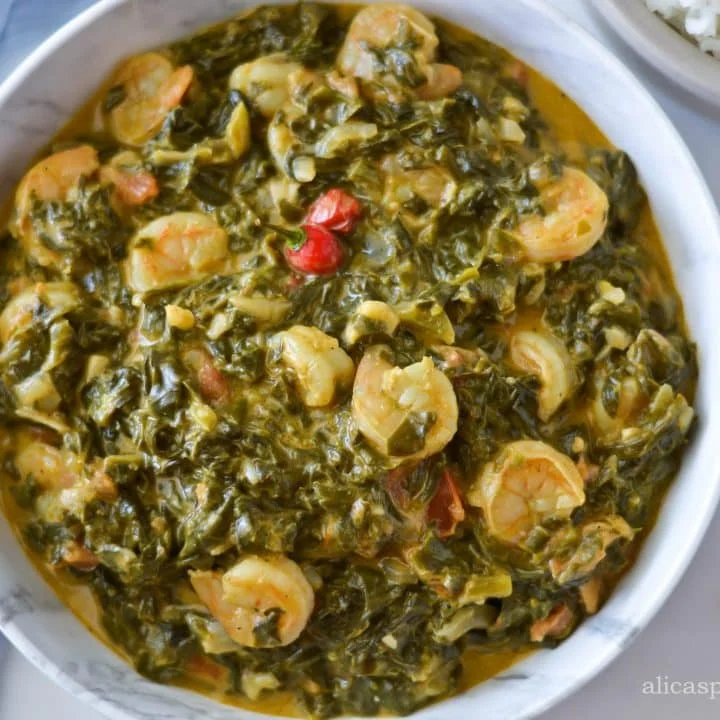
Guyanese-style bhaji is a richly cooked spinach dish with tomato, mango, coconut and shrimp. It makes a hearty one-pot-style meal, with the shrimp cooked separately and stirred in at the end.
Ingredients
- 1.13 kg (2½ lb)fresh poi bhaji or regular spinach
- 1 mediumonion, finely chopped
- 2–3 clovesgarlic, minced
- 1wiri wiri pepper or ½ Scotch bonnet
- 1 largetomato, chopped
- 10 cm (4 in)piece of green mango
- 113 g (4 oz) or ⅓ blockcoconut milk or coconut cream
- ½ tspsalt
- ½ tsppaprika
- ½ tspblack pepper
- 60–75 ml (4–5 tbsp)canola oil
- 227 g (½ lb)small shrimp
- 2 tspgreen seasoning
- 1 tbsp (15 ml)olive oil
- 1 pinchsalt
Instructions
- 1
Prepare the bhaji
Strip the leaves from the stems, rinse them and place them in a bowl. Chop the leaves thoroughly and set aside.
- 2
Prep the ingredients
Chop the onion, garlic, tomato, pepper and mango. Measure out the coconut milk, or prepare the coconut cream. Clean the shrimp, remove the tails, season them and set aside.
- 3
Sauté the aromatics
Heat the canola oil in a shallow pot. Add the onion, garlic, pepper and tomato, and sauté until fragrant.
- 4
Cook the bhaji
Add the bhaji and cook for 10 minutes, until wilted. Stir in the spices, mango and coconut milk or solid coconut cream, then cook for 20–25 minutes. It is ready when fully wilted and dark green.
- 5
Cook the shrimp
In a separate pan, sauté the shrimp for 2–3 minutes, until pink. Add them to the bhaji and mix to combine.
What is Guyanese-style bhaji?
Bhaji is a term used for leafy greens in Caribbean cooking, including dishes influenced by South Asian traditions in Guyana. This version cooks spinach down with aromatics, green mango and coconut, then finishes with shrimp.
The long, gentle cook lets the leaves soften and the flavours come together. Cooking the shrimp separately helps keep it tender.
Nutrition and macros by portion
The nutrition label shows one serving as written: 360 calories, 25g protein, 18g carbs, 24g fat.
| Portion | Adjustment | kcal | Protein | Carbs | Fat |
|---|---|---|---|---|---|
| Lighter | Use less cooking oil | 252 kcal | 18g | 13g | 17g |
| This serving | As written | 360 kcal | 25g | 18g | 24g |
| Hungry | Serve with extra rice | 540 kcal | 38g | 27g | 36g |
The spinach and mango contribute most of the carbohydrates, while the shrimp provides much of the protein. Canola oil, olive oil and coconut carry much of the fat. Serve it with a measured portion of rice or roti, and add extra vegetables if you want a more varied plate.
Choosing the greens
Fresh bhaji: Poi bhaji is the named leafy green in the recipe; regular spinach is an alternative. Remove the stems and chop the leaves well so they cook down evenly.
Freshness: Rinse the leaves thoroughly and drain them before chopping. A large pile will shrink substantially as it wilts.
Building the flavour
Aromatics: Onion, garlic, pepper and tomato form the base. Sauté them in the pot until fragrant before adding the greens.
Mango and coconut: Green mango brings a tart note, while coconut milk or cream adds richness. The recipe gives either coconut option; the finished texture can vary depending on which you use.
Managing the pepper
Pepper choice: Wiri wiri and Scotch bonnet can both bring considerable heat. Keep the pepper whole or remove its seeds for a milder result, and chop it if you want its heat distributed through the dish.
Take care when handling hot peppers, and wash your hands and utensils before touching your face.
Knowing when it is done
Wilted leaves: Cook the bhaji for the stated 10 minutes at first, then continue for 20–25 minutes after adding the spices, mango and coconut. The recipe’s doneness cue is fully wilted, dark-green leaves.
Tender shrimp: Cook the shrimp separately for 2–3 minutes, stopping when they turn pink. Stir them into the bhaji at the end rather than simmering them through the full cooking time.
Serving the bhaji
A plain starch such as rice or roti is a natural accompaniment to the savoury, coconut-rich greens. Serve it alongside the bhaji so diners can choose how much to add.
The recipe does not specify a side, so the dish can also be served on its own as a generous bowl with shrimp in every portion.
Recipe notes & tips
- Chop the leaves before cooking so they are easier to stir and serve.
- Drain the rinsed spinach well to avoid adding excess water to the pot.
- Measure the coconut milk before starting so it is ready when the leaves have wilted.
- Use a separate pan for the shrimp, as directed, to avoid overcooking them.
- Taste the finished bhaji before serving and adjust seasoning only if needed.
Variations
- Use spinach: Swap poi bhaji for regular spinach, as the recipe allows.
- Choose coconut cream: Use ⅓ block of coconut cream instead of 113 g coconut milk.
- Reduce the heat: Use half a Scotch bonnet or remove its seeds for a gentler dish.
- Make it without shrimp: Leave out the shrimp for a vegetable-only bhaji.
- Serve with roti: Pair the bhaji with roti for a filling meal.
Common mistakes to avoid
- Leaving tough stems in: Strip the leaves from the stems before chopping.
- Adding unwashed leaves: Rinse the bhaji thoroughly before preparing it.
- Cooking the shrimp too long: Sauté only until pink, about 2–3 minutes.
- Adding the shrimp too early: Cook it separately and mix it in at the end.
- Stopping while leaves are still bulky: Continue cooking until they are fully wilted and dark green.
How to store
Refrigerate leftovers in a covered container and use within 2 days. Reheat gently in a pan until piping hot, stirring so the bhaji heats evenly.
Frequently asked questions
Can I use regular spinach instead of poi bhaji?
Yes. Regular spinach is listed as an alternative; remove any thick stems, rinse and chop it before cooking.
Can I use coconut cream instead of coconut milk?
Yes. The recipe calls for either 113 g coconut milk or ⅓ block of coconut cream.
How do I know when the bhaji is cooked?
The leaves should be fully wilted and dark green after the cooking time.
How long should I cook the shrimp?
Sauté the shrimp in a separate pan for 2–3 minutes, until pink, then mix them into the bhaji.
How can I make the dish less spicy?
Use half a Scotch bonnet or remove its seeds. You can also keep the pepper whole rather than chopping it.
What can I serve with bhaji?
Rice or roti makes a straightforward accompaniment, though the recipe does not specify a side.
Cook it from the original
This recipe comes from alicaspepperpot.com. Their page has the author’s own photos, notes and tips — the best place to cook it from.
Open the recipe on alicaspepperpot.com