
Breakfast Pizza Recipe with Sausage Gravy
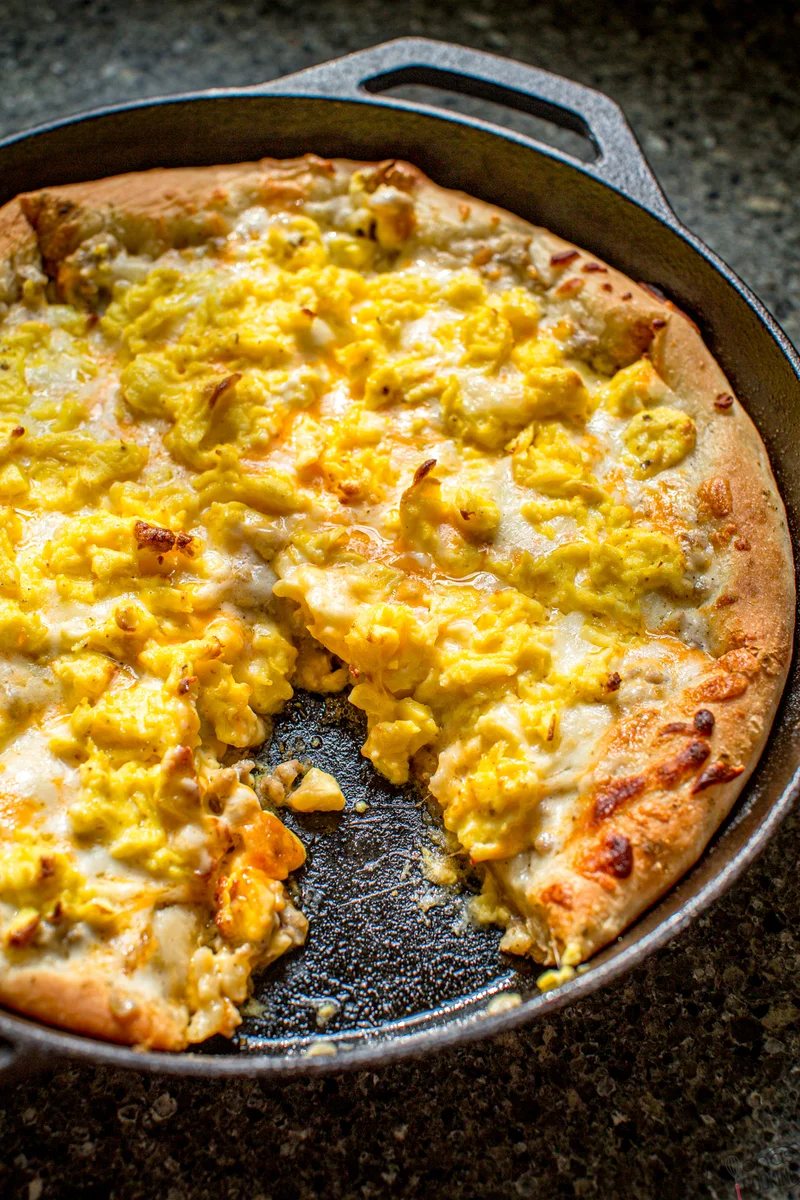
This American-style breakfast pizza layers sausage gravy, Monterey Jack and Colby cheese, and scrambled eggs over homemade dough. It makes two pizzas and is a hearty option for a breakfast or brunch shared among a crowd.
Ingredients
- 300 ml (1 1/4 cups)warm water
- 1 heaping tbspyeast
- 1 heaping tbspsugar
- 2 tspsalt
- 4 tbspoil
- 450 g (3 3/4 cups)flour
- 2 cups (about 475 ml)sausage gravy
- 3 cups (about 340 g)Monterey Jack and Colby cheese (or half mozzarella and half Cheddar)
- 9scrambled eggs
- A pinch, optionalground sage
Instructions
- 1
Mix the dough
Whisk the yeast, sugar, warm water, salt and oil together in a pint measuring jug. Leave the mixture for 5 minutes, until it foams. Pour it into the flour and bring the mixture together into a ball; the dough is ready when it no longer sticks to your hands.
- 2
Top the pizzas
Divide the dough between two well-greased cast-iron pans. Spread about 1 cup of sausage gravy over each crust, then add 1 1/2 cups of cheese and the scrambled eggs to each pizza. Sprinkle each with a pinch of ground sage, if using.
- 3
Bake the pizzas
Bake in an oven preheated to 260°C (500°F) for 7–10 minutes, or until the crust is browned and the pizzas are done.
What is breakfast pizza?
Breakfast pizza takes familiar morning foods and serves them on a pizza base. This American-style version uses sausage gravy, cheese and scrambled eggs, combining savoury breakfast toppings with homemade dough.
The short rest for the yeast and the brief bake make this a practical option when you want a warm, shareable breakfast. Splitting the dough between two pans also gives you two pizzas to serve.
Nutrition and macros by portion
The nutrition label shows one serving as written: 260 calories, 11g protein, 20g carbs, 13g fat.
| Portion | Adjustment | kcal | Protein | Carbs | Fat |
|---|---|---|---|---|---|
| Lighter | Smaller slice, fruit side | 182 kcal | 8g | 14g | 9g |
| This serving | As written | 260 kcal | 11g | 20g | 13g |
| Hungry | Larger portion | 390 kcal | 17g | 30g | 20g |
The flour supplies most of the carbohydrates, while oil and cheese contribute much of the fat; the eggs, cheese and sausage gravy add protein. Pair a slice with fruit or vegetables for a fresh contrast, or serve it with a lighter side instead of an additional rich breakfast item.
Building the dough
Foamy yeast: leave the water, yeast and sugar mixture for the full 5 minutes so you can see it foam before adding it to the flour.
Ready-to-shape dough: bring the mixture together until it forms a ball and no longer clings to your hands. The recipe does not call for a separate rising stage.
Choosing the toppings
Sausage gravy: spread about 1 cup over each crust to give both pizzas an even layer.
Cheese: Monterey Jack and Colby are the suggested blend; mozzarella and Cheddar can be used instead. Divide the 3 cups evenly between the two pizzas.
Eggs and sage: use the 9 scrambled eggs across both pizzas, then finish with a pinch of optional ground sage on each.
Shaping and topping
Greased pans: divide the dough between two well-greased cast-iron pans and spread it into each pan. Evenly distributed dough helps the toppings sit across the crust.
Balanced layers: spread the gravy first, then add the cheese and scrambled eggs. Keeping the toppings spread out helps each portion include a little of everything.
Checking when they are done
Oven heat: preheat to 260°C (500°F) before baking, as the recipe relies on a very hot oven for its short cook.
Crust cue: start checking at 7 minutes and bake for up to 10 minutes, until the crust is browned and the pizza is done.
Serving the pizzas
Cut each pizza into portions once it is out of the oven. For a more rounded breakfast plate, serve with fresh fruit or a simple green salad alongside.
Recipe notes & tips
- Measure the flour before mixing so the dough is easier to bring together.
- Grease both cast-iron pans well before dividing the dough.
- Use about 1 cup of gravy and 1 1/2 cups of cheese on each pizza.
- Preheat the oven fully to 260°C (500°F) before baking.
- Check the crust at 7 minutes, as the pizzas may be ready before the 10-minute mark.
Variations
- Change the cheese: use half mozzarella and half Cheddar in place of Monterey Jack and Colby.
- Skip the sage: leave out the optional ground sage for a simpler flavour.
- Add vegetables: scatter cooked peppers or mushrooms over the pizzas before baking.
- Use extra herbs: add a little dried herb to the toppings for a different savoury note.
- Serve with greens: add a crisp salad on the side for a fresh contrast.
Common mistakes to avoid
- Skipping the foam check: wait 5 minutes and look for foam before mixing the yeast liquid into the flour.
- Using ungreased pans: grease both cast-iron pans well so the dough is easier to serve.
- Uneven topping: divide the gravy and cheese between the pizzas rather than piling them in the centre.
- Starting with a cool oven: preheat to 260°C (500°F) so the short baking time works as intended.
- Baking by time alone: use the browned crust and finished pizza as cues, checking from 7 minutes.
How to store
Refrigerate leftover slices in a covered container and eat within 3 days. Reheat in an oven until hot throughout; the crust is likely to stay firmer than when reheated in a microwave.
Frequently asked questions
Can I use mozzarella and Cheddar?
Yes. The recipe suggests replacing the Monterey Jack and Colby with half mozzarella and half Cheddar.
Do I need to let the dough rise?
The method only specifies leaving the yeast mixture for 5 minutes to foam. It does not include a separate dough-rising stage.
Can I leave out the ground sage?
Yes. Sage is optional, so you can omit it without changing the rest of the method.
How many pizzas does the recipe make?
It divides the dough between two well-greased cast-iron pans.
How do I know the pizzas are ready?
Bake for 7–10 minutes at 260°C (500°F), checking for a browned crust and a finished pizza.
Cook it from the original
This recipe comes from alyonascooking.com. Their page has the author’s own photos, notes and tips — the best place to cook it from.
Open the recipe on alyonascooking.com