
Chicken Lo Mein Recipe
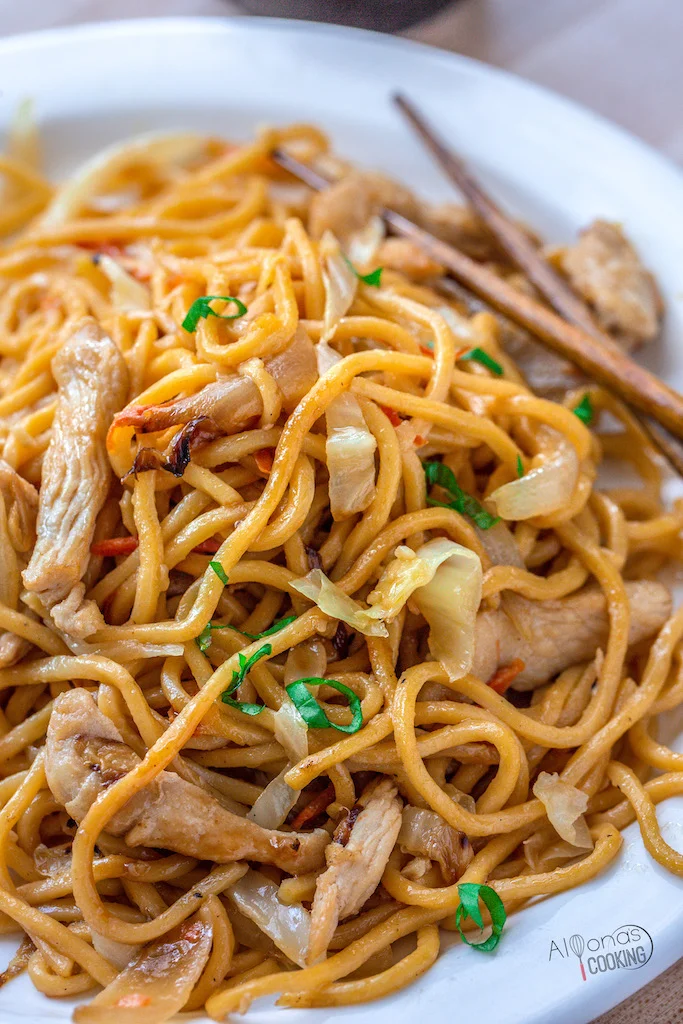
Chicken lo mein combines noodles, chicken and crisp-tender vegetables in a quick sweet-and-savoury sauce. It is a handy takeout-style meal to make at home, with everything tossed together in one hot pan.
Ingredients
- 454 g (1 lb)Chinese egg noodles, or spaghetti cooked according to the packet instructions and drained
- 1carrot, peeled and cut into thin matchsticks
- 75 g (½ cup)chopped cabbage; the bottom of salad greens or bean sprouts can be used instead
- 1 smallonion, sliced
- 1 largechicken breast, thinly sliced
- 2 tbspoyster sauce
- 3 tbspsoy sauce
- 2 tbspsugar
- 1 tspapple cider vinegar
- 2 clovesgarlic, crushed
- ⅛ tspdried ginger
- A dashwhite pepper
- 4 tbspoil, for cooking
Instructions
- 1
Mix the sauce
Combine the oyster sauce, soy sauce, sugar, vinegar, garlic, dried ginger and white pepper; set the sauce aside.
- 2
Prepare vegetables
Cut the carrot into thin matchsticks, then slice the onion and cabbage. Set the vegetables aside.
- 3
Slice the chicken
Cut the chicken breast into thin strips and set aside.
- 4
Cook the vegetables
Heat a wok or pan over high heat and add 2 tablespoons of oil. Sear the vegetables for 2 minutes, then lift them out with a slotted spoon and set aside.
- 5
Cook the chicken
Add the chicken to the same pan and cook until done. Remove it with a slotted spoon and set aside.
- 6
Toss everything
Add the remaining 2 tablespoons of oil to the pan, followed by the cooked noodles and sauce. Return the vegetables and chicken, then toss over high heat for about 2 minutes, until everything is well combined and nicely browned.
What is chicken lo mein?
Lo mein is a Chinese noodle dish whose name refers to tossed or mixed noodles. This chicken version has the takeout-style combination of wheat noodles, vegetables and savoury-sweet sauce.
The quick cooking keeps the vegetables lively while the sauce coats the noodles. Using a hot pan and tossing everything together at the end helps bring the separate components into one dish.
Nutrition and macros by portion
The nutrition label shows one serving as written: 295 calories, 8g protein, 63g carbs, 1g fat.
| Portion | Adjustment | kcal | Protein | Carbs | Fat |
|---|---|---|---|---|---|
| Lighter | Use less cooking oil | 207 kcal | 6g | 44g | 1g |
| This serving | As written | 295 kcal | 8g | 63g | 1g |
| Hungry | Add more noodles | 443 kcal | 12g | 95g | 2g |
The noodles and sugar supply most of the carbohydrate, while the chicken provides protein; the cooking oil and sauces contribute much of the fat and sodium. For a more balanced plate, serve a portion with extra non-starchy vegetables alongside.
Getting the sauce balanced
Sauce ingredients: Oyster sauce and soy sauce provide savoury depth, while sugar softens their saltiness. Vinegar adds a little sharpness, with garlic, ginger and white pepper rounding out the flavour.
Mix first: Combine the sauce before you start cooking so it is ready to pour in once the noodles go into the pan.
Prep before heating the pan
Cut evenly: Thin strips of chicken cook quickly, and matchstick-cut carrot softens in the brief sear. Slice the onion and cabbage before turning on the heat.
Noodles: Cook spaghetti according to its packet instructions if using it, then drain it well. Chinese egg noodles can be used as directed on their packaging.
Use high heat in batches
Vegetables first: Sear them for 2 minutes, then remove them from the pan. Keeping them aside prevents them from cooking for the full time needed for the chicken and noodles.
Chicken next: Cook the strips until done, then remove them before adding the noodles. A hot pan helps the ingredients sear rather than sit and steam.
How to judge the finish
Noodle texture: The noodles should be hot and coated in sauce, with a little colour from the final toss. Stir and lift them through the pan rather than leaving them undisturbed.
Vegetables: The 2-minute sear and short final toss should leave them tender but not collapsed. The chicken should be cooked through before it is returned to the pan.
Serving ideas
Serve the lo mein hot as a complete noodle meal. If you want a larger spread, pair it with a simple vegetable side or soup.
For a fresh contrast, add a side of lightly dressed greens. Keep extra salty sauces modest, since the noodles already have soy and oyster sauce.
Recipe notes & tips
- Have the sauce, vegetables and chicken ready before heating the wok, since the cooking moves quickly.
- Use a slotted spoon to lift out the vegetables and chicken while leaving the pan ready for the next step.
- Drain the noodles thoroughly so they do not water down the sauce.
- Keep the pan over high heat during the final toss and keep the noodles moving.
- If using spaghetti, cook it according to the packet directions before starting the stir-fry.
Variations
- Swap the protein: Use thin strips of beef or pork, or peeled shrimp in place of chicken.
- Make it vegetarian: Leave out the chicken and use a suitable vegetarian oyster-style sauce.
- Change the greens: Replace the cabbage with bean sprouts or the bottom of salad greens.
- Adjust the noodles: Use spaghetti if Chinese egg noodles are not available.
- Add extra vegetables: Include more sliced carrot, cabbage or onion while keeping the same quick searing approach.
Common mistakes to avoid
- Crowding the pan: The ingredients can steam instead of searing; cook in batches if your pan is small.
- Uneven chicken strips: Thick pieces take longer to cook; cut the breast into similarly thin strips.
- Wet noodles: Excess water dilutes the sauce; drain the noodles well before adding them.
- Overcooking the vegetables: They continue cooking during the final toss; sear them for 2 minutes, then remove them.
- Leaving the final toss too late: The noodles can stick or brown unevenly; keep everything moving for the final 2 minutes.
How to store
Refrigerate leftovers in a covered container and use within 3 days. Reheat in a pan over medium heat, stirring until hot throughout; add a small splash of water if the noodles seem dry.
Frequently asked questions
Can I use spaghetti instead of Chinese egg noodles?
Yes. Cook the spaghetti according to the packet instructions, drain it well and use it in the final toss.
Can I prepare the ingredients ahead?
Yes. Slice the vegetables and chicken and mix the sauce in advance, then keep them covered and chilled until cooking.
How do I know when the chicken is done?
The thin strips should be cooked through with no raw-looking centre. Remove them from the pan once done, then return them for the brief final toss.
Can I make this without chicken?
Yes. The recipe can be made with vegetables alone or with another protein such as beef, pork or shrimp. For a vegetarian version, use a suitable vegetarian alternative to oyster sauce.
Why are my noodles sticking together?
They may be holding too much cooking water or sitting still in the pan. Drain them well and toss them promptly with the oil and sauce over high heat.
Cook it from the original
This recipe comes from alyonascooking.com. Their page has the author’s own photos, notes and tips — the best place to cook it from.
Open the recipe on alyonascooking.com