
Cinnamon Challah Bread: An easy step-by-step guide
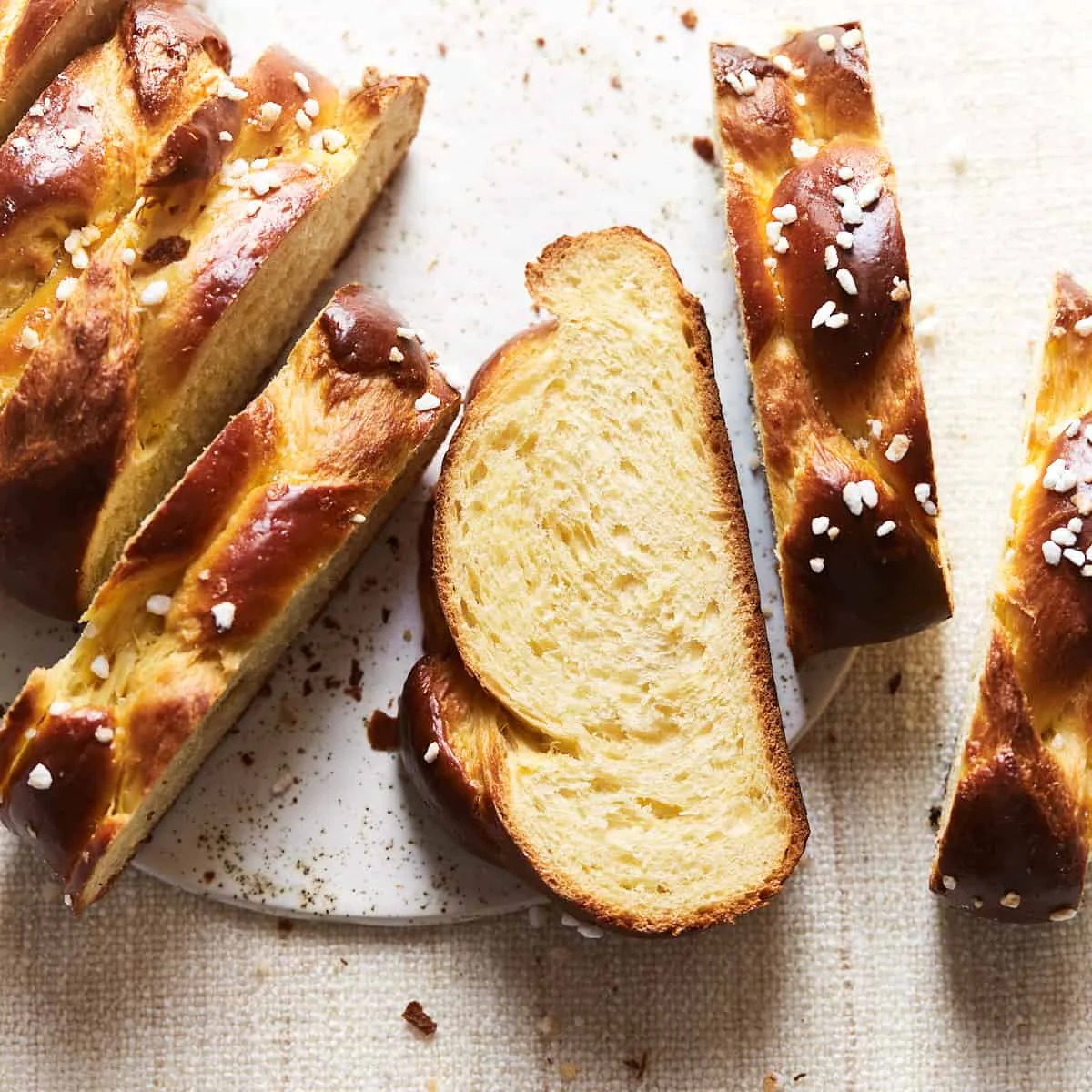
This soft, enriched challah is braided from four strands and flavoured with vanilla, orange juice and honey. It takes time to rise, but the overnight rest helps make the dough easier to handle and gives you a golden loaf for a holiday table or a special breakfast.
Ingredients
- 360 g (3 cups)bread flour, spooned and levelled
- 1¼ tspsalt
- 1¾ tspinstant dried yeast
- 1vanilla bean
- 3 largeeggs
- 75 ml (5 tbsp)olive oil
- 60 ml (¼ cup)orange juice
- 45 ml (3 tbsp)honey
- 1 large egg yolk + 15 ml (1 tbsp) wateregg wash
- Optional, to tastecoarse nib sugar
Instructions
- 1
Mix the dough
Put the flour, salt, yeast, vanilla, eggs, olive oil, orange juice and honey in a large mixing bowl fitted with a dough hook. Mix on low for 3–4 minutes, scraping down the sides halfway through, until the dough comes together. Leave it to rest for 20–30 minutes.
- 2
Knead until smooth
Knead on high for 6–8 minutes, until the dough is smooth, pulls away from the sides of the bowl and passes the windowpane test. It should feel soft, heavy and slightly tacky.
- 3
Chill overnight
Lightly oil a straight-sided container and the top of the dough, then cover it. Leave at room temperature for 1–2 hours, until doubled, then refrigerate overnight for about 8–12 hours; it will continue to rise to around three times its original size.
- 4
Warm the dough
Take the dough out of the refrigerator and leave it at room temperature for about 30 minutes.
- 5
Prepare the tray
Line a baking sheet with baking parchment and lightly spray it with oil. Set it aside.
- 6
Divide the dough
Use a dough scraper to lift the dough from its container and place it on a very lightly oiled work surface. Shape it roughly into a square and divide it into four equal pieces.
- 7
Shape four strands
Oil your fingers lightly and flatten one piece on the work surface into a rectangle about 20 × 33 cm and 0.5 cm thick. Starting at a long edge, roll it tightly, pinch the seam closed, then roll it with your hands into a 38 cm rope. Repeat with the other three pieces.
- 8
Braid the loaf
Set the four ropes side by side and pinch their tops together. Number them from 1 on the left to 4 on the right; take strand 4 over strand 3, under strand 2 and over strand 1. Repeat this over-under-over pattern from right to left, always starting with the rightmost strand, until the loaf is braided.
- 9
Finish the ends
Pinch the strands together at the end and tuck the tip underneath. Open the top where the strands were first pinched together, then braid that end in the same way to give both ends a neat finish.
- 10
Proof the loaf
Transfer the loaf to the prepared baking sheet. Leave it in a warm room, ideally at 25°C, for 45–60 minutes, until doubled.
- 11
Heat the oven
Preheat the oven to 204°C for 15–20 minutes.
- 12
Bake until golden
Brush the loaf with egg wash and, if you like, sprinkle it with coarse nib sugar. Bake for 30–35 minutes, until deep golden brown and hollow-sounding when tapped on the bottom. If it is browning too quickly, loosely cover it with foil after 20 minutes.
- 13
Cool and store
Take the loaf out of the oven and cover it with a clean, dry tea towel for 15 minutes. Remove the towel, transfer the loaf to a cooling rack and let it cool completely. Keep it in an airtight container at room temperature for up to 3 days.
What is challah?
Challah is a braided Jewish bread traditionally served for Shabbat and major Jewish holidays. It is associated with Eastern European Jewish cooking and is known for its soft crumb and glossy, golden crust.
This version uses four strands and adds honey, orange juice and vanilla to the dough. An overnight chill gives the long rise time a practical pause and makes the dough easier to shape.
Nutrition and macros by portion
The nutrition label shows one serving as written: 249 calories, 7g protein, 34g carbs, 9g fat.
| Portion | Adjustment | kcal | Protein | Carbs | Fat |
|---|---|---|---|---|---|
| Lighter | Smaller slice, skip sugar | 174 kcal | 5g | 24g | 6g |
| This serving | As written | 249 kcal | 7g | 34g | 9g |
| Hungry | Larger slice | 374 kcal | 11g | 51g | 14g |
The flour and honey provide most of the carbohydrates, while the eggs contribute protein and the eggs and olive oil account for much of the fat. Pair a slice with fruit and a protein-rich accompaniment, or serve it alongside a savoury dish to make a more balanced plate.
The enriched dough
Eggs and olive oil give the dough its tender, rich texture, while honey adds sweetness. Orange juice and vanilla bring flavour without changing the four-strand method.
Bread flour gives the dough enough structure to hold its shape as you braid it. Measure the flour by spooning it into the cup and levelling it, rather than packing it down.
Kneading and the windowpane test
The initial low-speed mixing brings the ingredients together; the short rest then gives the flour time to hydrate before the more vigorous knead. The dough will be soft and a little tacky, so avoid adding extra flour unless it is unmanageable.
Windowpane: stretch a small piece gently between your fingers. If it forms a thin membrane before tearing, the dough is ready for its first rise.
Why the dough rests twice
First rise: leave the covered dough at room temperature for 1–2 hours, until it has doubled. The time depends on how warm the room is, so use the dough’s growth as your cue.
Cold rest: refrigerate the dough overnight for about 8–12 hours. Let it sit out for 30 minutes before shaping, as directed, to make it more workable.
Shaping and braiding
Rolling each flattened piece tightly into a rope helps keep the strands smooth and even. Pinch the seam closed before rolling each rope to its 38 cm length.
Braid from the right, moving the outermost strand over, under and over the others. Keep the tension steady rather than pulling the strands tight, so the loaf has room to expand during its final rise.
Proofing and baking cues
The shaped loaf needs 45–60 minutes in a warm place, ideally at 25°C, until doubled. A properly risen loaf should look visibly fuller before it goes into the oven.
Bake at 204°C for 30–35 minutes, looking for a deep golden colour and listening for a hollow sound when the bottom is tapped. Loosely cover with foil after 20 minutes if the crust is getting too dark.
Serving the loaf
Let the bread cool completely on a rack before slicing, so the crumb can settle. Serve it with a savoury meal or enjoy it at breakfast with fruit, yoghurt or a spread of your choice.
The optional coarse nib sugar gives the crust a sweet finish. Leave it off if you would rather keep the loaf more versatile for savoury accompaniments.
Recipe notes & tips
- Use room-temperature eggs to help the dough come together evenly.
- Lightly oil your hands and work surface when shaping rather than adding flour to the soft dough.
- Keep the four ropes similar in length and thickness for an even braid.
- Use the dough’s size, not just the clock, to judge whether it has doubled.
- Check the loaf from 20 minutes into baking and cover loosely with foil if it is browning too quickly.
- Cool the loaf completely before slicing for neater pieces.
Variations
- Skip the topping: leave off the coarse nib sugar for a less sweet crust.
- Add seeds: scatter sesame or poppy seeds over the egg-washed loaf.
- Use a different oil: choose another mild-flavoured oil if you do not have olive oil.
- Make a savoury pairing: serve slices with soup or a savoury spread.
- Try another shape: divide the dough differently and braid it in a shape that fits your baking sheet.
Common mistakes to avoid
- Adding too much flour: the dough is meant to be soft and slightly tacky, so use oil on your hands instead.
- Skipping the rest: allow the 20–30-minute pause before the final knead.
- Uneven ropes: flatten each piece to the stated rectangle size and roll each rope to about 38 cm.
- Over-tight braiding: keep the strands secure but leave room for the loaf to rise.
- Baking by colour alone: check for a hollow sound when tapping the bottom as well as a deep golden crust.
- Slicing while hot: let the loaf cool completely on a rack first.
How to store
Once completely cool, keep the loaf in an airtight container at room temperature for up to 3 days. Rewarm slices briefly in the oven or toast them; avoid sealing the bread while it is still warm.
Frequently asked questions
Can I make the dough without a stand mixer?
The method uses an electric mixer with a dough hook. If kneading by hand, work until the dough is smooth and passes the windowpane test; the time may differ.
Can I skip the overnight refrigerator rest?
The recipe includes an overnight rest of about 8–12 hours, so skipping it changes the timing and handling. Follow the stated rest for the intended process.
How do I know when the dough has risen enough?
For the first rise, look for the dough to double; after shaping, let the loaf double again. The specified times are guides, and a cooler room may slow the rise.
What is the windowpane test?
Stretch a small piece of dough gently between your fingers. It should become thin enough to let light through before it tears.
Why is my loaf browning too quickly?
The recipe suggests loosely covering the loaf with aluminium foil after 20 minutes if it is getting too dark. Continue baking until it is deep golden and sounds hollow when tapped underneath.
Can I freeze challah?
The recipe gives room-temperature storage instructions, not freezing guidance. For best texture, follow those instructions and use the loaf within 3 days.
Cook it from the original
This recipe comes from alsothecrumbsplease.com. Their page has the author’s own photos, notes and tips — the best place to cook it from.
Open the recipe on alsothecrumbsplease.com