
Steak Tartare
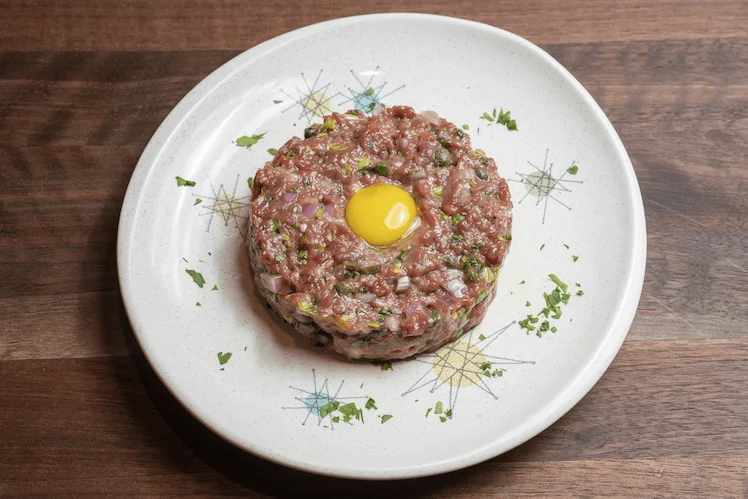
Steak tartare is finely chopped raw beef dressed with a tangy, savoury mixture of egg yolk, olive oil, shallots, capers and herbs. It makes an elegant starter, but careful sourcing and cold, clean handling are essential because the beef and egg are served raw.
Ingredients
- 454 gtop sirloin, cleaned and trimmed
- 10 mlsherry vinegar
- 2.5 mldry mustard
- 2 largeegg yolks
- 60 mllight olive oil
- 90 mlshallots, finely diced
- 60 mlcelery leaves, finely chopped and divided
- 30 mlfresh parsley, finely chopped and divided
- 30 mlsmall brined capers, drained and unrinsed
- 5 mlkosher salt
Instructions
- 1
Chill the beef
Cut the steak into 2.5 cm cubes and place it in the freezer for 10 minutes.
- 2
Make the dressing
In a small bowl, whisk together the sherry vinegar, dry mustard and egg yolks. Keep whisking as you slowly pour in the oil until the mixture emulsifies. Whisk in the shallots, capers, salt and about two-thirds of the celery leaves and parsley.
- 3
Chop the steak
Chop the meat by hand to your preferred texture. Alternatively, divide it into four batches and pulse each batch separately 3 to 4 times in a food processor fitted with the standard S-blade.
- 4
Mix and plate
With clean hands, quickly fold the meat into the dressing. Shape portions with a 9.5 cm pastry ring, then garnish with the reserved herbs and lemon zest.
What is steak tartare?
Steak tartare is a dish of raw beef chopped or minced and served with a seasoned dressing. It belongs to a broader European tradition of raw-meat dishes, though its exact origins are debated.
This version combines the beef with egg yolk and olive oil for richness, while vinegar, capers and shallots bring sharp, savoury contrast. Fresh herbs finish it with a bright note.
Nutrition and macros by portion
The nutrition label shows one serving as written: 310 calories, 25g protein, 4g carbs, 22g fat.
| Portion | Adjustment | kcal | Protein | Carbs | Fat |
|---|---|---|---|---|---|
| Lighter | Use less olive oil | 217 kcal | 18g | 3g | 15g |
| This serving | As written | 310 kcal | 25g | 4g | 22g |
| Hungry | Serve with extra toast | 465 kcal | 38g | 6g | 33g |
The beef supplies most of the protein, while olive oil and egg yolks contribute much of the fat. The shallots and capers provide a small amount of carbohydrate, and the salt and capers account for much of the sodium. Serve with a generous salad or vegetables and a modest amount of toast for a more balanced plate.
Choose and handle the beef carefully
The cut: top sirloin is trimmed before chopping, so remove any remaining sinew or tough bits. Buy the beef from a trusted butcher, tell them it will be eaten raw, and follow their advice on the freshest suitable cut.
The temperature: keep the meat cold throughout preparation and serve it promptly. Raw beef carries a food-safety risk that careful sourcing and handling can reduce but cannot eliminate.
Build an emulsified dressing
The oil: drizzle it into the vinegar and yolks gradually while whisking continuously. Adding it too quickly can leave the dressing loose or separated.
The seasoning: shallots and capers contribute punch and salt, while the herbs add freshness. Since capers and salt both season the mixture, taste only if you can do so without tasting the raw beef.
Choose your chopping texture
By hand: a sharp knife gives you control over the size of the pieces and helps avoid a pasty texture. Work quickly, and keep the beef cold.
With a processor: use short pulses and process in four batches, as directed. Stop while the meat still has distinct pieces rather than letting it turn into a mince-like paste.
Mix and shape just before serving
The fold: combine the beef and dressing briefly, just until coated. Mixing quickly limits the time the raw ingredients spend out of the fridge.
The finish: the pastry ring gives each serving a neat shape, but it is optional. Use clean equipment, add the reserved herbs and lemon zest, and serve straight away.
What to serve alongside it
For contrast: serve with crisp toast or thin slices of toasted bread, plus a simple green salad. These provide crunch and freshness alongside the rich, savoury tartare.
For a fuller plate: add boiled or roasted potatoes and keep any accompaniments chilled or freshly prepared. Avoid leaving the tartare sitting at room temperature while you arrange the rest.
Recipe notes & tips
- Ask a trusted butcher for beef suitable for serving raw and prepare it on the day of purchase.
- Chill the steak for the full 10 minutes so it is firmer and easier to chop.
- Use a sharp knife and a clean, non-porous chopping board.
- Add the olive oil in a thin stream while whisking to help the dressing emulsify.
- Keep the reserved herbs separate until plating for a fresher finish.
- Serve immediately after mixing and discard any tartare left at room temperature.
Variations
- Add a little heat: Stir a small amount of finely chopped chilli into the dressing.
- Use chives: Swap some of the parsley for finely chopped chives.
- Add a crunchy accent: Top with finely diced cornichons for extra tang.
- Change the herbs: Use a little fresh tarragon in place of some of the parsley.
- Serve on toast: Spoon small portions onto crisp toast just before serving.
Common mistakes to avoid
- Using beef of uncertain freshness: buy from a trusted butcher and explain that you intend to serve it raw.
- Letting the meat warm up: keep it chilled until you are ready to chop and mix.
- Overprocessing the beef: pulse briefly in four batches and stop while the texture is still distinct.
- Pouring in the oil too quickly: add it gradually while whisking to help the dressing emulsify.
- Mixing too far ahead: combine the beef and dressing just before serving.
- Reusing unwashed equipment: wash hands, boards and utensils thoroughly after handling raw beef.
How to store
This dish is best served immediately and is not suitable for keeping as leftovers. Do not store tartare that has been sitting out; discard any remaining portion rather than saving it for later.
Frequently asked questions
Can I make steak tartare ahead of time?
Prepare the components shortly before serving, keeping the beef and dressing chilled and separate. Fold them together just before plating.
Can I chop the beef in a food processor?
Yes. Follow the recipe's four-batch method and pulse each batch 3 to 4 times, checking the texture so it does not become paste-like.
Is steak tartare safe to eat?
Raw beef and raw egg can carry harmful organisms, and careful handling cannot remove all risk. Use fresh beef from a trusted source, keep everything cold and clean, and avoid serving it to people at higher risk from foodborne illness.
What can I use instead of a pastry ring?
The ring is only for shaping. Divide the tartare onto plates with a spoon, handling it quickly and using clean utensils.
What should I serve with steak tartare?
Crisp toast or toasted bread and a simple green salad make good accompaniments. Potatoes can turn it into a more substantial meal.
Cook it from the original
This recipe comes from altonbrown.com. Their page has the author’s own photos, notes and tips — the best place to cook it from.
Open the recipe on altonbrown.com