
Cassava / Yuca Fries
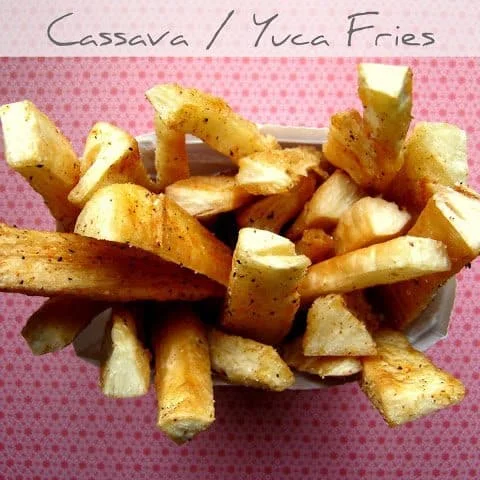
Cassava, also called yuca, is boiled until just tender, cut into sticks and fried until golden. These crisp-edged fries make a satisfying side, with salt and your choice of seasoning to finish.
Ingredients
- 1.36 kg (3 lb)cassava/yuca root
- as neededvegetable or rapeseed oil, for frying
- to tastesalt
- to tasteblack pepper, cayenne pepper or garlic powder
Instructions
- 1
Cut into sections
With the skin still on, chop the cassava into sections 5–7.5 cm (2–3 in) wide; use sections about 7.5 cm (3 in) long for longer fries.
- 2
Peel the cassava
Make a shallow cut through the skin, slide the knife underneath it and lift the skin away all the way around each piece.
- 3
Rinse the pieces
Rinse the peeled cassava and set it aside.
- 4
Boil until tender
Bring a pot of water to the boil, add the cassava and cook for 20–30 minutes. It should feel soft but still offer some resistance when pierced with a fork; if it gets too soft, it will be difficult to cut into sticks.
- 5
Drain and dry
Lift each piece out with a slotted spoon and place it on a thick layer of kitchen paper to dry for about 8–10 minutes.
- 6
Cut into fries
Cut the pieces into sticks of your preferred size. Thinner sticks will be crunchier, while slightly thicker ones will be softer.
- 7
Fry until golden
Heat the oil to 163°C (325°F) and fry the cassava in batches until golden brown.
- 8
Season and serve
Season with salt and your chosen spices. Serve with ketchup or mango sour, if you like.
What are cassava fries?
Cassava, known as yuca in many parts of the Americas, is a starchy tropical root eaten in many cuisines. Cutting it into fries gives it a crisp, browned outside and a tender centre.
This version boils the root before frying. That two-stage method softens the inside first, while the final fry adds colour and crunch.
Nutrition and macros by portion
The nutrition label shows one serving as written: 600 calories, 5g protein, 94g carbs, 22g fat.
| Portion | Adjustment | kcal | Protein | Carbs | Fat |
|---|---|---|---|---|---|
| Lighter | Use less frying oil | 420 kcal | 4g | 66g | 15g |
| This serving | As written | 600 kcal | 5g | 94g | 22g |
| Hungry | Serve a larger portion | 900 kcal | 8g | 141g | 33g |
Cassava supplies most of the carbohydrate, while the frying oil contributes much of the fat; the recipe includes little protein. Pair a serving with a protein-rich main and vegetables for a more balanced plate.
Choosing and peeling cassava
Fresh root: Choose firm cassava without soft or damaged patches. The recipe starts by cutting it into sections before peeling, which makes the thick skin easier to handle.
Frozen cassava: Frozen peeled pieces can save preparation time. If using them, follow the packet guidance for cooking and check tenderness as you boil.
Get the boiling point right
Fork test: After 20–30 minutes, the pieces should be soft enough to pierce but not falling apart. A little resistance matters because the root still needs to be cut into neat sticks.
Drying: Let the boiled pieces sit on kitchen paper for 8–10 minutes. Removing surface moisture helps limit spluttering when they go into hot oil.
Cut for your preferred texture
Thinner sticks: Cut these for more crispness and a greater proportion of browned edges.
Thicker sticks: Leave the pieces a little larger for a softer, more substantial centre. Keep the sticks reasonably even so they fry at a similar rate.
Frying in batches
Oil temperature: Heat the oil to 163°C (325°F) before frying. Fry in batches rather than adding all the cassava at once, and cook each batch until golden brown.
Doneness: Look for an even golden colour on the outside. Lift the fries from the oil carefully and season them while they are freshly fried.
Seasoning and serving
Simple seasoning: Salt works on its own, or add black pepper, cayenne or garlic powder to suit your taste.
To serve: Ketchup is one suggested dip; mango sour is another option. These fries also work alongside a main dish as a starchy side.
Recipe notes & tips
- Use a sharp knife to cut through the cassava skin and firm flesh.
- Check the cassava with a fork during boiling so it does not become too soft to cut.
- Pat or air-dry the boiled pieces before frying to reduce surface moisture.
- Use a thermometer to bring the oil to 163°C (325°F).
- Fry in batches and let the oil return to temperature between them.
- Add salt and spices soon after frying so they cling to the surface.
Variations
- Peppery fries: Add black pepper after frying for a simple savoury finish.
- Cayenne heat: Sprinkle on cayenne to give the fries a spicy edge.
- Garlic seasoning: Dust the hot fries with garlic powder after frying.
- Ketchup dip: Serve the fries with ketchup, as suggested in the method.
- Mango sour: Try mango sour alongside the fries for an alternative dip.
Common mistakes to avoid
- Overboiling: The cassava can become too soft to cut; stop when a fork pierces it but the piece still holds its shape.
- Skipping the drying time: Wet surfaces can make hot oil splutter; leave the pieces on kitchen paper for 8–10 minutes.
- Uneven sticks: Pieces of very different sizes may cook unevenly; cut them to a similar thickness.
- Crowding the oil: Adding too many pieces at once can cool the oil; fry in batches.
- Guessing the oil temperature: Oil that is not at 163°C (325°F) may give inconsistent results; check with a thermometer if available.
How to store
Refrigerate leftover fries in a covered container for up to 3 days. Reheat in an oven or air fryer until hot and crisp; they may be softer than freshly fried.
Frequently asked questions
Can I use frozen cassava?
Yes. Frozen cassava can save peeling time; cook it according to the packet directions and check that it is tender but still firm enough to cut.
How do I know when the cassava is done boiling?
A fork should pierce it readily, but the pieces should not be falling apart. The recipe gives a boiling time of 20–30 minutes.
Why boil the cassava before frying?
Boiling softens the inside before the fries are browned in oil. It also makes the root easier to cut into sticks.
What oil should I use?
The recipe suggests vegetable or canola oil for frying.
What can I serve with cassava fries?
Ketchup is suggested in the method, and mango sour is offered as another dip. They can also be served as a side with a main dish.
Cook it from the original
This recipe comes from alicaspepperpot.com. Their page has the author’s own photos, notes and tips — the best place to cook it from.
Open the recipe on alicaspepperpot.com