
Traditional White Bread
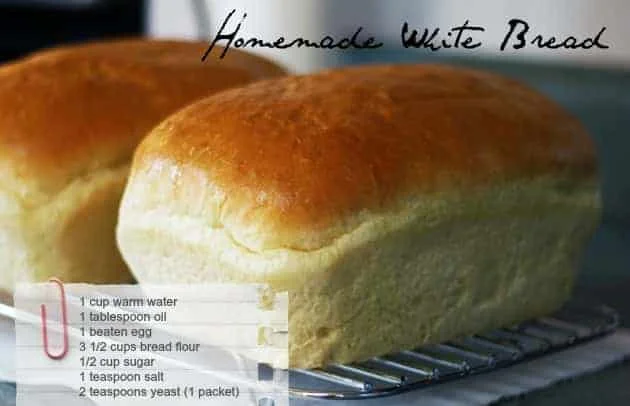
This soft, mildly sweet white bread is made with bread flour, honey and yeast, then baked as two loaves. Make it for toast, sandwiches or a homemade loaf to share.
Ingredients
- 240 ml (1 cup)warm water
- 15 ml (1 tablespoon)olive oil
- 1egg
- 420 g (3 1/2 cups)bread flour
- 1 teaspoonsalt
- 2 teaspoonsyeast
- 170 g (1/2 cup)raw honey
Instructions
- 1
Mix the dough
Mix all the ingredients in a mixer fitted with a dough blade until a dough forms. It should be moist enough to hold together but not so sticky that it clings, and not so dry that it crumbles.
- 2
Let it rise
Lift the dough from the bowl, spray the bowl with olive oil, then return the dough and cover it with a towel. Leave it to rise for 30–60 minutes.
- 3
Knead in mixer
Knead the dough with the dough blade; it will deflate.
- 4
Knead by hand
Remove the dough from the bowl and place it on a floured surface. Knead it by hand a few times.
- 5
Divide the dough
Divide the dough into two equal portions.
- 6
Shape the loaves
Roll each portion into a loaf shape and place it in a loaf pan misted with olive oil.
- 7
Proof the loaves
Cover the pans and let the dough rise, usually for about 60 minutes, depending on the room temperature. It should rise just above the edge of the pan; do not let it over-rise.
- 8
Bake until golden
Bake at 175°C (350°F) for about 20–30 minutes, until golden brown on top. Around the 15-minute mark, mist the tops with olive oil, then continue baking until done.
What is traditional white bread?
This is a soft, lightly sweetened loaf in the familiar American style of everyday sandwich bread. Its tender crumb and mild flavour make it useful for toast as well as sandwiches.
Here, honey adds sweetness and bread flour gives the dough structure. The recipe shapes the dough into two loaves, so you can bake a pair of smaller loaves rather than one large one.
Nutrition and macros by portion
The nutrition label shows one serving as written: 118 calories, 3g protein, 23g carbs, 1g fat.
| Portion | Adjustment | kcal | Protein | Carbs | Fat |
|---|---|---|---|---|---|
| Lighter | Use a smaller slice | 83 kcal | 2g | 16g | 1g |
| This serving | As written | 118 kcal | 3g | 23g | 1g |
| Hungry | Serve two slices | 177 kcal | 5g | 35g | 2g |
The flour and honey provide most of the carbohydrates, while the egg and bread flour contribute protein. Olive oil and the egg account for much of the fat. Serve a slice with a protein-rich filling and fruit or vegetables for a more balanced plate.
Getting the dough consistency right
Water: Start with the stated amount, then judge the dough as it mixes. The recipe notes that the amount may need adjusting; aim for dough that holds together without sticking heavily or crumbling.
Flour: Add it in the listed quantity and assess the dough before making any adjustments. Too much extra flour can make the finished bread dry and dense.
Working with the first rise
Oiled bowl: A light spray of olive oil helps keep the dough from sticking as it rises. Covering it with a towel keeps the surface from drying out.
Rise time: Leave the dough for 30–60 minutes, using its appearance as well as the clock. The room temperature affects how quickly it rises.
Shaping and the second rise
Brief knead: After the first rise, knead with the mixer’s dough blade; the dough will deflate at this stage. A few hand-kneads on a floured surface follow before dividing.
Pan rise: Shape the portions into loaves and let them rise until just above the pan edges, usually around 60 minutes. Watch closely near the end so they do not over-rise.
How to tell when it is baked
Colour: The recipe’s main visual cue is a golden-brown top after roughly 20–30 minutes at 175°C. Baking time can vary, so use the colour and doneness rather than relying only on the timer.
Oil mist: The method calls for misting the tops with olive oil at about 15 minutes, then returning the loaves to the oven. Take care when opening the oven and spraying.
Serving and using the loaves
Let the loaves cool before slicing so the crumb has time to settle. Serve with soup, eggs or a sandwich filling, or toast slices for breakfast.
Because the recipe makes two loaves, you can keep one for immediate use and freeze the other once it has cooled.
Recipe notes & tips
- Use warm rather than hot water when mixing the dough.
- Check the dough texture as it mixes, since the water amount may need adjustment.
- Mist the bowl and loaf pans lightly so the dough does not stick.
- Use the loaf’s height as a cue during the second rise, not just the elapsed time.
- Begin checking the tops for golden colour as the loaves approach the shorter end of the baking time.
Variations
- Use sugar: Replace the honey with sugar if you do not have honey.
- Change the oil: Use another cooking oil in place of olive oil.
- Add seeds: Sprinkle seeds over the loaves before baking for a different finish.
- Make toast: Slice the cooled bread and toast it for a simple serving.
- Freeze one loaf: Cool it completely, wrap it well and freeze it for later.
Common mistakes to avoid
- Adding too much water: The dough can become very sticky; adjust gradually and stop when it holds together without clinging heavily.
- Adding too much flour: The dough may turn crumbly; use only enough to keep it workable.
- Over-proofing: The loaves can rise too far; bake when they sit just above the pan edge.
- Skipping the pan oil: The dough may stick; mist each loaf pan with olive oil before shaping.
- Baking by time alone: The loaves may need more or less time; check for a golden-brown top.
How to store
Once completely cool, keep the bread in an airtight bag or container at room temperature for about 2–3 days. Freeze a well-wrapped loaf for longer storage, then thaw before serving; slices can be toasted from frozen.
Frequently asked questions
Can I use sugar instead of honey?
Yes. The recipe suggests sugar as a substitute when honey is unavailable.
How much water should I use?
Begin with 240 ml and check the dough as it mixes. The recipe notes that the amount may need to be increased or reduced slightly to reach the right consistency.
How long should the dough rise?
The first rise takes 30–60 minutes. The second is usually around 60 minutes, but room temperature affects the timing, so watch for the dough to rise just above the pan edge.
Can I make the dough without a mixer?
The method is written for a mixer with a dough blade, followed by a short hand-knead. It does not give a separate method or timing for mixing and kneading entirely by hand.
Why did my loaves rise too far?
The second rise can move quickly depending on the room temperature. Check the dough regularly and bake when it is just above the edge of the pan.
Can I freeze one of the loaves?
Yes. Let it cool completely, wrap it well and freeze it. Thaw before serving or toast individual slices from frozen.
Cook it from the original
This recipe comes from 730sagestreet.com. Their page has the author’s own photos, notes and tips — the best place to cook it from.
Open the recipe on 730sagestreet.com