
Basil Pesto Recipe with Pine Nuts
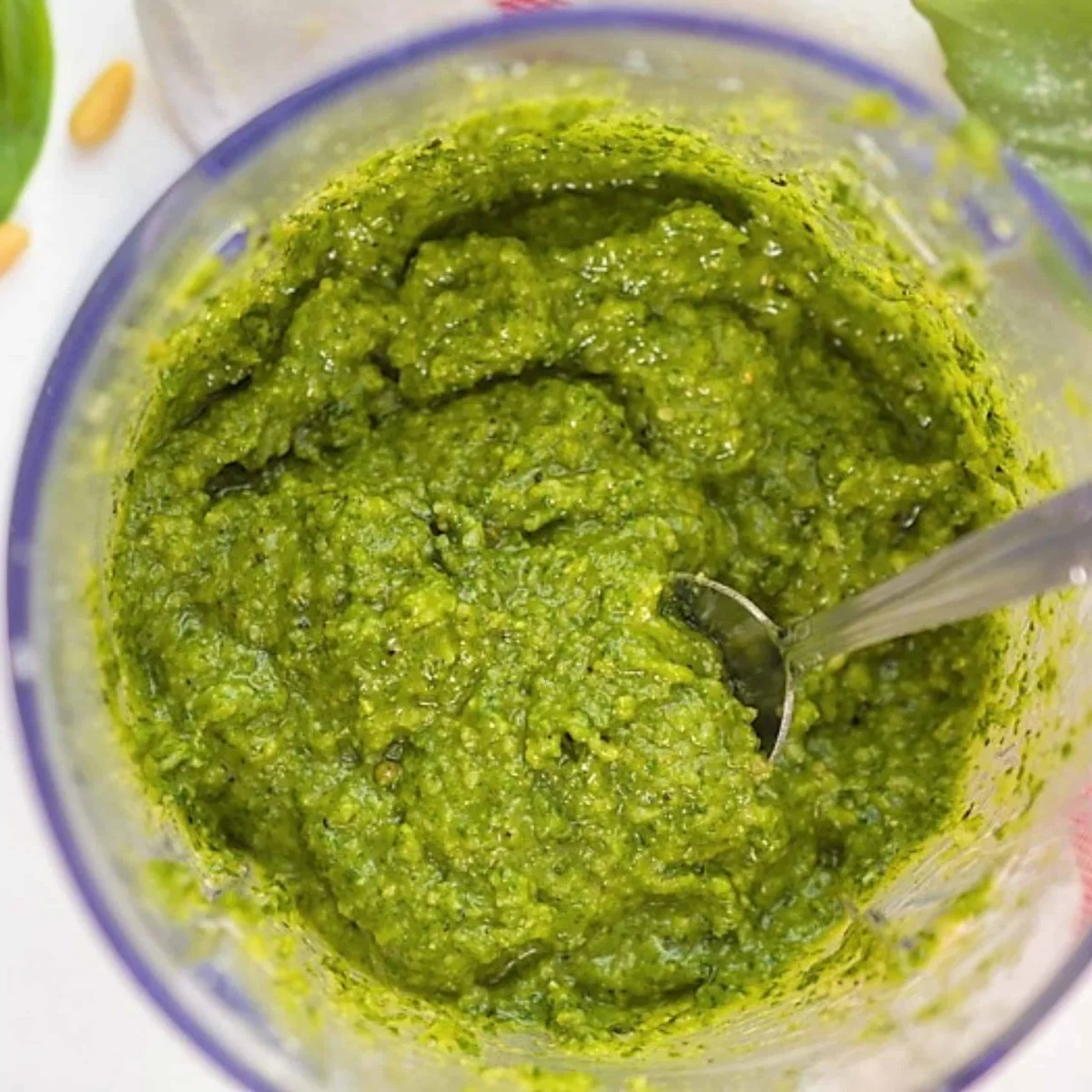
This quick basil pesto blends fresh leaves, pine nuts, Parmesan, garlic and olive oil into a savoury sauce. Make it in minutes to toss with pasta, spoon over pizza or spread in a sandwich.
Ingredients
- 30 ml (2 tablespoons)olive oil, cold-pressed or cold-extracted
- about 12 g (½ cup)fresh basil leaves
- 5 ml (1 teaspoon)minced garlic
- about 25 g (¼ cup)grated Parmesan
- about 34 g (¼ cup)pine nuts
- to tastesalt and black pepper
Instructions
- 1
Blend the pesto
Put the basil leaves, pine nuts, grated Parmesan, minced garlic and 30 ml (2 tablespoons) of olive oil in a blender or food processor. Blend on high until the mixture comes together as a pesto. If it is too thick, add 15 ml (1 tablespoon) more olive oil and blend again.
What is basil pesto?
Pesto is a herb-based sauce associated with Liguria in north-west Italy, where basil, garlic, hard cheese, nuts and olive oil are traditionally crushed together. This version uses a food processor for a fast, smooth result.
Pine nuts bring a mellow richness, while fresh basil supplies the defining fragrant flavour. Use the pesto as a sauce or condiment rather than cooking it for a long time.
Nutrition and macros by portion
The nutrition label shows one serving as written: 149 calories, 4g protein, 2g carbs, 15g fat.
| Portion | Adjustment | kcal | Protein | Carbs | Fat |
|---|---|---|---|---|---|
| Lighter | Use less olive oil | 104 kcal | 3g | 1g | 11g |
| This serving | As written | 149 kcal | 4g | 2g | 15g |
| Hungry | Serve with more pasta | 224 kcal | 6g | 3g | 23g |
The olive oil and pine nuts provide most of the fat, while the Parmesan and pine nuts contribute some protein; the basil and garlic add little carbohydrate overall. Pair a serving with pasta or bread and vegetables for a more complete plate.
Choose fresh ingredients
Basil leaves: Choose fresh, green leaves without dark or wilted patches. Pick them from the stems before measuring.
Pine nuts and Parmesan: Pine nuts contribute a buttery note, and Parmesan adds saltiness and savoury depth. Grate the cheese finely so it blends readily.
Getting the texture right
Blend: Process the ingredients until they are combined, stopping when the mixture looks like a sauce rather than continuing simply to make it completely smooth.
Adjust: If the pesto is too thick to blend or use, add the optional tablespoon of olive oil and process again. Add it gradually if you prefer a thicker consistency.
Garlic and seasoning
Garlic: A teaspoon gives the sauce a clear savoury edge. Keep to the stated amount if you want the basil and pine nuts to remain prominent.
Salt and pepper: Season to taste, bearing in mind that Parmesan is already salty. Taste the blended pesto before adding much salt.
Make it in five minutes
This recipe needs only a brief blend, so measure the ingredients before starting and have the serving dish ready. The stated total time is 5 minutes.
A food processor or blender does the work; scrape down the sides if ingredients cling above the blades, then blend until evenly combined.
Ways to serve pesto
Pasta: Toss the pesto with cooked pasta, loosening it with a little pasta water if needed. Add it off the heat to keep its fresh basil character.
Beyond pasta: Spread it on sandwiches or use it as a pizza topping. It also works as a savoury accompaniment to roasted vegetables.
Recipe notes & tips
- Use dry basil leaves so excess water does not dilute the pesto.
- Grate the Parmesan finely to help it incorporate evenly.
- Start with the stated olive oil quantity and add the extra tablespoon only if needed.
- Taste before adding salt because Parmesan is naturally salty.
- For pasta, loosen the pesto with a little pasta water rather than heating it for a long time.
Variations
- Walnut swap: Replace the pine nuts with walnuts for a deeper, earthier flavour.
- Peppery greens: Replace some of the basil with rocket for a sharper note.
- Lemon lift: Add a little finely grated lemon zest for a bright citrus accent.
- Dairy-free version: Use a dairy-free hard-cheese alternative in place of Parmesan.
- More garlic: Increase the garlic slightly for a stronger, sharper sauce.
Common mistakes to avoid
- Adding all the oil at once: Start with the measured amount and add the extra tablespoon only if the pesto is too thick.
- Over-blending: Stop once the ingredients are combined so the sauce does not become unnecessarily smooth.
- Using damp basil: Dry the leaves first to avoid a watery pesto.
- Over-salting: Taste after blending because Parmesan brings saltiness.
- Heating it for too long: Stir pesto into hot pasta off the heat to preserve its fresh flavour.
How to store
Keep leftover pesto in an airtight container in the fridge and use within 3–4 days. Stir before serving; it is best used cold or stirred into hot food rather than reheated on its own.
Frequently asked questions
Can I make this without a food processor?
Yes. Use a blender, or finely chop the ingredients and mix them by hand. With a blender, pause as needed to scrape down the sides.
How do I make the pesto thinner?
Blend in the optional extra 15 ml (1 tablespoon) of olive oil. For pasta, a little pasta water can also loosen it when serving.
Can I use a different nut?
Yes. Walnuts are a convenient substitute, though they give the pesto a different, earthier flavour.
Can I use this pesto on pizza?
Yes. Spread it over the base as a topping, or add a little after baking for a fresher basil flavour.
Can I freeze basil pesto?
Yes. Freeze it in a sealed, freezer-safe container in portions. Thaw it in the fridge and stir well before using.
Cook it from the original
This recipe comes from 730sagestreet.com. Their page has the author’s own photos, notes and tips — the best place to cook it from.
Open the recipe on 730sagestreet.com