
Potato Mashed Cauliflower
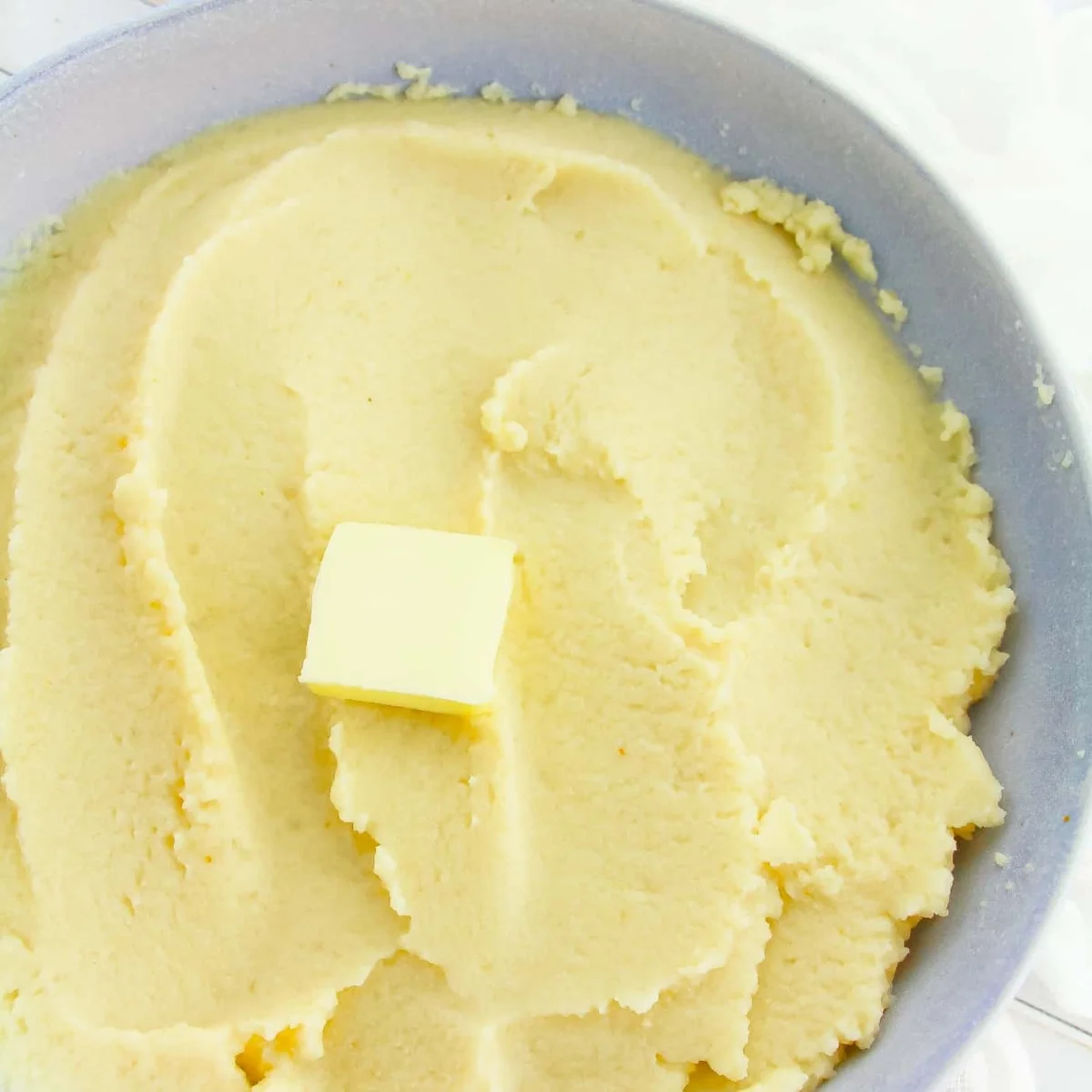
This American-style mashed cauliflower is a creamy, buttery alternative to mashed potatoes, made with frozen riced cauliflower, garlic and black pepper. It comes together in about 25 minutes and works well alongside a roast or turkey.
Ingredients
- 907 g (32 oz)frozen riced cauliflower
- 43 g (3 tablespoons)unsalted butter
- 480 ml (2 cups)water
- 1 teaspoonkosher salt
- ½ teaspoonblack pepper
- 2 clovesgarlic, minced
Instructions
- 1
Sauté cauliflower
Melt the butter in a large pot over medium-high heat. Add the cauliflower and sauté, stirring regularly, until it lightens in colour, about 3 to 5 minutes.
- 2
Boil cauliflower
Add the water and salt and bring to the boil. Cover and cook until the cauliflower is tender, about 10 minutes.
- 3
Drain cauliflower
Drain the cauliflower, reserving 60 ml (¼ cup) of the cooking liquid.
- 4
Mash or purée
Return the drained cauliflower to the pot with the minced garlic, pepper and reserved cooking liquid. Mash with an immersion blender, high-speed blender or food processor until it reaches your preferred consistency.
- 5
Serve the cauliflower
Serve.
What is mashed cauliflower?
Mashed cauliflower is a smooth, savoury side dish that takes the place of mashed potatoes on the plate. It is a familiar American-style accompaniment, often served with roast meat or turkey.
This version starts with frozen riced cauliflower, then uses butter and reserved cooking liquid to help it blend into a creamy mash. Garlic and black pepper add flavour without complicating the method.
Nutrition and macros by portion
The nutrition label shows one serving as written: 67 calories, 2g protein, 5g carbs, 4g fat.
| Portion | Adjustment | kcal | Protein | Carbs | Fat |
|---|---|---|---|---|---|
| Lighter | Use less butter | 47 kcal | 1g | 4g | 3g |
| This serving | As written | 67 kcal | 2g | 5g | 4g |
| Hungry | Serve a larger portion | 101 kcal | 3g | 8g | 6g |
The cauliflower provides most of the carbohydrates, while the butter contributes most of the fat; this serving has a modest amount of protein. Pair it with a protein-rich main and another vegetable for a more balanced plate.
Why use riced cauliflower?
Frozen riced cauliflower is already cut into small pieces, so it cooks quickly and is easy to mash or purée. Use it straight from frozen; the method does not call for thawing.
Build flavour in the pot
Butter: melting it before adding the cauliflower gives the pieces a brief sauté and coats them as they cook.
Garlic: add it during the mashing stage as directed, so its flavour stays distinct rather than being sautéed at the start.
Get the texture right
Tender cauliflower: cook it covered for about 10 minutes after the water boils. The pieces should be soft enough to mash or blend easily.
Reserved liquid: keep 60 ml from the pot after draining. Add it back with the cauliflower to help adjust the consistency as you blend.
Choose your mashing method
For a more textured result, use an immersion blender briefly or mash until the cauliflower reaches the consistency you like. A high-speed blender or food processor can make it smoother; avoid processing longer than needed.
What to serve it with
Serve the mash with roast meat or turkey, as you might serve mashed potatoes. It also fits alongside other roast dinner sides and can be brought straight to the table from the pot.
Recipe notes & tips
- Stir the cauliflower regularly during the initial sauté so it heats evenly.
- Keep the lid on while the cauliflower cooks after the water reaches a boil.
- Measure out the reserved cooking liquid before draining the rest.
- Blend in short bursts and stop when the texture suits you.
- Serve soon after mashing for the warmest, creamiest texture.
Variations
- Extra pepper: add a little more black pepper when mashing.
- Herb finish: stir in chopped fresh parsley just before serving.
- Cheesy mash: mix in grated cheese while the cauliflower is still hot.
- Savoury topping: scatter sliced spring onions over each serving.
- More garlic: increase the minced garlic to suit your taste.
Common mistakes to avoid
- Skipping the sauté: the recipe starts by cooking the cauliflower in butter; stir it regularly for 3 to 5 minutes.
- Overcooking uncovered: cover the pot after adding the water and salt so the cauliflower cooks as directed.
- Discarding all the liquid: reserve 60 ml before draining to use when mashing.
- Adding all the liquid at once: start with the reserved amount and blend to your preferred consistency.
- Blending too long: stop once the mash is smooth enough for your liking to avoid overworking it.
How to store
Refrigerate leftovers in an airtight container for up to 3 days. Reheat gently in a covered pan or in the microwave, stirring occasionally; add a small splash of water if the mash seems too thick.
Frequently asked questions
Can I use fresh riced cauliflower?
The recipe specifies frozen riced cauliflower. Fresh cauliflower may cook at a different rate, so check it for tenderness before draining.
Do I need to thaw the cauliflower first?
No thawing step is given. Add the frozen cauliflower directly to the pot with the melted butter.
How do I make the mash smoother?
Use a high-speed blender or food processor and blend until smooth. Add the reserved cooking liquid as needed.
Can I make it without an immersion blender?
Yes. The method also gives a high-speed blender and food processor as options.
Why reserve the cooking liquid?
It goes back into the pot with the cauliflower and helps you mash or purée it to the desired consistency.
Cook it from the original
This recipe comes from 730sagestreet.com. Their page has the author’s own photos, notes and tips — the best place to cook it from.
Open the recipe on 730sagestreet.com