
Millionaire Macarons
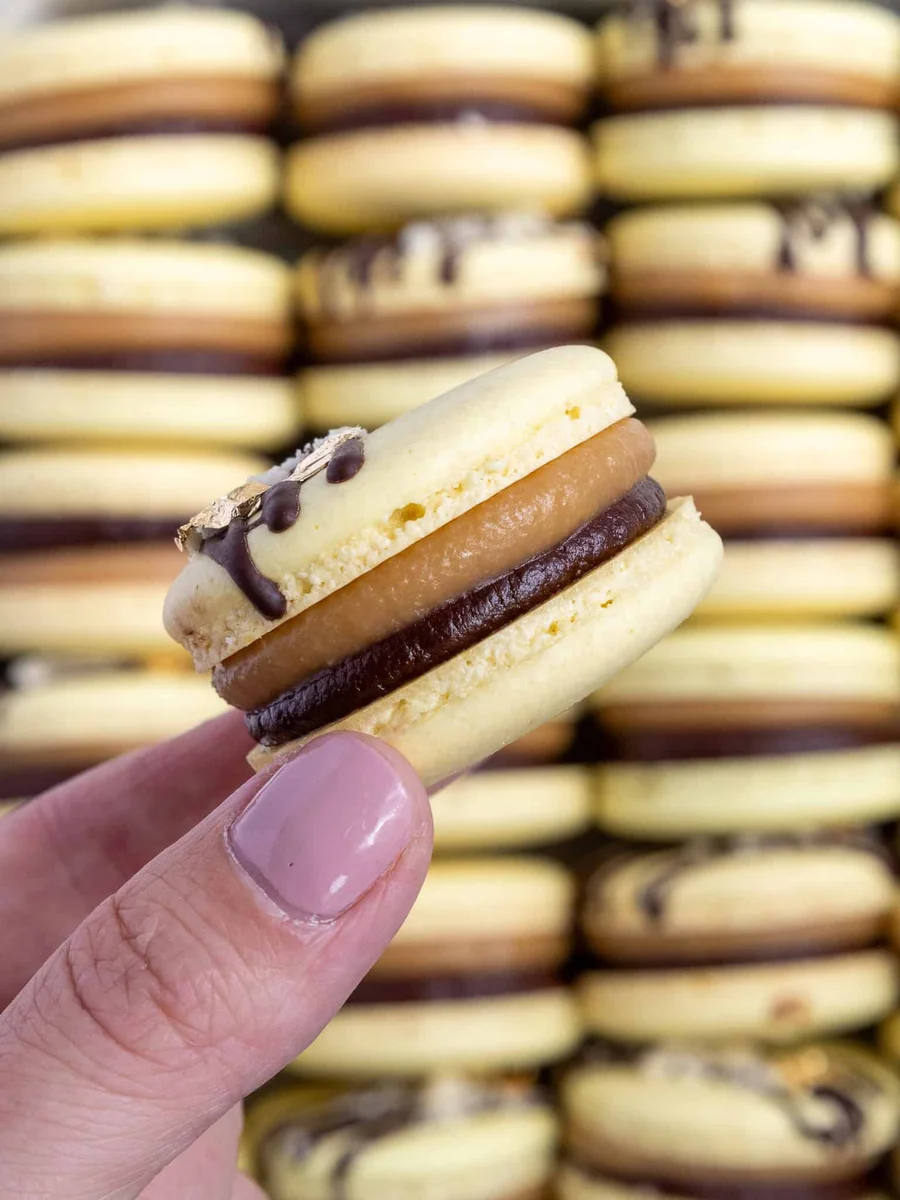
Millionaire macarons pair crisp French almond meringue shells with buttery caramel, dark chocolate ganache and shortbread. They take a little patience, but the fillings and crumble can be prepared ahead to make assembly easier.
Ingredients
- 200 g (⅔ cup; half a 397 g can)sweetened condensed milk
- 50 g (¼ cup, packed)light brown sugar
- 56 g (¼ cup)unsalted butter
- 30 g (2 tbsp)light corn syrup
- 3 g (½ tsp)fine salt
- 4 g (1 tsp)vanilla extract or vanilla bean paste
- 180 g (¾ cup), at room temperaturedouble cream or heavy whipping cream
- 180 g (1 cup + 1 tbsp)dark chocolate chips
- 45 g (3 tbsp), at room temperatureunsalted butter
- 20 g (1 tbsp), optionallight corn syrup
- 2 g (¼ tsp)fine salt
- 56 g (¼ cup), at room temperatureunsalted butter
- 62 g (½ cup)plain flour
- 16 g (2 tbsp)icing sugar
- 2 g (¼ tsp)fine salt
- 110 g, at room temperature (about 4 large egg whites)aged egg whites
- ¼ tsp, optionalcream of tartar
- 110 g (½ cup + 2 tsp)granulated sugar
- 140 g (1½ cups), blanchedsuperfine almond flour
- 126 g (1 cup)icing sugar
- A small drop, optionalyellow gel food colouring
- About 45 g (¼ cup), melteddark chocolate
- A small piece per macaron, or to tasteedible gold leaf
Instructions
- 1
Cook the caramel
In a heavy saucepan over medium heat, combine the condensed milk, brown sugar, 56 g butter, 30 g corn syrup and 3 g salt. Stir often until the mixture just starts bubbling at the edges, or reaches 100°C on a sugar thermometer. Turn the heat to low and simmer, stirring frequently, until thick and medium caramel-coloured, about 5–7 minutes. Take off the heat and stir in the vanilla.
- 2
Cool the caramel
Transfer the caramel to a separate container and leave it to cool to room temperature. If butter separates and rises to the surface, stir it gently back in as the caramel cools. To make it ahead, cover and keep at room temperature overnight or refrigerate for up to a week; warm chilled caramel in 10-second microwave bursts until it is workable and at room temperature.
- 3
Make the ganache
Heat the cream in a heatproof bowl in the microwave for 45 seconds, until it is just beginning to bubble. Pour in the dark chocolate chips, making sure they are covered, and leave for 1 minute. Stir slowly until smooth; if chocolate remains unmelted, heat for a further 15 seconds and stir again. Mix in 45 g butter, the optional corn syrup and 2 g salt. Press cling film directly onto the ganache and leave it to cool and thicken to room temperature. For a milk chocolate ganache, use 80 g cream and 240 g milk chocolate instead.
- 4
Prepare the trays
Heat the oven to 175°C and line two large baking trays with baking parchment or silicone mats.
- 5
Mix shortbread dough
Use a pastry cutter or electric mixer to combine 56 g butter, the plain flour, 16 g icing sugar and 2 g salt until a soft dough forms. If it will not come together, microwave it for just 2–3 seconds to soften the butter without melting it.
- 6
Shape shortbread discs
For a shortbread centre in each macaron, roll half the dough into a log about 1.25 cm in diameter and 15 cm long. Chill for 15 minutes, or until firm, then cut 24 discs about 0.5 cm thick, small enough to fit inside the ganache rings. Space them about 2.5 cm apart on a lined tray, prick each a couple of times with a fork and bake for 7–10 minutes, stopping just before the edges begin to brown.
- 7
Bake shortbread crumble
Divide the remaining dough into six similarly sized balls. If you are skipping the shortbread centres, divide all the dough into 12 balls instead. Flatten each ball to about 1 cm thick, space them about 2.5 cm apart on the remaining lined tray and freeze for about 10 minutes. Prick each with a fork, bake for 9–12 minutes, rotating the tray halfway through, and cool fully on the tray on a wire rack. Crumble the larger biscuits into small pieces. Reduce the oven to 157°C.
- 8
Whip the egg whites
Line two large baking trays with baking parchment or silicone mats. Put the egg whites in the bowl of a stand mixer fitted with a whisk and beat at medium speed until covered with small bubbles. Add a pinch of optional cream of tartar and continue beating until soft peaks form and the whisk leaves faint tracks.
- 9
Make the macaron batter
Gradually add the granulated sugar and beat at medium speed for 30 seconds, then raise the speed to medium-high and whisk until stiff, glossy peaks form. Sift the almond flour and 126 g icing sugar into the meringue and fold with a rubber spatula, sweeping around the bowl and through the bottom. Add a small drop of optional yellow gel colouring at this point. Continue folding until the batter falls in a thick ribbon and you can make a couple of figure eights; fold a little more if the stream breaks before then.
- 10
Pipe the shells
Transfer the batter to a large piping bag fitted with a medium round tip and pipe rounds about 3 cm across, spaced about 2.5 cm apart on the prepared trays. Pipe one tray at a time, tap each tray firmly on the worktop several times to release air bubbles, then pop any remaining bubbles with a toothpick or scribe.
- 11
Rest and bake
Leave the piped shells to rest for 30 minutes, or until they look matte and have formed a skin. Meanwhile, make sure the oven is at 157°C. Bake one tray at a time on the middle shelf for 17–21 minutes, rotating halfway through. If you like, cover the shells loosely with foil for the second half of baking to prevent browning.
- 12
Cool the shells
Remove each tray from the oven and leave the shells to cool on it for about 15 minutes. Gently lift them off the silicone mat or baking parchment.
- 13
Fill the macarons
Put the room-temperature ganache in a piping bag fitted with a small round tip and the caramel in a separate bag fitted with a medium round tip. Secure the tops of the bags with clips or elastic bands; both fillings should be thick enough to hold their shape. Pair the shells. Pipe a ring of ganache onto one shell, place a shortbread disc inside the ring, then pipe a dollop of caramel onto its partner and sandwich the shells together. Repeat with the remaining shells.
- 14
Decorate and mature
If desired, drizzle the macarons with melted chocolate and finish with shortbread crumbs and a small piece of edible gold leaf. Store in an airtight container in the fridge overnight to mature. Before serving, leave at room temperature for 10–20 minutes.
What are millionaire macarons?
Macarons are French sandwich biscuits made from meringue and ground almonds, with smooth shells and a ruffled base called a foot. This version borrows the caramel, chocolate and shortbread combination associated with millionaire’s shortbread and layers those flavours between the shells.
The components each bring a different texture: crisp almond shells, thick caramel, ganache and buttery shortbread. Making the fillings and biscuits ahead helps make the final assembly more manageable.
Nutrition and macros by portion
The nutrition label shows one serving as written: 205 calories, 3g protein, 22g carbs, 12g fat.
| Portion | Adjustment | kcal | Protein | Carbs | Fat |
|---|---|---|---|---|---|
| Lighter | Use less caramel | 144 kcal | 2g | 15g | 8g |
| This serving | As written | 205 kcal | 3g | 22g | 12g |
| Hungry | Add another macaron | 308 kcal | 5g | 33g | 18g |
The almond flour and sugars provide most of the carbohydrates, while butter, cream, chocolate and caramel contribute much of the fat. Egg whites and almonds provide some protein. Serve with fresh berries or fruit to add freshness and balance the rich layers.
The fillings
Caramel: condensed milk, brown sugar and butter cook into a thick, buttery filling. Stir often and lower the heat once bubbling begins so it can thicken without catching.
Ganache: warm cream softens the dark chocolate before butter adds richness. Let it cool until thick enough to pipe; warm ganache can run rather than hold a neat ring.
Shortbread, two ways
Centre discs: roll and chill half the dough before cutting small, thin rounds. Keep them narrow enough to sit inside each piped ganache ring.
Crumble: shape and bake the rest as larger biscuits, then break them up after cooling. If you prefer not to put a biscuit in each macaron, the method gives the option of using all the dough for the larger biscuits instead.
Getting the shells right
Meringue: whip the egg whites first to soft peaks, then add the sugar gradually and beat until the peaks are stiff and glossy. This gives the folded batter its structure.
Macaronage: fold the sifted almond flour and icing sugar into the meringue until the batter falls in a thick ribbon. Stop when it can form a couple of figure eights without the stream breaking; folding too little or too much changes how the batter pipes.
Resting and baking
Skin: leave the piped rounds for about 30 minutes, until the surfaces look matte. This is the visual cue to move on to baking.
Oven: bake one tray at a time at 157°C for 17–21 minutes, rotating halfway through. A loose foil cover for the second half can help keep the shells from browning.
Assembling the layers
Pipe the ganache as a ring on one shell, then place a shortbread disc inside it. Add caramel to the matching shell and press the pair together gently so the fillings stay within the edges.
The fillings need to be cool and thick enough to pipe cleanly. A drizzle of melted chocolate, shortbread crumbs and gold leaf are optional finishes.
Serving and planning ahead
The caramel and ganache can each be prepared up to a week ahead. Allow time for them to cool and thicken before piping, and bake the shortbread before lowering the oven for the macaron shells.
Once filled, chill the macarons overnight so the shells and fillings settle together. Let them stand at room temperature for 10–20 minutes before serving.
Recipe notes & tips
- Weigh the egg whites and dry ingredients for consistent macaron batter.
- Make the caramel and ganache ahead so they have time to cool and thicken.
- Use a template beneath the baking parchment if you want evenly sized shells.
- Tap the trays firmly and remove visible air bubbles before resting the shells.
- Keep the shortbread discs small enough to sit inside the ganache rings.
- Wait until the shells have cooled before lifting them from the tray.
Variations
- Milk chocolate ganache: use 80 g cream and 240 g milk chocolate instead of the dark chocolate and cream quantities in the method.
- Skip the centres: use all the shortbread dough for larger biscuits to crumble over the finished macarons.
- Plain shells: leave out the optional yellow gel colouring.
- Simple finish: omit the chocolate drizzle and gold leaf, and use only shortbread crumbs.
- Dark chocolate finish: keep the dark ganache and drizzle with melted dark chocolate.
Common mistakes to avoid
- Overcooking the caramel: take it off the heat once thick and medium caramel-coloured so it does not become too firm.
- Melting the butter in the shortbread: if the dough needs softening, microwave it for only 2–3 seconds.
- Making shortbread discs too large: cut them small enough to fit inside the piped ganache rings.
- Under-mixed macaron batter: fold until it falls in a thick ribbon and can form a couple of figure eights.
- Skipping the resting time: wait until the shells look matte and have formed a skin before baking.
- Filling warm shells: allow the shells and fillings to cool first so the fillings hold their shape.
How to store
Keep the filled macarons in an airtight container in the fridge; they are best after maturing overnight. Bring them to room temperature for 10–20 minutes before serving. The caramel and ganache can be made up to a week ahead; keep caramel covered at room temperature overnight or refrigerate it for longer storage, and refrigerate the ganache.
Frequently asked questions
Can I make the fillings ahead?
Yes. Both the caramel and ganache can be made up to a week ahead. Bring chilled caramel back to room temperature in short 10-second microwave bursts, and let the ganache soften enough to pipe.
How do I know when the shells are ready to bake?
After resting for about 30 minutes, the surfaces should look matte and have formed a skin. The precise time can vary, so use that appearance as your cue.
Why is the macaron batter folded into a ribbon?
The batter should fall from the spatula in a thick stream that can form a couple of figure eights. If the stream breaks too soon, fold it a little more.
Can I leave out the shortbread discs?
Yes. Skip making the centre discs and divide all the shortbread dough into 12 larger biscuits instead. Bake, cool and crumble them for the topping.
Can I use milk chocolate?
Yes. The method gives an alternative using 80 g cream and 240 g milk chocolate for the ganache.
Why do the macarons need to rest in the fridge overnight?
The overnight rest allows the assembled shells and fillings to mature together. Let them sit at room temperature for 10–20 minutes before eating.
Cook it from the original
This recipe comes from chelsweets.com. Their page has the author’s own photos, notes and tips — the best place to cook it from.
Open the recipe on chelsweets.com