
Whole Roasted Chicken
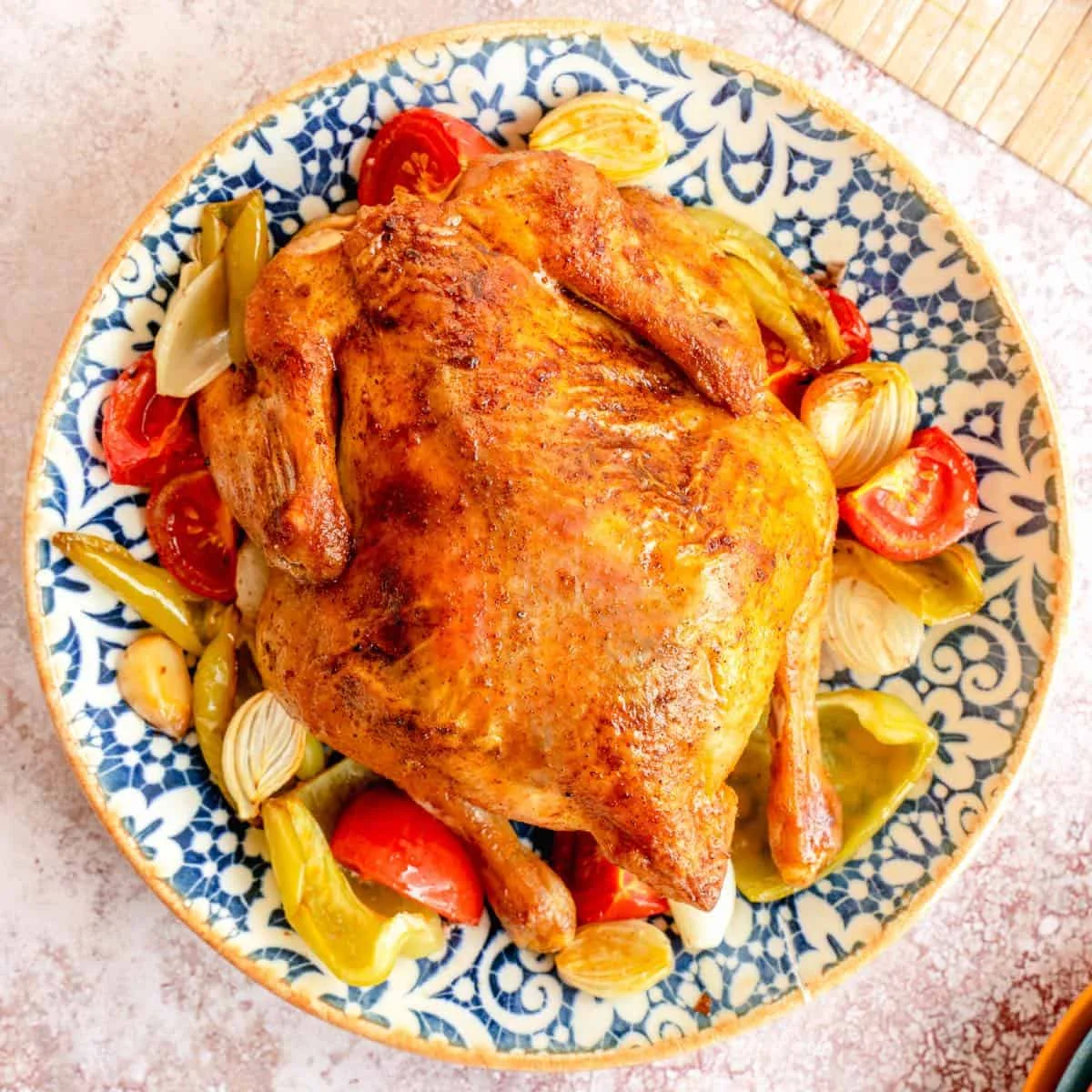
This whole roasted chicken is brined, coated in a warmly spiced olive oil and roasted over peppers, shallots, tomatoes, lemongrass and garlic. It makes a generous centrepiece, with the vegetables cooking beneath the chicken to take on its savoury juices.
Ingredients
- 1 whole chicken (approximately 1.8–2 kg / 4–4.5 lb)whole chicken
- 2 teaspoonssalt
- as neededwater
- 3 tablespoonsolive oil
- 1 teaspooncayenne pepper
- 1/4 teaspooncinnamon
- 1/4 teaspooncumin
- 1/4 teaspoonblack pepper
- 2bell peppers, deseeded and cut into quarters
- 1/2lemongrass stalk, whole
- 4 clovesgarlic, whole
- 6shallots, halved or quartered
- 2 mediumtomatoes, quartered
Instructions
- 1
Brine the chicken
Pour water into a large container and stir in 2 teaspoons of salt until it dissolves. Submerge the chicken and refrigerate for 4 to 24 hours.
- 2
Mix the spices
Combine the olive oil, cayenne pepper, cinnamon, cumin and black pepper in a small bowl. Mix well and leave the mixture to sit for a while.
- 3
Prepare the oven
Preheat the oven to 180°C (350°F). Spread the prepared vegetables across the bottom of a roasting pan and set a rack on top.
- 4
Prepare the chicken
Take the chicken out of the brine and pat it dry with paper towels. Place it breast-side up on the rack, then brush the spice mixture over its outside. Tuck the wings beneath the body.
- 5
Roast until done
Carefully place the pan in the preheated oven and roast for 1 hour. Increase the oven temperature to 220°C (425°F) and roast for another 30 minutes, until the thickest part of the thigh reaches 74°C (165°F).
- 6
Rest and serve
Remove the chicken from the oven and leave it to rest for 15 minutes. Transfer it to a serving plate and serve with the roasted vegetables.
What is whole roasted chicken?
Whole roasted chicken is a familiar American-style centrepiece: a seasoned bird cooked intact until its skin browns and its meat is tender. This version adds a salt-water brine and roasts the chicken above a bed of vegetables.
The spice blend brings heat and gentle warmth, while the vegetables cook in the roasting pan beneath the bird. Lemongrass adds a fragrant note alongside the garlic and shallots.
Nutrition and macros by portion
The nutrition label shows one serving as written: 376 calories, 25g protein, 9g carbs, 26g fat.
| Portion | Adjustment | kcal | Protein | Carbs | Fat |
|---|---|---|---|---|---|
| Lighter | More vegetables, less skin | 263 kcal | 18g | 6g | 18g |
| This serving | As written | 376 kcal | 25g | 9g | 26g |
| Hungry | Larger chicken portion | 564 kcal | 38g | 14g | 39g |
The chicken supplies most of the protein and fat, while the olive oil adds further fat. The vegetables contribute most of the carbohydrates in the listed ingredients. Serve a portion with extra non-starchy vegetables or salad for a more balanced plate.
Why brine the chicken?
Salt brining seasons the chicken before it goes into the oven. Use a container large enough to submerge the bird, and keep it refrigerated for the stated 4 to 24 hours.
After brining, pat the skin dry with paper towels. This removes surface moisture before you brush on the oil and spices.
Build the spice coating
Oil base: olive oil carries the cayenne, cinnamon, cumin and black pepper across the outside of the chicken. Mix them thoroughly so the coating is evenly seasoned.
Resting the mixture: let it sit for a while as directed, then brush it over the chicken before roasting.
Roast over the vegetables
Vegetable bed: spread the peppers, lemongrass, garlic, shallots and tomatoes in the bottom of the pan, then position the rack above them. The chicken roasts on the rack rather than sitting directly in the vegetables.
Cooking stages: roast for 1 hour at 180°C, then raise the oven to 220°C for another 30 minutes. The final hotter stage helps finish the skin while the chicken cooks through.
Check doneness and rest
Temperature cue: check the thickest part of the thigh and look for 74°C. Keep the thermometer away from the bone for a useful reading.
Resting: leave the chicken for 15 minutes after taking it out of the oven. This gives you time to bring the vegetables and serving plate to the table.
What to serve with it
The roasted peppers, tomatoes and shallots are already part of the dish, so serve them alongside carved chicken. Their soft texture and pan juices make a simple accompaniment.
For a fuller meal, add a green salad or another side dish to suit your table. Carve the chicken just before serving.
Recipe notes & tips
- Choose a brining container that lets the chicken sit fully submerged.
- Keep the chicken refrigerated throughout the 4-to-24-hour brine.
- Pat the chicken thoroughly dry after brining so the spice coating adheres well.
- Arrange the vegetables beneath the rack so the chicken can roast above them.
- Use a thermometer to check the thickest part of the thigh reaches 74°C.
- Allow the full 15-minute rest before carving.
Variations
- Milder spice: Reduce the cayenne to make the coating less hot.
- Extra garlic: Add more whole garlic cloves to the vegetable bed.
- Different vegetables: Swap in other roasting vegetables that fit in the pan.
- More citrus aroma: Add a little lemon zest to the spice mixture.
- Herb finish: Scatter chopped fresh herbs over the chicken and vegetables before serving.
Common mistakes to avoid
- Short brining: Leaving the chicken for less than 4 hours misses the recipe's brining time; allow 4 to 24 hours in the fridge.
- Wet skin: Skipping the drying step leaves moisture on the chicken; pat it dry before adding the spice mixture.
- Uneven coating: Brushing only part of the bird leaves patches under-seasoned; cover the outside with the mixture.
- Guessing doneness: Colour alone does not confirm the chicken is cooked; check for 74°C in the thickest part of the thigh.
- Skipping the rest: Cutting immediately after roasting rushes the final step; leave the chicken to rest for 15 minutes.
How to store
Refrigerate leftover chicken and vegetables in a covered container within 2 hours, and use within 3 to 4 days. Reheat portions until piping hot, using an oven or microwave.
Frequently asked questions
How long should I brine the chicken?
Refrigerate it in the salted water for 4 to 24 hours, as specified in the method.
Can I prepare the chicken the day before?
You can brine it in advance, provided it stays refrigerated and the brining time does not exceed 24 hours. Pat it dry when you take it out.
How do I know when the chicken is cooked?
Check the thickest part of the thigh with a thermometer; it should reach 74°C (165°F).
Why is the chicken cooked on a rack?
The rack holds the chicken above the vegetables while it roasts. The vegetables remain in the pan beneath it.
Can I skip the brining step?
The recipe includes brining to season the chicken before roasting. If you skip it, you will be changing the method and the chicken may be less evenly seasoned.
Can I use a different oven temperature?
Follow the two-stage schedule in the recipe: 180°C for 1 hour, then 220°C for another 30 minutes, checking that the thigh reaches 74°C.
Cook it from the original
This recipe comes from castironketo.net. Their page has the author’s own photos, notes and tips — the best place to cook it from.
Open the recipe on castironketo.net