
Wiener schnitzel
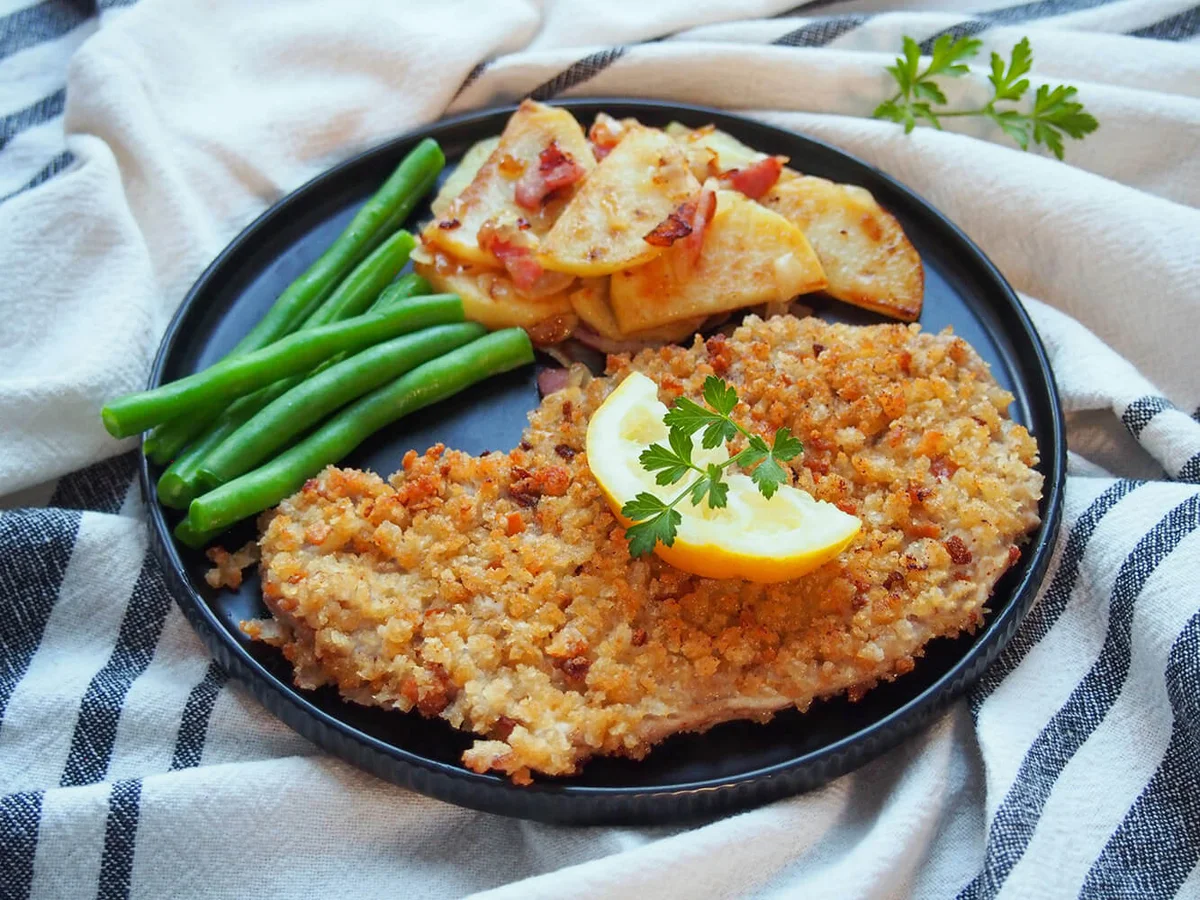
Wiener schnitzel is a classic Austrian dish of tender veal coated in crisp breadcrumbs and fried in butter. It is quick to prepare and makes a satisfying meal with a simple side dish.
Ingredients
- 225 g (½ lb; approximately, typically 2–3 pieces)veal escalopes
- 2 tbspflour
- ¼ tsp (approximately)salt
- 1egg
- 60 g (1 cup)fresh breadcrumbs
- 2 tbsp, or more as neededbutter, for frying
Instructions
- 1
Thin the veal
Use the flat side of a meat tenderiser to pound the veal escalopes lightly until they are a little thinner. Take care not to break up the meat; if the escalopes are already very thin, you may not need to pound them.
- 2
Prepare the coating
Spread the flour on a plate and put the breadcrumbs on another plate or a baking sheet. Beat the egg in a shallow dish, such as an oven dish.
- 3
Coat the escalopes
Season both sides of the veal lightly with salt. Dip each piece in flour, covering it all over, then shake off the excess. Dip it in the egg, then turn it in the breadcrumbs so both sides are covered. Do not press the crumbs on; sprinkle a few over any gaps instead.
- 4
Fry until golden
Heat the butter in a frying pan over a medium heat, then add the breaded veal. Cook for around 3–5 minutes, turn, and cook for around the same time on the other side, until the breadcrumbs are lightly brown. Cook one piece at a time if that is easier to handle, and add more butter as needed so the breadcrumbs make contact with it.
- 5
Serve immediately
Remove the schnitzel from the pan and serve straight away.
What is Wiener schnitzel?
Wiener schnitzel is an Austrian dish traditionally made with a thin slice of veal coated in breadcrumbs and fried. Its name refers to Vienna, and its simple combination of crisp coating and tender meat has made it a familiar classic.
This version keeps the preparation straightforward: flour, beaten egg and fresh breadcrumbs form the coating, while butter provides the frying fat. Leaving the crumbs loose helps the finished crust ripple rather than cling tightly to the veal.
Nutrition and macros by portion
The nutrition label shows one serving as written: 506 calories, 34g protein, 44g carbs, 20g fat.
| Portion | Adjustment | kcal | Protein | Carbs | Fat |
|---|---|---|---|---|---|
| Lighter | Use less butter | 354 kcal | 24g | 31g | 14g |
| This serving | As written | 506 kcal | 34g | 44g | 20g |
| Hungry | Add a larger side | 759 kcal | 51g | 66g | 30g |
The veal supplies most of the protein, while the flour and breadcrumbs provide most of the carbohydrates. Butter contributes much of the fat; serve the schnitzel with vegetables or salad for a fresh counterpoint and a more balanced plate.
Choosing and preparing the veal
Veal escalopes: the recipe uses about 225 g, usually two or three pieces. If they are already thin, skip the pounding; otherwise, flatten them gently with the flat side of a meat tenderiser.
Building the breadcrumb coating
Flour first: coat every surface, then shake away any excess so the egg has a light, even layer to cling to.
Egg and crumbs: turn the veal in the beaten egg, then cover both sides with breadcrumbs. Avoid pressing them down; sprinkle extra crumbs over bare spots instead.
Getting the frying right
Butter: heat it in a frying pan over a medium heat before adding the coated veal. Add more if needed so the breadcrumbs have contact with butter as they cook.
Pan space: frying one escalope at a time can make turning easier, particularly if your pan is small. Use the approach that lets you turn each piece carefully.
When the schnitzel is done
Colour: cook each side for around 3–5 minutes, turning when the first side is lightly brown. The same light-brown breadcrumb colour is the cue for the second side.
Texture: serve as soon as the schnitzel comes out of the pan, while the breadcrumb coating is at its crispest.
What to serve with it
A fresh salad or steamed green vegetables make an easy contrast to the buttery coating. For a more substantial plate, serve the schnitzel with boiled potatoes or a potato salad.
Recipe notes & tips
- Pound the veal only enough to thin it slightly; stop before the meat starts to break apart.
- Set up the flour, beaten egg and breadcrumbs in separate dishes before you begin coating.
- Shake excess flour from each escalope before dipping it in the egg.
- Keep the breadcrumb coating loose rather than pressing it firmly onto the meat.
- Fry one piece at a time if that makes the schnitzel easier to turn.
- Serve immediately after frying for the best contrast between the coating and the veal.
Variations
- Lemon finish: serve with a wedge of lemon for a bright squeeze at the table.
- Fresh herbs: add chopped parsley to a simple salad served alongside.
- Potato side: pair with boiled potatoes for a more filling meal.
- Green side: serve with steamed green vegetables for a lighter-feeling plate.
Common mistakes to avoid
- Pounding too hard: the veal can break apart, so use the flat side of the tenderiser gently.
- Leaving excess flour: a thick flour layer can interfere with the coating, so shake off the extra before adding egg.
- Pressing on the crumbs: this can flatten the coating, so leave it loose and fill gaps with a sprinkle of crumbs.
- Using too little butter: dry patches of crumbs may not cook through, so add more butter as needed.
- Crowding the pan: it can make turning awkward, so fry the pieces one at a time if space is tight.
How to store
Wiener schnitzel is best eaten straight after frying. If you have leftovers, refrigerate them in a covered container and reheat in a frying pan until hot, though the breadcrumb coating may lose some crispness.
Frequently asked questions
Can I skip pounding the veal?
Yes, if the escalopes are already very thin. Otherwise, pound them lightly to thin them a little without breaking up the meat.
How do I keep the coating from going flat?
Do not press the breadcrumbs onto the veal. Turn each piece gently and sprinkle crumbs over any uncovered spots.
How long should I fry each side?
Cook each side for around 3–5 minutes over a medium heat, until the breadcrumbs are lightly brown.
Can I cook more than one piece at a time?
Yes, if your pan has room and you can turn the pieces comfortably. Cooking one at a time is an option when a smaller pan makes handling easier.
Why might I need extra butter?
The breadcrumbs need contact with butter as they cook. Add more if needed so the coating cooks through.
Cook it from the original
This recipe comes from carolinescooking.com. Their page has the author’s own photos, notes and tips — the best place to cook it from.
Open the recipe on carolinescooking.com