
Greek Yogurt Scrambled Eggs
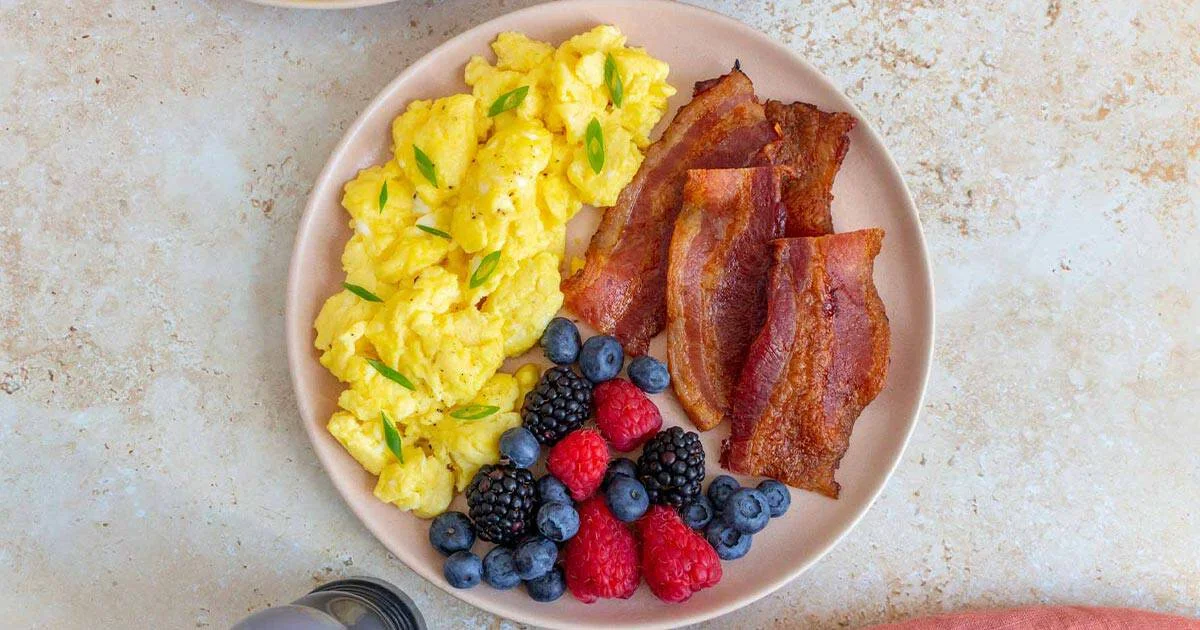
Soft, fluffy scrambled eggs get a creamy tang from full-fat Greek yoghurt and cook in butter for a quick breakfast. The recipe takes about 10 minutes and uses just a handful of ingredients.
Ingredients
- 6eggs
- 4 tablespoonsfull-fat Greek yoghurt
- 1 pinchsalt
- 1 tablespoonunsalted butter
- to tastepepper
Instructions
- 1
Beat the eggs
Put the eggs, Greek yoghurt and salt in a bowl. Beat with a fork or whisk until combined.
- 2
Melt the butter
Set a non-stick frying pan over medium heat and add the butter. Once it has melted, pour in the egg mixture.
- 3
Cook gently
Stir the eggs slowly and gently with a rubber spatula, folding them over themselves as they cook. When they are mostly set but still look custard-like, take the pan off the heat. This should take no more than 4–5 minutes; the residual heat will finish cooking them.
- 4
Serve the eggs
Remove the eggs from the heat and serve.
What are Greek yoghurt scrambled eggs?
They are scrambled eggs enriched with Greek yoghurt, which gives the mixture a creamy consistency and a gentle tang. This version is an American-style breakfast built around familiar eggs-and-butter cooking rather than a more elaborate preparation.
The yoghurt is beaten into the eggs before cooking, so it blends through the curds. Gentle stirring and taking the pan off the heat while the eggs are still slightly soft help keep the result tender.
Nutrition and macros by portion
The nutrition label shows one serving as written: 283 calories, 22g protein, 2g carbs, 20g fat.
| Portion | Adjustment | kcal | Protein | Carbs | Fat |
|---|---|---|---|---|---|
| Lighter | Use less butter | 198 kcal | 15g | 1g | 14g |
| This serving | As written | 283 kcal | 22g | 2g | 20g |
| Hungry | Add toast on the side | 425 kcal | 33g | 3g | 30g |
The eggs provide most of the protein and some of the fat, while the full-fat Greek yoghurt and butter contribute additional fat; the dish contains very little carbohydrate. Serve it with wholemeal toast and vegetables for a more balanced plate.
Why add Greek yoghurt?
Full-fat Greek yoghurt brings richness and a little acidity to the eggs. Use the stated amount so it complements the eggs without making the mixture too loose.
Beat it thoroughly with the eggs before they go into the pan. This helps distribute it evenly rather than leaving thick pockets of yoghurt in the finished scramble.
Keep the heat controlled
Medium heat gives you time to stir and fold the eggs before they set too firmly. A non-stick pan also makes it easier to move the soft curds without scraping them apart.
Stir gently with a rubber spatula, drawing the eggs together and folding them over themselves. Avoid rushing the cooking with higher heat, which can make them firm before you can remove the pan.
When are the eggs done?
Look for eggs that are mostly cooked but still glossy and custard-like. The method allows up to 4–5 minutes of cooking, though the visual cue matters more than forcing the full time.
Take the pan off the heat at that stage. The residual warmth continues to cook the eggs, so waiting until they look completely firm in the pan can leave them overdone.
Seasoning and serving
Salt goes into the egg mixture before cooking, while pepper is added to taste. Serve the eggs straight away for the softest texture.
Toast makes a simple accompaniment, while sliced tomatoes or sautéed greens add freshness to the plate. Keep additions separate if you want to preserve the creamy texture of the scramble.
Timing and preparation
The recipe takes about 10 minutes from start to finish, with only a few minutes spent cooking. Measure the yoghurt and butter before heating the pan so you can focus on stirring once the eggs go in.
Have a serving plate ready and remove the pan from the hob as soon as the eggs look mostly set. They continue cooking briefly from the heat already in the pan.
Recipe notes & tips
- Beat the yoghurt fully into the eggs before cooking.
- Use a non-stick pan to help the soft curds release easily.
- Keep the pan at medium heat and stir slowly.
- Fold the eggs over themselves rather than whisking them in the pan.
- Remove the pan while the eggs still look slightly soft.
- Season with pepper just before serving, to taste.
Variations
- Fresh herbs: Fold chopped chives or parsley through the eggs just before serving.
- Chilli heat: Add a little chilli flakes to the beaten mixture.
- Cheese: Sprinkle grated cheese over the eggs as they finish cooking.
- Greens: Serve with sautéed spinach for a savoury side.
- Toast: Spoon the eggs over toasted bread for a more substantial breakfast.
Common mistakes to avoid
- Adding yoghurt in lumps: Beat it thoroughly with the eggs before cooking.
- Using high heat: Keep the pan at medium so the eggs stay tender as they set.
- Stirring too vigorously: Move the spatula gently and fold the curds over themselves.
- Cooking until fully firm: Remove the pan when the eggs still look custard-like.
- Leaving the eggs in the hot pan: Transfer or serve them promptly because residual heat keeps cooking them.
How to store
For the best texture, eat the eggs straight away. If needed, refrigerate leftovers in a sealed container for up to 2 days and reheat gently in a pan over low heat, stirring until warmed through.
Frequently asked questions
Can I use low-fat Greek yoghurt?
Yes, though the result may be less rich than with the full-fat yoghurt specified. Use the same amount and beat it into the eggs well.
How do I stop the eggs becoming rubbery?
Cook them gently over medium heat and take the pan off the heat while they still look slightly soft. The residual heat will finish cooking them.
Can I make the mixture ahead?
It is best to beat the eggs and yoghurt shortly before cooking. The dish cooks quickly, and freshly cooked eggs have the softest texture.
Can I make this without a non-stick pan?
A non-stick pan is easiest for moving the soft eggs. If using another pan, keep the heat controlled and stir gently with a suitable spatula.
What can I serve with the eggs?
Toast, sliced tomatoes or sautéed greens all work well. Add them on the side to keep the eggs soft and creamy.
Cook it from the original
This recipe comes from carmyy.com. Their page has the author’s own photos, notes and tips — the best place to cook it from.
Open the recipe on carmyy.com