
Campfire Pesto Pasta
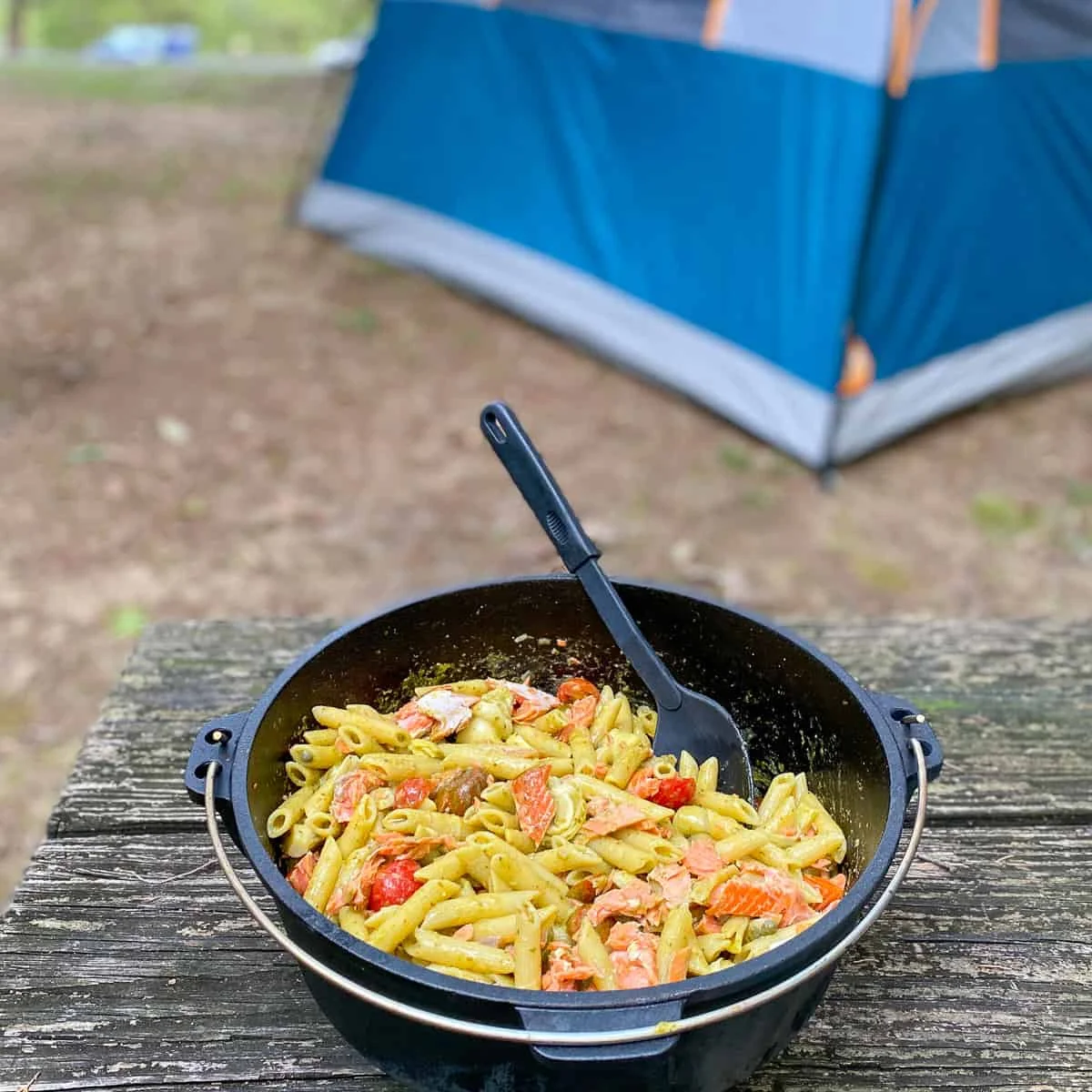
Campfire Pesto Pasta is a one-pot penne meal with basil pesto, artichoke hearts, tomatoes and hot-smoked salmon. Cook it over coals or on a camp stove for a filling meal with minimal washing-up.
Ingredients
- 480 ml (2 cups)vegetable stock (use low-sodium stock if desired)
- 720 ml (3 cups), divided, plus more if neededwater
- 10 ml (2 teaspoons)garlic powder
- 454 g (1 pound)penne, or another short pasta such as rigatoni (use certified gluten-free pasta if needed; chickpea pasta works well)
- 170 g (6 ounces), about 1 fillet or 1 tinhot-smoked salmon (see salmon alternatives in the recipe notes)
- 170 g (6 ounces), 1 small jarbasil pesto
- 30 ml (2 tablespoons)nutritional yeast, or grated Parmesan cheese (dairy or vegan)
- 1 jar (12 ounces; about 340 g), drainedquartered artichoke hearts
- 150 g (1 cup)cherry tomatoes, halved
- 30 ml (2 tablespoons)capers
Instructions
- 1
Prepare the fire
Heat the coals until very hot, or let the campfire burn down until the wood is smouldering without active flames. Add the stock, 480 ml (2 cups) of the water and garlic powder to a Dutch oven. Place it uncovered on the coals and bring the broth to a simmer.
- 2
Cook the pasta
Add the pasta and stir, making sure it is covered with liquid; add more stock or water if needed. Simmer until tender and most of the broth has been absorbed, about 15 minutes, depending on the pasta and the heat. Stir often and scrape the bottom of the pot to prevent sticking. If the pasta starts to sizzle, add a little water and stir to loosen any stuck pieces.
- 3
Flake the salmon
While the pasta cooks, break the salmon into flakes with a fork and set it aside. If the fillet has skin, discard it.
- 4
Stir in pesto
Once the pasta is tender, remove the pot from the heat. Add the remaining 240 ml (1 cup) of water and stir, then add the nutritional yeast and pesto and mix to combine.
- 5
Finish and serve
Add the salmon, drained artichoke hearts, tomatoes and capers. Stir to combine and serve immediately.
What is campfire pesto pasta?
This is a camping-style one-pot pasta: penne simmers directly in broth over a fire or camp stove, then gets finished with pesto and toppings. Its American camp-cooking approach makes a hearty meal without needing a separate pasta pot.
Pesto brings basil and a rich, savoury coating, while tomatoes, artichokes and capers add brightness and tang. Hot-smoked salmon makes this version especially substantial.
Nutrition and macros by portion
The nutrition label shows one serving as written: 701 calories, 30g protein, 97g carbs, 20g fat.
| Portion | Adjustment | kcal | Protein | Carbs | Fat |
|---|---|---|---|---|---|
| Lighter | Smaller pasta portion | 491 kcal | 21g | 68g | 14g |
| This serving | As written | 701 kcal | 30g | 97g | 20g |
| Hungry | Larger pasta portion | 1052 kcal | 45g | 146g | 30g |
Penne provides most of the carbohydrates, while pesto contributes much of the fat and the salmon supplies protein. Pair a serving with a generous portion of salad or other vegetables to add freshness and balance the plate.
Choosing the ingredients
Short pasta: Penne or rigatoni is easy to stir in a Dutch oven and holds the pesto well. Chickpea or certified gluten-free pasta can be used, but check it as it cooks because timing and liquid absorption may differ.
Pesto and toppings: Use a jar of basil pesto and drain the artichokes so they do not add excess liquid. The capers are salty and tangy, so low-sodium stock is a useful option if you want more control over seasoning.
Managing the campfire
Steady heat: Wait for hot coals or smouldering wood rather than cooking over active flames. Fire heat can vary, so keep an eye on the pot and adjust its position as needed.
Stirring: Pasta can settle and catch on the bottom while it simmers. Stir often and scrape the base of the Dutch oven; if you hear sizzling, add a little water and loosen the pasta promptly.
Getting the pasta tender
Liquid level: Make sure the pasta is covered when it goes into the broth, adding extra stock or water if necessary. The pasta should become tender as most of the liquid is absorbed.
Doneness: Start checking around 15 minutes, since the pasta type and fire heat affect the timing. If it is still firm and the pot looks dry, add a little more water and continue cooking.
Finishing with pesto
Off the heat: Remove the pot from the fire once the pasta is tender, then stir in the remaining water, nutritional yeast and pesto. This order coats the pasta without simmering the pesto along with the broth.
Gentle mixing: Fold in the salmon, artichokes, tomatoes and capers after the sauce is combined. Stir just enough to distribute them while keeping the salmon in flakes.
Serving the pasta
Serve this pasta straight from the Dutch oven while it is hot. A simple green salad or crunchy vegetables make a fresh side alongside the rich pesto and salmon.
For a lighter-feeling plate, pair a smaller helping with extra vegetables. If serving a group, keep any additional sides simple so they do not compete with the capers and pesto.
Recipe notes & tips
- Use low-sodium stock if you would like to keep the dish's saltiness in check.
- Keep extra water nearby because campfire heat and pasta types can change how much liquid is needed.
- Stir frequently and scrape the bottom of the Dutch oven to prevent the pasta from sticking.
- Drain the artichoke hearts well before adding them.
- Remove the pot from the heat before stirring in the pesto.
- Serve as soon as the salmon and vegetables are mixed through.
Variations
- Use rigatoni: Swap in another short pasta and check it regularly for doneness.
- Make it vegetarian: Leave out the salmon and add extra artichoke hearts or tomatoes.
- Change the cheese: Use grated Parmesan, dairy or vegan, in place of nutritional yeast.
- Choose chickpea pasta: Use it as the pasta option and adjust cooking time as needed.
- Add extra tomatoes: Stir in more halved cherry tomatoes for a fresher, juicier finish.
Common mistakes to avoid
- Cooking over flames: Active flames can make the heat uneven; wait for hot coals or smouldering wood.
- Skipping the stirring: Pasta can stick to the base; stir often and scrape the pot.
- Letting the pot run dry: Add a little more water or stock if the pasta is still firm and liquid has been absorbed.
- Adding pesto too early: Remove the pot from the heat before mixing in the pesto.
- Leaving the artichokes wet: Drain them well so their liquid does not thin the finished pasta.
How to store
Refrigerate leftovers in a covered container and eat within 3–4 days. Reheat until piping hot, adding a splash of water to loosen the pasta if needed.
Frequently asked questions
Can I make this on a camp stove?
Yes. Use a Dutch oven on the camp stove and simmer the pasta, stirring often. Adjust the heat so it cooks steadily without catching.
How do I know when the pasta is done?
Taste it for tenderness; the recipe takes about 15 minutes, but pasta type and fire heat affect the timing. Most of the broth should be absorbed.
Can I use a different pasta shape?
Yes, another short pasta such as rigatoni is suitable. Check it as it cooks, since different shapes and pasta types may need different amounts of time or liquid.
Can I leave out the salmon?
Yes. Omit it for a vegetarian version, or add extra artichoke hearts or tomatoes instead.
What can I use instead of nutritional yeast?
Use grated Parmesan cheese, either dairy or vegan, as suggested in the ingredient list.
Why is my pasta sticking?
Pasta can settle against the base of the Dutch oven, especially over strong heat. Stir often, scrape the bottom, and add a little water if you hear sizzling.
Cook it from the original
This recipe comes from champagne-tastes.com. Their page has the author’s own photos, notes and tips — the best place to cook it from.
Open the recipe on champagne-tastes.com