
Pancakes (Perfect for Pancake Day)
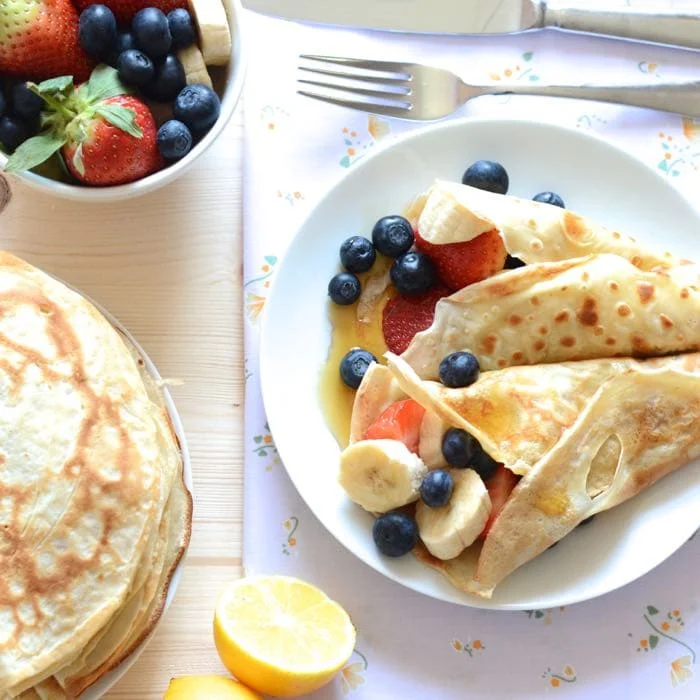
These thin, traditional pancakes are made from a simple flour, egg and milk batter, then cooked quickly in a hot pan. They are a straightforward choice for Pancake Day, or whenever you want pancakes with crisp, lightly browned edges.
Ingredients
- 1egg
- 100 gplain flour
- 300 mlfull-fat milk
- About ¼ tspsalt
- About 25 g in totalbutter, for greasing the pan
Instructions
- 1
Sift the flour
Sift the 100 g plain flour and about ¼ tsp salt into a large bowl.
- 2
Beat the egg
Beat the egg in a separate bowl, then add it to the flour.
- 3
Add first milk
Pour in about a quarter of the milk, 75 ml, and whisk until combined.
- 4
Finish the batter
Gradually whisk in the remaining 225 ml milk, combining each addition before adding more. If lumps remain, pass the batter through a sieve or briefly blitz it with a hand blender.
- 5
Melt the butter
Melt the 25 g butter in a frying pan over a low heat so it does not burn, then pour it into a cup or bowl.
- 6
Coat the pan
Turn the heat up to medium. When the pan is hot, add about two tablespoons of batter for a 15 cm pancake and immediately swirl it to cover the base. Tip any excess batter back into the bowl.
- 7
Keep them thin
Use only enough batter to coat the pan; too much will make the pancakes thick and stodgy.
- 8
Cook both sides
Cook for about 1 minute, until browned, then flip and cook the other side for a further 30 seconds.
- 9
Serve the pancakes
Serve the cooked pancakes.
- 10
Repeat the cooking
Dip kitchen paper into the melted butter and spread it over the pan. Repeat the process from step 6 until all the pancakes are cooked.
What are traditional pancakes?
In Britain, thin pancakes are closely associated with Shrove Tuesday, often called Pancake Day. The simple batter of flour, egg and milk cooks into a flexible pancake that can be served folded or rolled.
This version works because the milk is whisked in gradually, helping the batter come together smoothly, while a small amount in the pan keeps each pancake thin.
Nutrition and macros by portion
The nutrition label shows one serving as written: 60 calories, 2g protein, 9g carbs, 1g fat.
| Portion | Adjustment | kcal | Protein | Carbs | Fat |
|---|---|---|---|---|---|
| Lighter | Use less pan butter | 42 kcal | 1g | 6g | 1g |
| This serving | As written | 60 kcal | 2g | 9g | 1g |
| Hungry | Serve a larger portion | 90 kcal | 3g | 14g | 2g |
The flour and milk provide most of the carbohydrates, while the egg and milk contribute protein; butter supplies most of the fat. To balance the plate, serve a pancake alongside a portion of fruit or another savoury accompaniment.
The batter basics
Flour and salt: Sifting them together breaks up floury lumps before the wet ingredients go in.
Egg and milk: The egg helps bind the batter, while adding the milk in stages makes it easier to whisk evenly.
Getting a smooth mixture
Gradual additions: Start with 75 ml milk and whisk it into the flour and egg before slowly adding the remaining 225 ml. Mix each addition in before pouring in more.
Lumps: If a few persist, the stated options are to pass the batter through a sieve or briefly use a hand blender.
Swirling the batter
Thin coating: Add about two tablespoons of batter for a 15 cm pancake, then immediately tilt and swirl the pan so the batter covers its base.
Excess batter: Pour any surplus back into the bowl. Too much batter in the pan makes a thick, stodgy pancake rather than a thin one.
Heat and doneness
Butter first: Melt the butter over low heat so it does not burn, then remove it from the pan. Once the pan is hot, raise the heat to medium for cooking.
Colour and timing: Cook the first side for about 1 minute until browned, then flip and cook the other side for a further 30 seconds.
Serving ideas
These pancakes can be served as they are or folded and rolled at the table. Keep the cooked pancakes together while you finish the batch so they are ready to serve at once.
Recipe notes & tips
- Whisk each addition of milk into the batter before adding the next.
- If the batter has lumps, use the sieve or hand-blender option in the method.
- Melt the butter over low heat to help prevent it burning.
- Swirl the batter into a thin layer as soon as it hits the pan.
- Use kitchen paper dipped in the melted butter to grease the pan between pancakes.
Variations
- Sweet finish: Fold or roll the pancakes before serving.
- Savoury serving: Serve them with a savoury accompaniment.
- Fruit pairing: Add fruit alongside the pancakes.
- Smaller pancakes: Use less batter for each pancake and coat a smaller area of the pan.
Common mistakes to avoid
- Adding milk all at once: Whisk it in gradually so the batter combines more smoothly.
- Leaving lumps in: Pass the batter through a sieve or briefly blitz it with a hand blender.
- Burning the butter: Melt it over low heat, then pour it out of the pan.
- Using too much batter: Swirl a thin coating around the pan and tip excess back into the bowl.
- Cooking before the pan is hot: Wait until it is hot after turning the heat up to medium.
How to store
The method is written for serving the pancakes freshly cooked and does not specify storage times. If you have leftovers, refrigerate them in a covered container and reheat until hot before serving.
Frequently asked questions
How do I avoid lumps in the batter?
Add the milk gradually, whisking each addition in before adding more. If lumps remain, pass the batter through a sieve or briefly use a hand blender.
How much batter should I use for each pancake?
Use about two tablespoons for a pancake around 15 cm across, then swirl it to cover the base. Tip any excess back into the bowl.
How long does each pancake take to cook?
Cook the first side for about 1 minute, until browned, then cook the other side for a further 30 seconds.
Why are my pancakes thick and stodgy?
There may be too much batter in the pan. Use just enough to coat the base in a thin layer.
How should I grease the pan between pancakes?
Dip kitchen paper into the melted butter and spread it around the pan before repeating the cooking process.
Cook it from the original
This recipe comes from charlotteslivelykitchen.com. Their page has the author’s own photos, notes and tips — the best place to cook it from.
Open the recipe on charlotteslivelykitchen.com