
Turkey Melt Recipe
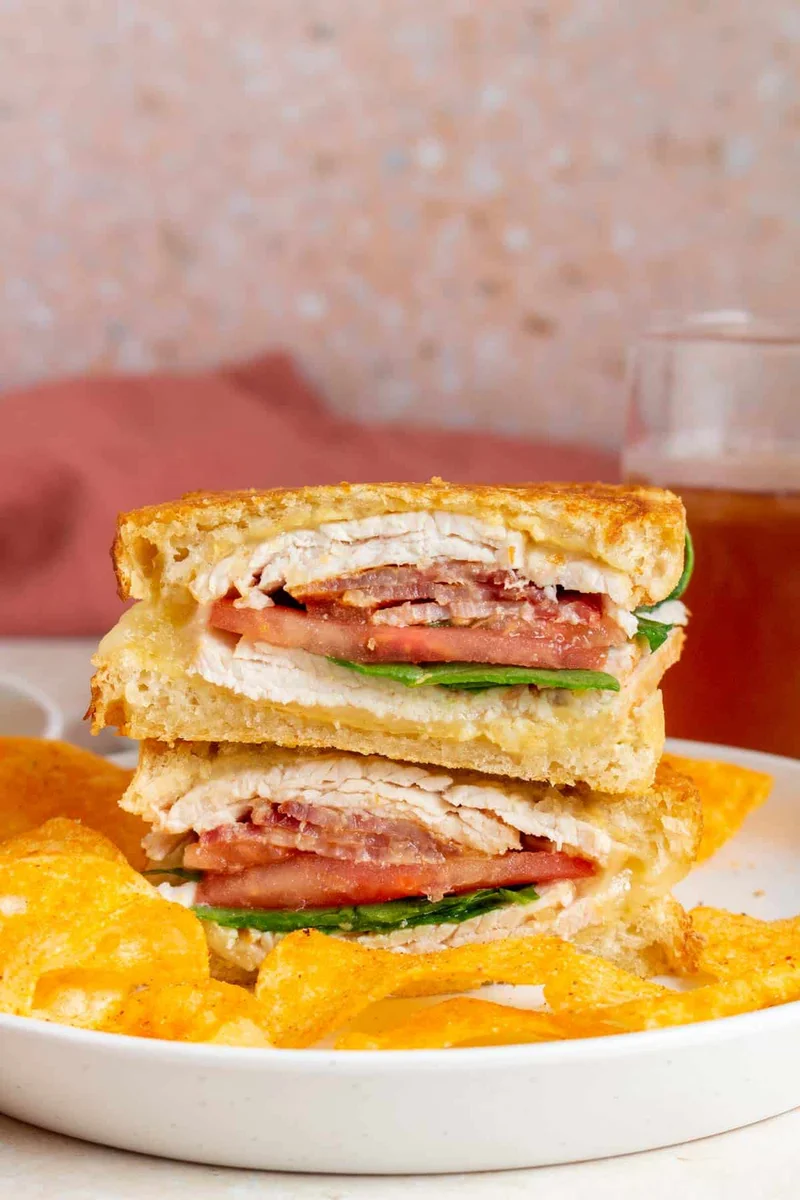
A hot American-style sandwich layered with turkey, cheese, bacon, spinach and tomato, then toasted in a skillet until the bread is crisp and the cheese is warm. It’s a quick, filling way to use leftover turkey for lunch or dinner.
Ingredients
- 28 g (2 tablespoons)butter
- 4 slicessourdough bread, or thick, crusty bread of choice
- 30 ml (2 tablespoons)Dijon mustard
- 4 slices, cut in halfcheese
- 170–198 g (6–7 oz)sliced turkey
- 2–4 slicestomato
- 120 ml (½ cup)fresh baby spinach
- 2–4 strips, cooked and cut in halfbacon
Instructions
- 1
Butter and spread
Set out the 4 slices of sourdough on a cutting board. Butter one side of each slice, turn them over and spread the Dijon mustard over the other sides.
- 2
Add the cheese
Put 2 half-slices of cheese on each slice of bread.
- 3
Layer the turkey
Divide the turkey into 4 portions. Arrange 2 portions on 2 of the bread slices.
- 4
Finish the filling
Divide the bacon, spinach and tomato in half, and place one half of each on the 2 slices topped with turkey. Add the remaining turkey, then close the sandwiches with the other slices of bread, cheese-side down.
- 5
Toast the sandwiches
Warm a skillet over medium-low heat. Cook the sandwiches for 3–4 minutes, until the undersides are toasted. Flip them and cook for another 3–4 minutes, pressing with a spatula or placing something heavy on top.
What is a turkey melt?
A turkey melt is a hot sandwich in which sliced turkey and cheese are toasted between slices of bread. It belongs to the American tradition of griddled sandwiches, where a crisp exterior and warm filling make a simple lunch feel substantial.
This version pairs turkey with bacon, spinach and tomato, with Dijon mustard for a sharp note. Sourdough gives the outside a sturdy, tangy crust.
Nutrition and macros by portion
The nutrition label shows one serving as written: 820 calories, 43g protein, 72g carbs, 40g fat.
| Portion | Adjustment | kcal | Protein | Carbs | Fat |
|---|---|---|---|---|---|
| Lighter | Use less butter and bacon | 574 kcal | 30g | 50g | 28g |
| This serving | As written | 820 kcal | 43g | 72g | 40g |
| Hungry | Add another turkey portion | 1230 kcal | 65g | 108g | 60g |
The bread supplies most of the carbohydrates, while the butter, cheese and bacon contribute much of the fat. Turkey and cheese provide protein, with smaller amounts also coming from the bread and bacon. Serve with a green salad or fresh vegetables for a lighter, more balanced plate.
Choosing the bread and cheese
Bread: Sourdough or another thick, crusty loaf can hold the filling while it cooks. Butter the outside so it browns in the skillet.
Cheese: The recipe leaves the type open, so use a cheese that melts well and suits the turkey. Cutting each slice in half makes it easier to distribute across the bread.
Layering the filling
Turkey: Divide it into four portions, placing two portions on each sandwich so the filling is spread through the middle.
Vegetables and bacon: Add the spinach, tomato and cooked bacon in even layers. Keeping the filling within the bread makes the sandwiches easier to flip.
Getting the skillet temperature right
Medium-low heat gives the bread time to toast while the filling warms. A hotter skillet can brown the outside before the cheese has had a chance to soften.
Cook the first side for 3–4 minutes, then flip and cook the second side for another 3–4 minutes. The recipe suggests pressing with a spatula or using something heavy on top.
Checking for doneness
Look for toasted, crisp bread on both sides. The cheese should be warm and beginning to soften around the turkey.
If the bread is browning quickly, reduce the heat and give the sandwich more time in the skillet rather than rushing the second side.
What to serve with a turkey melt
Serve the sandwiches hot, while the bread is crisp and the cheese is soft. A simple green salad or a bowl of soup makes an easy accompaniment.
The filling is already hearty, so lighter sides such as fresh vegetables or fruit can balance the plate without adding another rich component.
Recipe notes & tips
- Use leftover turkey sliced into even pieces so it layers neatly.
- Butter the outside of every bread slice for an evenly toasted crust.
- Keep the heat at medium-low so the bread browns gradually.
- Press gently with a spatula to help the layers stay together as they cook.
- Let the sandwiches rest briefly before cutting so the filling settles.
Variations
- Change the cheese: Choose a different melting cheese to shift the flavour.
- Use another bread: Try a thick, crusty loaf in place of sourdough.
- Make it bacon-free: Leave out the bacon and keep the turkey, spinach and tomato.
- Add extra spinach: Use more baby spinach for a greener filling.
- Adjust the mustard: Spread on less Dijon for a milder sandwich.
Common mistakes to avoid
- Heat too high: The bread may brown before the cheese softens; cook over medium-low heat.
- Overfilling: A packed sandwich is harder to flip; keep the layers within the bread.
- Uneven buttering: Bare patches can toast unevenly; spread the butter across each outside face.
- Flipping too soon: The filling can shift; let the first side toast for 3–4 minutes before turning.
- Skipping the press: The layers may not settle together; press with a spatula or use something heavy on top.
How to store
These sandwiches are best eaten straight from the skillet. Refrigerate leftovers in a covered container for up to 3 days, then reheat in a skillet over low heat until warmed through and crisp again.
Frequently asked questions
Can I use leftover turkey?
Yes. Slice or shred cooked leftover turkey and divide it into the portions described in the method.
What cheese works well?
Use a cheese that melts readily. The recipe does not specify a particular variety.
Can I make this without bacon?
Yes. Leave it out and assemble the sandwich with the turkey, cheese, spinach and tomato.
How do I stop the bread from burning?
Keep the skillet at medium-low heat and cook each side for 3–4 minutes, checking the colour as it toasts.
Can I prepare the sandwiches ahead?
You can assemble them shortly before cooking, but they are best toasted just before serving so the bread stays crisp.
Cook it from the original
This recipe comes from carmyy.com. Their page has the author’s own photos, notes and tips — the best place to cook it from.
Open the recipe on carmyy.com