
Buttermilk Fried Chicken Sandwiches with Slaw
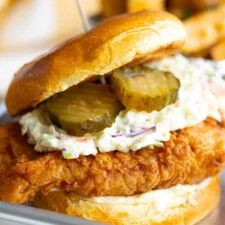
A Southern-style sandwich of buttermilk-marinated chicken, fried in a crisp seasoned coating and piled into a soft brioche bun with creamy slaw and sweet pickles. It makes a hearty meal with contrasting crunch, tang and richness.
Ingredients
- 2boneless, skinless chicken breasts, halved
- 240 ml (1 cup)buttermilk
- to tastesalt and pepper
- 4brioche hamburger buns
- to tastebread and butter pickles
- about 1.42 litres (1.5 quarts)vegetable oil, for frying
- about 188 g (1½ cups)plain flour
- 2 teaspoonskosher salt
- 1 teaspoononion powder
- 1 teaspoonground mustard
- 1 teaspoonwhite pepper
- 240 ml (1 cup)buttermilk
- 2 teaspoonsLouisiana-style hot sauce
- about 150 g (about 2 cups)ready-to-eat coleslaw mix
- about 115 g (½ cup)mayonnaise
- to tastesalt and pepper
Instructions
- 1
Marinate chicken
Put the chicken in a large resealable bag with 240 ml (1 cup) buttermilk and salt and pepper to taste. Mix inside the bag, then refrigerate overnight.
- 2
Drain chicken
Remove the chicken from the bag, shake off excess buttermilk and set it on a plate. Discard the marinade.
- 3
Heat the oil
Pour the oil into a large Dutch oven and heat it with a deep-frying thermometer until it reaches 177°C (350°F).
- 4
Mix the coatings
Use two shallow dishes. Put the flour, kosher salt, onion powder, ground mustard and white pepper in one; combine the remaining 240 ml (1 cup) buttermilk with the hot sauce in the other, stirring each mixture.
- 5
Coat the chicken
Dip each piece of chicken in the flour mixture, then the buttermilk mixture, then back into the flour. Make sure each piece is fully coated at each stage.
- 6
Fry the chicken
Using tongs, fry each piece until golden brown and cooked through, about 2–3 minutes per side. Transfer to a small baking tray fitted with a wire rack, let excess oil drain and leave to cool for about 10 minutes.
- 7
Make the slaw
In a small bowl, combine the coleslaw mix with the mayonnaise and salt and pepper to taste.
- 8
Build the sandwiches
Assemble the fried chicken sandwiches with the slaw and bread and butter pickles, then serve.
What is a buttermilk fried chicken sandwich?
This is a Southern-inspired take on a classic fried chicken sandwich: marinated chicken is coated in seasoned flour, fried until crisp and served in a bun with slaw and pickles. The combination draws on familiar Southern flavours of tangy buttermilk, spiced coating and sweet-sour pickle.
Here, the creamy slaw and soft brioche bring a cool, rich contrast to the crisp chicken. The method uses a second buttermilk dip between layers of flour to help build that craggy coating.
Nutrition and macros by portion
The nutrition label shows one serving as written: 690 calories, 43g protein, 57g carbs, 31g fat.
| Portion | Adjustment | kcal | Protein | Carbs | Fat |
|---|---|---|---|---|---|
| Lighter | Less mayonnaise, more slaw | 483 kcal | 30g | 40g | 22g |
| This serving | As written | 690 kcal | 43g | 57g | 31g |
| Hungry | Add another chicken piece | 1035 kcal | 65g | 86g | 47g |
Most of the carbohydrate comes from the brioche bun, flour coating and slaw mix; the chicken supplies most of the protein. Frying oil and mayonnaise contribute much of the fat, while the coating, marinade and pickles can make sodium vary considerably. Serve with extra vegetables or a simple green salad to balance the rich sandwich.
Why use two buttermilk portions?
Marinade: the first portion seasons and moistens the chicken during its overnight rest. Drain the pieces before coating so the flour can cling rather than turn pasty.
Dredge: the second portion, mixed with hot sauce, sits between two flour layers. This repeated dip-and-coat gives the outside a more substantial crust.
Getting the coating to cling
Flour first: press the chicken into the seasoned flour and turn it to cover all sides. A full first coating gives the buttermilk something to grip.
Final coat: return the chicken to the flour and cover it completely. Handle the pieces with tongs to keep the coating intact and your hands clear of the hot oil.
Frying to the right texture
Oil temperature: bring the oil to 177°C (350°F) before adding the chicken, and use the thermometer to check it as you fry. Oil that is not hot enough can leave the crust greasy.
Doneness: the method gives about 2–3 minutes per side, but thickness affects cooking time. Check that the chicken is cooked through before serving; a food thermometer inserted into the thickest part should read 74°C.
Resting before assembly
Rack rest: transfer the fried pieces to a wire rack so excess oil can drip away. Leave them for about 10 minutes as directed; a rack helps keep the underside from sitting in oil.
Keep the slaw separate until you build the sandwiches. This preserves more of the coating's crispness.
Building a balanced sandwich
Slaw and pickles: the creamy slaw softens the spicy, savoury chicken, while bread and butter pickles add sweetness and acidity. Use enough to complement the chicken without burying its crisp coating.
Brioche: the soft bun makes a rich, tender base for the filling. Toast it if you like a firmer surface, then assemble just before serving.
Recipe notes & tips
- Marinate the chicken overnight as the method directs, allowing time for the flavour to develop.
- Use a thermometer to bring the oil to 177°C (350°F) before frying.
- Let excess buttermilk drip from the chicken before beginning the flour coating.
- Keep the chicken pieces in a single layer in the oil so they can brown evenly.
- Drain the cooked chicken on a wire rack rather than directly on a flat plate.
- Mix the slaw shortly before serving and assemble the sandwiches just before eating.
Variations
- Adjust the heat: add more hot sauce to the buttermilk dredge for a spicier coating.
- Use a different bun: serve the chicken in soft seeded buns instead of brioche.
- Add extra crunch: top the sandwiches with a few more bread and butter pickles.
- Make the slaw tangier: stir a little pickle brine into the mayonnaise mixture.
- Change the greens: use shredded cabbage and carrot in place of the ready-to-eat coleslaw mix.
Common mistakes to avoid
- Skipping the marinade: give the chicken its overnight rest in the buttermilk as instructed.
- Wet, heavy coating: shake off excess marinade before dipping the chicken in flour.
- Oil at the wrong temperature: wait until it reaches 177°C (350°F) and monitor it while frying.
- Crowding the pot: fry the pieces with space around them so they brown rather than steam.
- Soggy crust: drain the chicken on a wire rack and keep slaw off the coating until assembly.
- Guessing doneness by colour: check the thickest part of the chicken to ensure it is cooked through.
How to store
Store leftover chicken and slaw separately in airtight containers in the fridge for up to 3 days. Reheat the chicken in an oven or air fryer until hot to help crisp the coating; assemble with the cold slaw and fresh bun just before serving.
Frequently asked questions
Can I marinate the chicken for less than overnight?
The recipe specifies an overnight marinade. If you are short on time, allow as much time as you can, but the result may be less well seasoned.
How do I know when the chicken is cooked?
Check the thickest part with a food thermometer; it should reach 74°C. The stated frying time is about 2–3 minutes per side, though piece thickness can change the timing.
Can I prepare the slaw ahead?
You can mix it ahead and keep it chilled, but it may soften as it sits. For the crispest sandwich, add the slaw when you are ready to serve.
Can I use a different oil for frying?
Use a neutral oil suitable for deep frying. Keep the amount and temperature in mind, and follow the method's target of 177°C (350°F).
What can I serve with these sandwiches?
Try a green salad, extra coleslaw or another vegetable side. The sandwich is rich, so a fresh, crisp accompaniment works well.
Cook it from the original
This recipe comes from butterbeready.com. Their page has the author’s own photos, notes and tips — the best place to cook it from.
Open the recipe on butterbeready.com