
Portuguese tomato rice, arroz de tomate
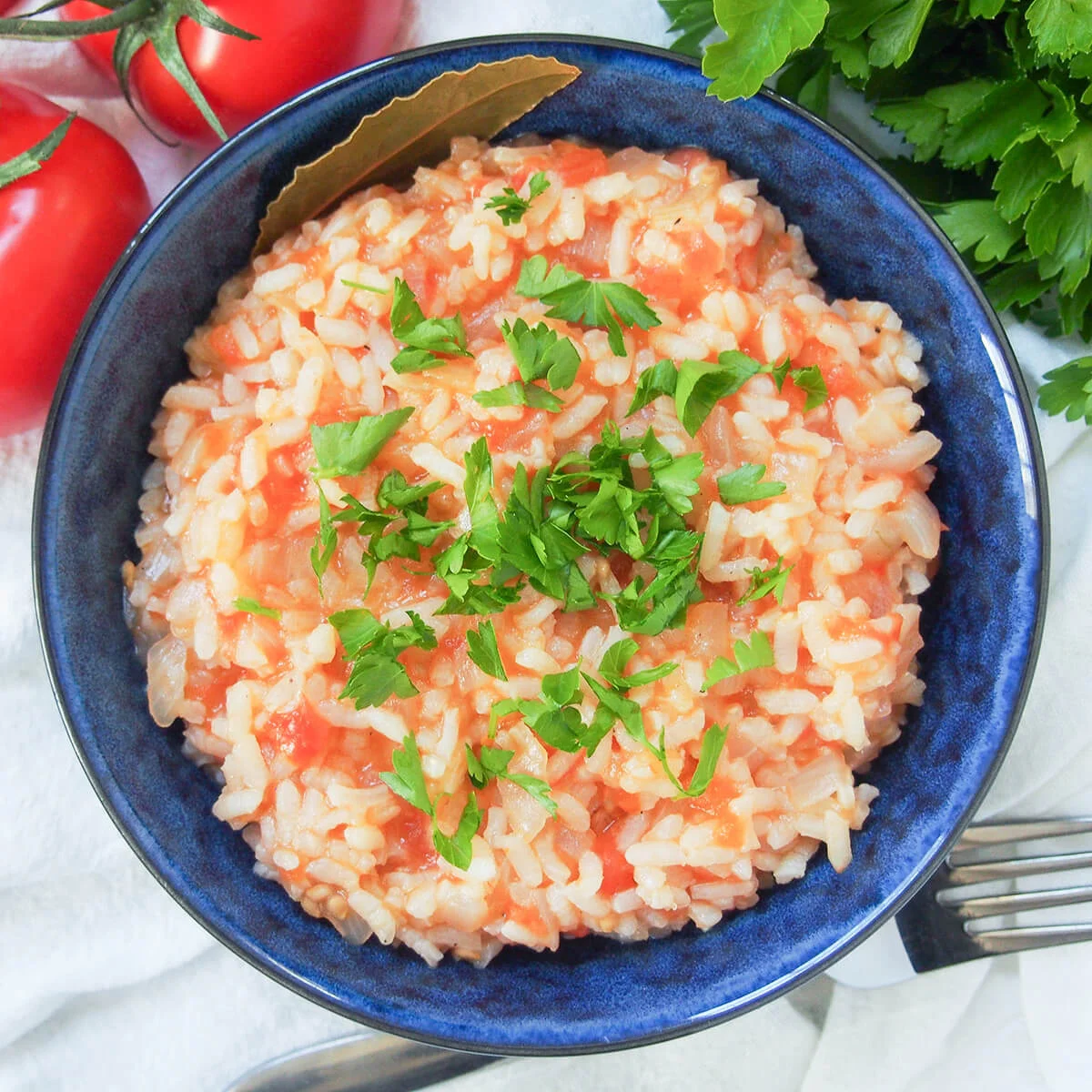
Arroz de tomate is a soft, aromatic Portuguese rice cooked with tomatoes, wine and stock. It makes a comforting side dish, served a little brothy or cooked down until drier.
Ingredients
- 1 mediumonion
- 2 cloves (or 3 if smaller)garlic
- 340 g (12 oz)tomatoes
- 30 ml (2 tbsp)olive oil
- 190 g (1 cup)arborio rice (or carolino rice, if available)
- 60 ml (¼ cup)white wine, such as vinho verde, sauvignon blanc or pinot grigio
- 480 ml (2 cups)light stock, such as vegetable or chicken
- To tastesalt
- A littlefreshly ground black pepper
- 1bay leaf
- 14 g (1 tbsp)butter
- 8 g (2 tbsp)chopped parsley, to serve
Instructions
- 1
Prepare the vegetables
Dice the onion fairly small and mince or finely chop the garlic. To peel the tomatoes, cover them with boiling water in a bowl for a minute or two, then pierce one: when the skin starts to lift, remove the tomatoes and peel them. Remove the cores, dice the tomatoes and discard roughly half the seeds, keeping the juices and remaining tomato.
- 2
Soften the onion
Warm the olive oil in a wide lidded pan over a medium heat. Add the onion and cook, stirring regularly, for about 3–4 minutes until softened. Stir in the garlic and cook for another minute, then add the tomatoes and bring to a simmer. Lower the heat and simmer for around 5–10 minutes, until the tomatoes are very soft.
- 3
Coat the rice
Add the rice and stir briefly so the grains are coated. Pour in the wine, then stir and scrape the bottom of the pan to lift any browned bits into the rice. Cook, stirring, until most of the wine has evaporated.
- 4
Simmer the rice
Add all the stock, season with salt and pepper to taste, and add the bay leaf. Cover the pan and bring the mixture to a simmer. Reduce the heat so it cooks gently rather than boiling vigorously, and cook for about 15 minutes, until the rice is cooked through.
- 5
Finish the dish
When the rice is cooked, remove the lid and, if desired, simmer longer to reduce the liquid to your preferred consistency. Check the seasoning, adjust if needed and remove the bay leaf. Stir in the butter until melted and coating the rice.
- 6
Add the parsley
Serve topped with freshly chopped parsley.
What is arroz de tomate?
Arroz de tomate is a Portuguese tomato rice, commonly served as a side alongside a main dish. This version builds its flavour from softened onion, garlic and ripe tomatoes, with wine and stock cooking into the grains.
Carolino rice is a traditional choice when you can find it; arborio is a practical alternative. Both help make a tender, cohesive dish that can be served with some broth still in the pan.
Nutrition and macros by portion
The nutrition label shows one serving as written: 371 calories, 13g protein, 52g carbs, 12g fat.
| Portion | Adjustment | kcal | Protein | Carbs | Fat |
|---|---|---|---|---|---|
| Lighter | Use less butter | 260 kcal | 9g | 36g | 8g |
| This serving | As written | 371 kcal | 13g | 52g | 12g |
| Hungry | Serve a larger portion | 557 kcal | 20g | 78g | 18g |
The rice provides most of the carbohydrates, while the olive oil and butter contribute much of the fat. Protein comes from the rice and depends partly on whether you choose vegetable or chicken stock; serve it with a protein-rich main and vegetables for a more balanced plate.
Choosing and preparing the tomatoes
Tomato flesh: Use ripe tomatoes and peel them for a softer, less papery texture. Briefly immersing them in boiling water helps the skins loosen.
Seeds and juices: Removing about half the seeds keeps the dish from becoming too seedy, while retaining the juices adds tomato flavour and moisture.
Build the tomato base
Onion and garlic: Give the onion a few minutes to soften before adding the garlic, which needs less time and can catch if left unattended.
Tomatoes: Simmer them until very soft before adding the rice. This gives the grains time to take on the tomato flavour as they cook.
Why stir in the wine?
After coating the rice with the tomato mixture, add the wine and scrape the pan as you stir. The liquid helps loosen any browned bits from the base, folding them back into the rice.
Let most of the wine cook away before adding the stock. This keeps the cooking liquid from being diluted by wine that has not yet reduced.
Getting the rice texture right
Gentle simmer: Once the stock is simmering, lower the heat so the rice cooks steadily without a hard boil. Keep the lid on during this stage and begin checking around the 15-minute mark.
Choose your finish: The rice can be left slightly brothy or cooked uncovered a little longer for a drier result. Stir in the butter at the end for a smooth, lightly coated finish.
Seasoning and serving
Stock varies in saltiness, so taste before adding much salt and check again after the rice is cooked. Remove the bay leaf before serving.
Parsley adds a fresh finish. Serve the rice with a main dish and vegetables; its tomato-rich, soft texture pairs especially well with simply cooked fish, meat or beans.
Recipe notes & tips
- Use a wide pan with a close-fitting lid so the rice cooks evenly.
- Keep the tomato juices when preparing the tomatoes; they belong in the pan.
- Stir and scrape well when adding the wine to lift browned bits from the base.
- Taste the stock before seasoning, as its salt content can vary.
- Check the rice near the end of the cooking time and adjust the liquid to suit your preferred texture.
Variations
- Use carolino rice: Choose it instead of arborio when it is available.
- Change the stock: Use vegetable or chicken stock, depending on what you are serving alongside.
- Choose a wine: Try vinho verde, sauvignon blanc or pinot grigio.
- Make it dairy-free: Leave out the butter and finish with the olive oil already in the dish.
- Add herbs: Replace or supplement the parsley with another freshly chopped soft herb.
Common mistakes to avoid
- Adding garlic too early: It can burn while the onion softens; add it after the onion has cooked for 3–4 minutes.
- Skipping the tomato simmer: The rice benefits from a soft, cooked-down base, so give the tomatoes 5–10 minutes.
- Boiling too vigorously: The rice may cook unevenly; lower the heat after the pan reaches a simmer.
- Leaving the pan uncovered: Too much liquid can evaporate during the rice's main cooking stage; keep the lid on.
- Over-reducing the rice: It can lose its softly brothy texture; stop cooking uncovered when it reaches your preferred consistency.
How to store
Cool leftovers promptly and refrigerate in a covered container for up to 3 days. Reheat gently in a pan or microwave, adding a splash of water or stock to loosen the rice; heat until steaming throughout.
Frequently asked questions
Can I use arborio rice instead of carolino?
Yes. Arborio is the suggested alternative and works well in this dish.
Do I have to peel the tomatoes?
Peeling gives the rice a softer texture, and the boiling-water method makes it easier. If you leave the skins on, expect them to remain noticeable in the finished dish.
How do I know when the rice is cooked?
After roughly 15 minutes of gentle simmering, taste a grain. It should be cooked through; continue cooking gently if it is still firm.
Should tomato rice be soupy or dry?
Either is suitable here. Serve it with some liquid remaining, or remove the lid and cook a little longer to reduce it.
Can I make it without wine?
The recipe uses white wine to deglaze the pan. You can omit it and proceed with the stock, though the flavour will be different.
Cook it from the original
This recipe comes from carolinescooking.com. Their page has the author’s own photos, notes and tips — the best place to cook it from.
Open the recipe on carolinescooking.com