
Dutch No Knead Oven Bread
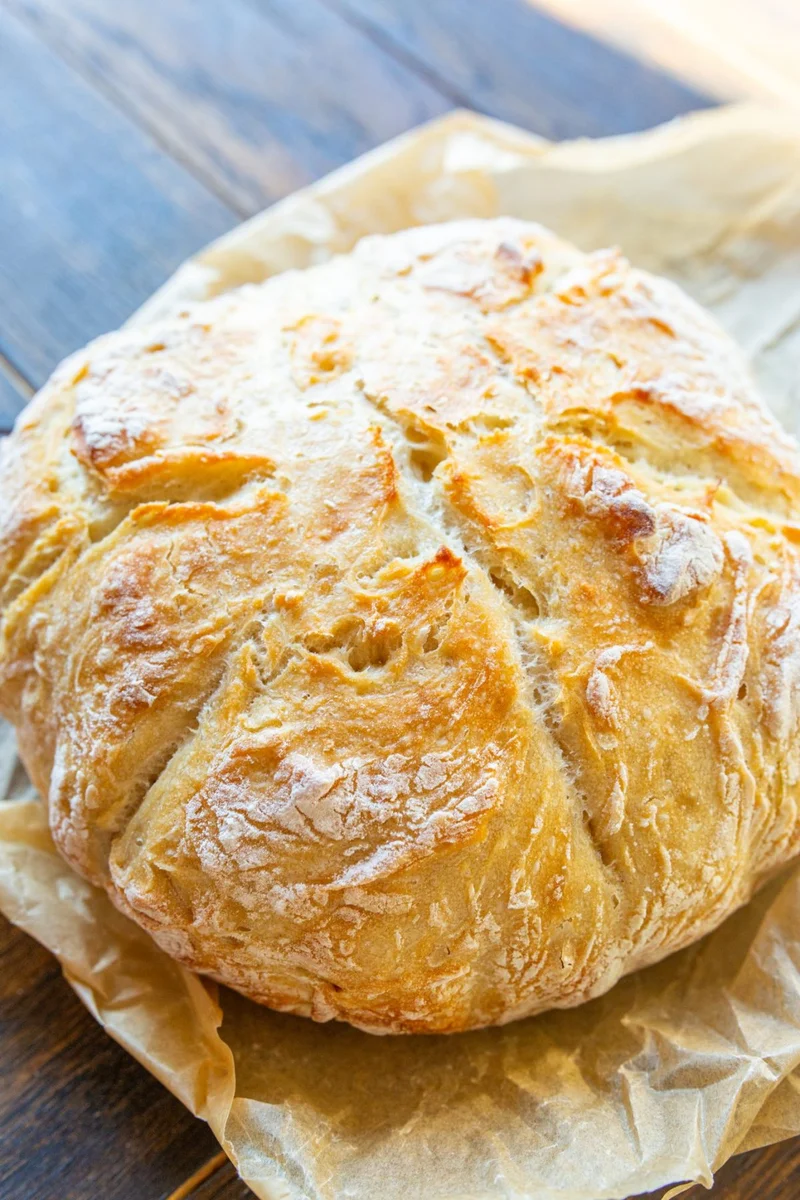
This Dutch oven bread has a crisp, deeply browned crust and a soft, chewy centre, made with a simple yeast dough that needs no kneading. It takes little hands-on work, though the dough needs several hours to rise and the loaf needs time to cool.
Ingredients
- 570 g (4 and 3/4 cups), plus extra for flouringplain flour
- 2 and 1/4 teaspoons (about 1 packet (7 g))instant yeast
- 2 teaspoons (12 g)sea salt
- 472 ml (2 cups), warm (about 48°C (120°F))water
- 2 teaspoons (13.5 g)maple syrup (or agave or granulated sugar)
- 1 teaspoon (4.4 g)olive oil (or any neutral oil)
Instructions
- 1
Mix the dough
Whisk the flour, yeast and salt together in a large bowl. Make a well in the centre, then add the warm water, maple syrup and oil. Stir for about 1 minute, until everything is incorporated and the dough looks shaggy.
- 2
Leave to rise
Lightly grease the bowl’s sides and turn the dough over so it is lightly coated. Cover with greased cling film or a light tea towel and leave on the counter for 2 to 3 hours, until doubled in size. In a cold kitchen, set it in an unheated oven with the light on, or in the microwave, and use a bowl tall enough to allow for the rise.
- 3
Heat the Dutch oven
During the final 30 to 40 minutes of rising, put the Dutch oven in the oven and preheat to 230°C (450°F). Let the pot heat up with the oven.
- 4
Turn out the dough
After about 2 hours, look for bubbles on top of the dough. Spread at least 1 tablespoon of flour over a work surface and turn out the dough. Sprinkle another 1/2 tablespoon of flour over it and flour your dough scraper.
- 5
Fold the dough
Use the scraper or a large knife to pull the outer edges of the dough up and over the centre. Rotate the dough and repeat about 6 to 12 times, until it feels tighter and starts to take shape. Add a light dusting of flour if needed; this should take less than a minute.
- 6
Shape the loaf
Scoop the dough onto a piece of parchment paper. Use your hands to gather and shape it into a circle.
- 7
Load the pot
Once the oven is hot, carefully remove the Dutch oven using oven mitts. Take off the lid, lower the dough into the pot on its parchment paper, replace the lid and return the pot to the oven.
- 8
Bake until browned
Bake for 45 minutes. Carefully remove the lid and bake for another 15 to 20 minutes, until the crust is as browned as you like. In a gas or convection oven, bake uncovered for only 5 to 10 minutes so the bottom and tips do not burn.
- 9
Cool the loaf
Remove the pot from the oven and set it down. Lift the bread out by the parchment edges and transfer it to a wire rack. To check for doneness, turn it over and tap the bottom lightly; it should sound hollow.
- 10
Slice and serve
Leave the bread to cool for at least 30 minutes before slicing and serving.
What is Dutch oven bread?
Dutch oven bread is a home-baked loaf cooked in a heavy, lidded pot. The enclosed pot holds steam around the dough early in baking, helping the loaf expand before the crust sets.
This American-style version uses a simple no-knead dough: time develops its structure while a few folds help it take shape before baking. Flour, yeast, salt, water, a little syrup and oil make a loaf with a tender crumb and a crisp crust.
Nutrition and macros by portion
The nutrition label shows one serving as written: 525 calories, 15g protein, 109g carbs, 2g fat.
| Portion | Adjustment | kcal | Protein | Carbs | Fat |
|---|---|---|---|---|---|
| Lighter | Serve a smaller slice | 368 kcal | 11g | 76g | 1g |
| This serving | As written | 525 kcal | 15g | 109g | 2g |
| Hungry | Serve a larger slice | 788 kcal | 23g | 164g | 3g |
Most of the carbohydrates come from the flour, while the flour also supplies most of the protein in this bread. The small amount of oil contributes fat; serve a slice with vegetables and a protein-rich topping or side for a more balanced plate.
Why the dough needs time
Slow rise: the dough rests for 2 to 3 hours, until doubled and bubbly. The room’s temperature affects the timing, so use the dough’s growth as your cue rather than relying only on the clock.
Warm water: aim for about 48°C, as specified in the recipe. A warm, draft-free spot can help the dough rise in a chilly kitchen.
Flour and folding
Flour: plain flour is the main structure of the loaf, while the extra flour helps keep the sticky dough manageable during shaping. Add it sparingly so the dough does not become dry.
Folding: pull the edges towards the centre about 6 to 12 times. Stop once the dough feels a little tighter and holds a rough round shape; this is a brief shaping step, not kneading.
Getting a crisp crust
Hot pot: preheating the Dutch oven with the oven gives the dough a hot, enclosed space to bake in. Handle the pot carefully with oven mitts, as both the pot and lid become very hot.
Uncovered finish: bake with the lid on for 45 minutes, then remove it to brown the crust for 15 to 20 minutes. Gas and convection ovens may need only 5 to 10 minutes uncovered, so keep an eye on the bottom and tips.
How to tell when it is done
Crust: after removing the lid, bake until the loaf reaches the colour you prefer. The recipe also suggests tapping the underside lightly; a hollow sound is a useful doneness cue.
Cooling: allow at least 30 minutes on a wire rack before slicing. Cutting too soon can make the centre seem gummy while the loaf is still settling.
What to serve with it
For a simple meal, serve slices with soup, a salad or a savoury spread. The crunchy crust and soft centre also work well for toast or sandwiches.
If serving it alongside a main dish, pair the bread with vegetables and a protein-rich food to make the meal more varied.
Recipe notes & tips
- Use a bowl with enough room for the dough to double in size.
- Keep the rising dough covered so its surface does not dry out.
- Dust the work surface and scraper with flour before handling the dough.
- Preheat the Dutch oven with the oven rather than placing a cold pot into a hot oven.
- Use oven mitts when moving the hot pot and taking off its lid.
- Cool the loaf on a wire rack for at least 30 minutes before cutting.
Variations
- Use agave: substitute it for the maple syrup in the same amount.
- Use sugar: replace the maple syrup with granulated sugar as suggested in the ingredient list.
- Change the oil: use a neutral oil instead of olive oil.
- Adjust the crust: leave the loaf uncovered for the shorter end of the range for a lighter crust.
- Serve as toast: slice the cooled loaf and toast it just before serving.
Common mistakes to avoid
- Rushing the rise: wait until the dough has doubled and developed bubbles on top.
- Using too small a bowl: choose one with enough height for the dough to double.
- Adding too much flour: dust the dough lightly during folding so it stays tender.
- Handling the hot pot carelessly: use oven mitts when lifting it or removing the lid.
- Overbaking uncovered: in a gas or convection oven, check after 5 minutes to help prevent the bottom and tips from burning.
- Slicing too soon: let the loaf cool on a rack for at least 30 minutes.
How to store
Once completely cool, store the loaf in a paper bag or bread box at room temperature and use within 2 to 3 days. Reheat slices in a toaster; a whole loaf can be warmed briefly in the oven until the crust is crisp again.
Frequently asked questions
How long does the dough need to rise?
Allow 2 to 3 hours, until the dough has doubled in size. A cooler kitchen can slow the rise, so check the dough rather than relying only on the time.
Can I let the dough rise in a cold kitchen?
Yes. The recipe suggests using an unheated oven with the light on or a microwave as a draft-free place for the covered bowl.
Why does the Dutch oven go into the oven before preheating?
The pot heats up gradually with the oven, as directed in the recipe. Always handle it with oven mitts once hot.
How do I know when the bread is baked through?
The crust should be browned to your liking, and the recipe recommends tapping the bottom lightly; it should sound hollow.
Can I bake this in a gas or convection oven?
Yes. The recipe advises baking uncovered for only 5 to 10 minutes in a gas or convection oven, checking that the bottom and tips do not burn.
Can I slice the bread while it is hot?
It is best to wait at least 30 minutes and let it cool on a wire rack before slicing, so the centre has time to settle.
Cook it from the original
This recipe comes from callmepmc.com. Their page has the author’s own photos, notes and tips — the best place to cook it from.
Open the recipe on callmepmc.com