
Causa rellena
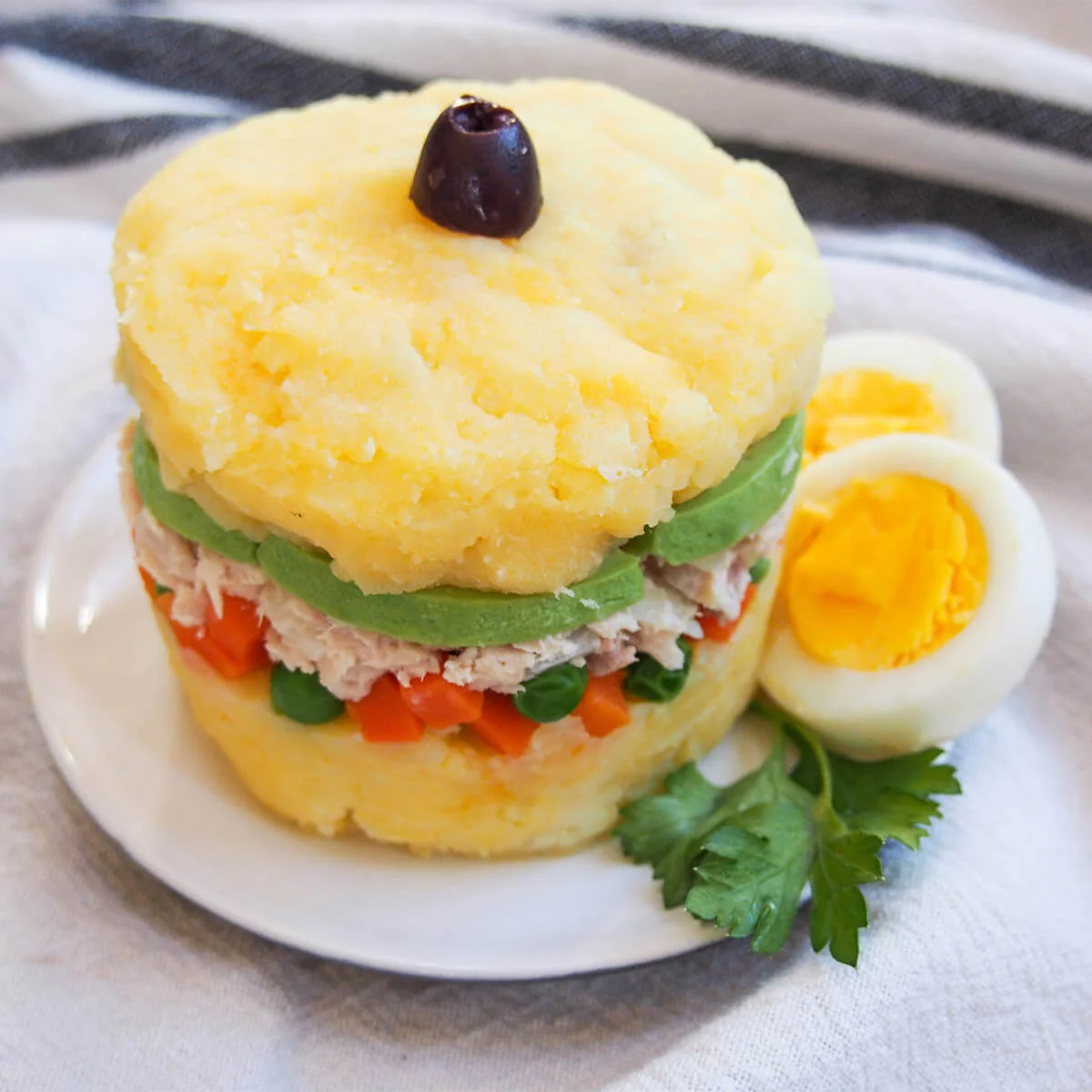
Causa rellena is a chilled Peruvian potato stack layered with tuna, avocado and vegetables. It is a colourful, satisfying dish that comes together with a short list of ingredients and works well for lunch or a light supper.
Ingredients
- 454 g (1 lb)yellow potatoes
- 1 tbsplime juice
- 1/2 tspají amarillo chilli paste
- 1/2carrot
- 2 tbsppeas (frozen and defrosted or canned, or lightly cooked fresh)
- 1/2avocado
- 113 g (4 oz)canned tuna
- 1 tbspmayonnaise
- 1 tbsponion (finely diced; red onion or another variety)
Instructions
- 1
Cook the potatoes
Peel and dice or slice the potatoes. Boil until just tender, about 10 minutes, checking regularly with a knife because the cooking time depends on the size of the pieces.
- 2
Mash and cool
Drain the potatoes, then mash them with the lime juice and ají amarillo. Set aside to cool.
- 3
Cook the vegetables
Cut the carrot into a very small dice, about the size of the peas. Boil the carrot and peas for a couple of minutes, until just cooked; drain and set aside.
- 4
Prepare the filling
Slice the avocado fairly thinly. Flake the tuna and mix it with the mayonnaise and onion.
- 5
Layer the stacks
Place two chef's rings on plates. Take half of the onion and divide it between the rings, then add half of the carrot and peas to each. Add the tuna mixture and arrange the avocado slices in an even layer on top.
- 6
Finish and serve
Divide the remaining potato between the two stacks and flatten the tops. Carefully remove the chef's rings and serve.
What is causa rellena?
Causa rellena is a Peruvian dish built from seasoned mashed potato and a savoury filling, often shaped into a layered stack. Its name is associated with causa limeña, a well-known style of causa from Lima.
This version pairs the potato with tuna, avocado, peas and carrot. The lime and ají amarillo bring brightness and gentle chilli flavour to the mild, creamy layers.
Nutrition and macros by portion
The nutrition label shows one serving as written: 332 calories, 19g protein, 38g carbs, 13g fat.
| Portion | Adjustment | kcal | Protein | Carbs | Fat |
|---|---|---|---|---|---|
| Lighter | Less mayonnaise, more vegetables | 232 kcal | 13g | 27g | 9g |
| This serving | As written | 332 kcal | 19g | 38g | 13g |
| Hungry | Larger potato stack | 498 kcal | 29g | 57g | 20g |
The potatoes provide most of the carbohydrates, while the tuna contributes protein and the mayonnaise and avocado supply much of the fat. Serve with a crisp salad or extra vegetables for a more varied plate.
The potato layer
Yellow potatoes: their naturally creamy texture makes a smooth base when mashed. Cut the pieces to a similar size so they cook at roughly the same rate.
Lime and chilli: mash these into the potatoes while they are hot so the seasoning is distributed evenly. Let the mash cool before stacking to help the layers hold their shape.
Keep the vegetables tender
Carrot: cut it into a fine dice, close to the size of the peas, for an even layer that is easy to eat.
Peas: cook them with the carrot only until just tender, then drain well. Excess water can make the filling and potato layers loose.
Build tidy layers
Chef's rings: use them to keep the ingredients in a neat stack, and add each layer gently rather than pressing hard as you go.
Avocado: slice it fairly thinly and lay the pieces in an even layer. Remove the rings carefully once the potato has been flattened on top.
A creamy tuna filling
Tuna and mayonnaise: flake the tuna before mixing so it spreads easily without pulling apart the layers. The mayonnaise binds the fish and diced onion into a cohesive filling.
The method also asks you to divide half of the onion between the rings before adding the vegetables, after mixing onion into the tuna. Follow that layering instruction as written when assembling.
Serve it simply
The finished stack is substantial enough for a light meal on its own. A crisp green salad or sliced tomatoes make a fresh accompaniment without competing with the seasoned potato.
For the cleanest presentation, assemble the stacks close to serving time and lift each ring straight upwards.
Recipe notes & tips
- Check the potatoes with a knife rather than relying only on the suggested 10 minutes.
- Drain the potatoes and vegetables thoroughly so the layers stay firm.
- Let the mashed potato cool before assembling the stacks.
- Dice the carrot finely so it sits neatly with the peas.
- Use a small spoon to distribute the filling evenly inside each chef's ring.
Variations
- Fresh chilli: add a little more ají amarillo to the mash for a livelier kick.
- Red onion: use finely diced red onion for a sharper, more colourful filling.
- Extra peas: increase the peas for a sweeter, more vegetable-forward layer.
- No rings: shape the layers by hand into compact stacks on the plates.
- Lime finish: add a small squeeze of lime over the avocado just before serving.
Common mistakes to avoid
- Overcooking the potatoes: they can become waterlogged; drain them as soon as a knife slides in easily.
- Uneven potato pieces: they cook at different speeds; cut them to a similar size.
- Wet vegetables: excess cooking water loosens the stack; drain the carrot and peas well.
- Warm mash: it is harder to shape; allow the potato mixture to cool before layering.
- Rough ring removal: the layers may shift; lift the chef's rings carefully and vertically.
How to store
Store covered in the fridge and eat within 1 day, as the assembled dish contains avocado and tuna. It is best served cold; reheating can soften the avocado and disturb the layers.
Frequently asked questions
Can I make causa rellena ahead?
You can cook the potatoes and vegetables ahead, then cool and refrigerate them separately. Assemble close to serving time for neater layers and fresher avocado.
How can I tell when the potatoes are cooked?
A knife should pass through a piece easily, while the potato still holds its shape. Start checking at around 10 minutes, since the timing depends on the size of the pieces.
What can I use instead of chef's rings?
Shape the layers by hand into compact stacks, or use a small bowl or mould to help form them. Handle the finished layers gently when turning them out.
Can I use canned peas?
Yes. The ingredient list allows canned peas; drain them well, and add them with the cooked carrot when assembling.
Is causa rellena served hot or cold?
This version is served after the mashed potato has cooled, so it is typically eaten chilled or at room temperature rather than hot.
Cook it from the original
This recipe comes from carolinescooking.com. Their page has the author’s own photos, notes and tips — the best place to cook it from.
Open the recipe on carolinescooking.com