
Potato wedges
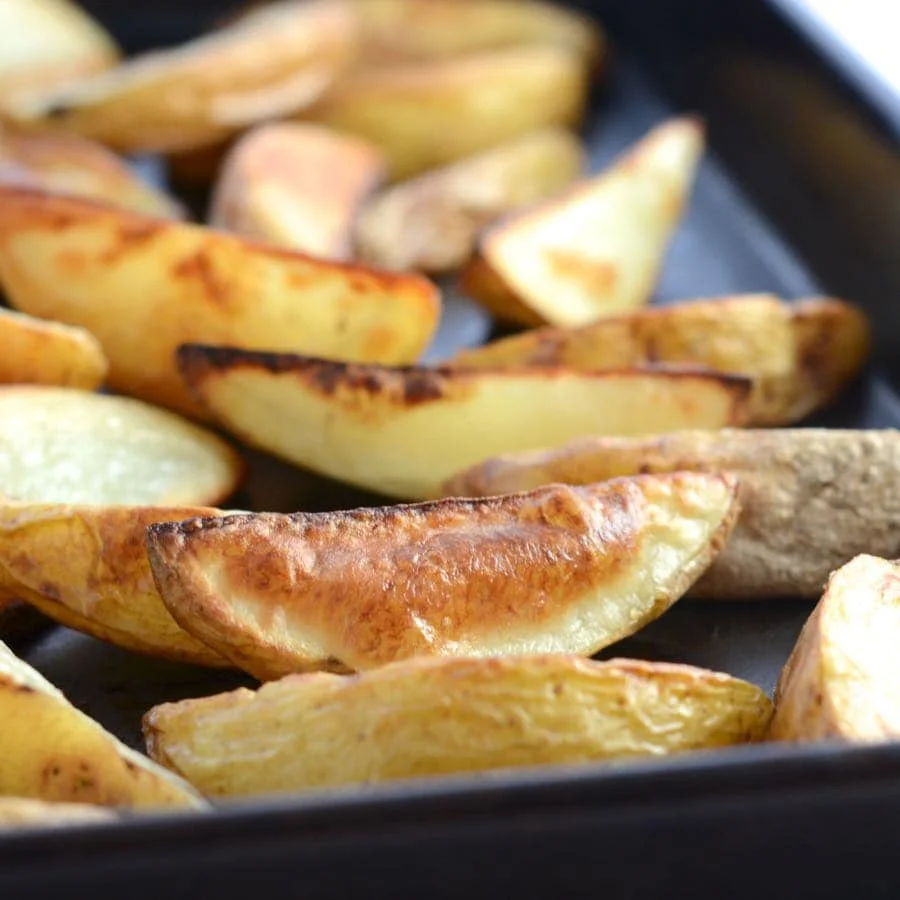
These homemade potato wedges are crisp-edged, soft inside and an easy alternative to chips. They need just potatoes, olive oil and salt, with the oven doing most of the work.
Ingredients
- 700 gpotatoes (baking potatoes work well)
- About 10 ml (2 tsp)olive oil
- To tastesalt
Instructions
- 1
Heat the oven
Preheat the oven to 220°C, or 200°C for a fan oven.
- 2
Cut the potatoes
Cut the potatoes into wedges.
- 3
Season the wedges
Put the wedges on a baking tray, toss with olive oil and season with salt.
- 4
Bake the first side
Bake for 15 minutes.
- 5
Turn the wedges
Take the tray out of the oven and turn the wedges with a fish slice or similar utensil.
- 6
Bake again
Return the tray to the oven and bake for a further 15 minutes.
- 7
Serve
Serve the wedges.
What are potato wedges?
Potato wedges are thick-cut pieces of potato roasted until golden outside and tender within. They are a familiar homemade alternative to chips, made here with a simple coating of olive oil and salt.
Baking potatoes are a useful choice because their fluffy centres suit roasting. Cutting them into wedges gives them broad sides that can brown on the tray.
Nutrition and macros by portion
The nutrition label shows one serving as written: 132 calories, 4g protein, 21g carbs, 3g fat.
| Portion | Adjustment | kcal | Protein | Carbs | Fat |
|---|---|---|---|---|---|
| Lighter | Use less olive oil | 92 kcal | 3g | 15g | 2g |
| This serving | As written | 132 kcal | 4g | 21g | 3g |
| Hungry | Larger wedge portion | 198 kcal | 6g | 32g | 5g |
The potatoes provide most of the carbohydrates, while the olive oil contributes most of the fat; the potatoes also provide a little protein. Pair a portion with a protein-rich main and vegetables or salad to round out the plate.
Choosing and cutting the potatoes
Baking potatoes: Their floury texture becomes soft and fluffy as the wedges cook. Use potatoes of a similar size so the pieces bake at roughly the same rate.
Even wedges: Cut each potato into pieces of similar thickness. Very thin wedges may cook faster, while much thicker ones can need longer in the oven.
Getting the tray ready
Oil coating: Toss the wedges so the olive oil reaches their surfaces; the recipe uses about 10 ml. A light, even coating helps them roast without leaving puddles on the tray.
Room to brown: Spread the wedges across the baking tray rather than piling them up. If they are crowded, they are more likely to soften than brown.
Turning and checking for doneness
First bake: Roast at 220°C, or 200°C in a fan oven, for 15 minutes before turning. The wedges should be starting to colour where they touch the tray.
Second bake: Turn them with a fish slice or similar utensil, then roast for another 15 minutes. They are ready when browned outside and tender when pierced with a knife.
What to serve with them
As a side: Serve the wedges alongside a main dish with vegetables or salad for a more complete plate. Their mild, savoury flavour works with many meals.
For dipping: Put out a dip or sauce at the table if you like. Serve the wedges soon after baking for the best contrast between their browned exterior and soft centre.
Recipe notes & tips
- Cut the potatoes into similar-sized wedges so they cook at a similar pace.
- Coat the wedges evenly with the oil before seasoning.
- Arrange the wedges in a single layer on the baking tray.
- Turn the wedges after the first 15 minutes so another side can brown.
- Check tenderness with a knife at the end of the second bake.
Variations
- Add black pepper: Season the wedges with pepper along with the salt.
- Use dried herbs: Toss a small amount of your preferred dried herbs with the oil.
- Add paprika: Dust the wedges with paprika before baking for a warmer savoury flavour.
- Serve with a dip: Offer a favourite dip alongside the hot wedges.
- Try different potatoes: Use another potato variety, keeping the wedges a similar size.
Common mistakes to avoid
- Uneven cuts: Make the wedges similar in thickness so smaller pieces do not cook much faster.
- Crowded tray: Spread the wedges out in one layer to help them brown.
- Too much oil: Use about 10 ml and toss well rather than leaving oil pooled on the tray.
- Skipping the turn: Turn the wedges after 15 minutes to expose another side to the tray.
- Removing them too soon: Check that the centres are tender before serving.
How to store
Refrigerate leftover wedges in a covered container for up to 3 days. Reheat in an oven until hot; they may be softer than when freshly baked.
Frequently asked questions
Can I use a fan oven?
Yes. Set it to 200°C, as given in the recipe, and keep the two 15-minute baking stages.
Do I need to peel the potatoes?
The recipe does not call for peeling, so you can leave the skins on. Scrub the potatoes clean before cutting if needed.
How thick should I cut the wedges?
Cut them into evenly sized wedges rather than aiming for an exact measurement. Consistent thickness helps them cook at a similar rate.
How can I tell when the wedges are done?
Look for browned surfaces and test the centre with a knife; it should feel tender. If needed, continue baking until tender.
Can I prepare the wedges ahead?
For the best texture, bake them shortly before serving. You can cut the potatoes ahead and keep them covered in cold water, then drain and dry them thoroughly before tossing with oil.
Cook it from the original
This recipe comes from charlotteslivelykitchen.com. Their page has the author’s own photos, notes and tips — the best place to cook it from.
Open the recipe on charlotteslivelykitchen.com