
BEST Homemade Cinnamon Rolls
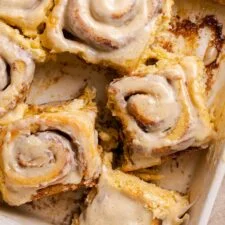
These American-style cinnamon rolls are made with a soft, enriched yeast dough, a buttery cinnamon-sugar filling and a smooth vanilla bean cream cheese icing. They take time to rise, but make a cosy centrepiece for a weekend breakfast or a holiday table.
Ingredients
- 240 ml (1 cup)whole milk, warmed to about 43°C (110°F)
- 100 g (1/2 cup), dividedgranulated sugar
- 1 packet (2 1/4 teaspoons)active dry yeast
- 3 largeeggs, at room temperature
- 113 g (1/2 cup; 1 stick)unsalted butter, melted and slightly cooled
- 1 teaspoonvanilla extract
- 560 g (4 1/2 cups), plus more for dustingall-purpose flour
- 1 teaspoonkosher salt
- 57 g (1/4 cup)unsalted butter, softened to room temperature
- 220 g (1 cup, packed)dark brown sugar
- 2 tablespoonsground cinnamon
- 1/4 teaspoonkosher salt
- 113 g (4 ounces)cream cheese, softened to room temperature
- 57 g (1/4 cup)unsalted butter, softened to room temperature
- 180 g (1 1/2 cups)powdered sugar
- 1 tablespoonvanilla bean paste
Instructions
- 1
Activate the yeast
In a stand mixer bowl or a large mixing bowl, stir the warm milk with about half of the sugar. Sprinkle in the yeast and mix, then leave for 10–15 minutes until foamy.
- 2
Add the dough ingredients
Once the yeast mixture is foamy, add the remaining sugar, eggs, melted butter, vanilla extract, flour and salt.
- 3
Knead the dough
Fit a dough hook and mix on low for 1–2 minutes, until the dough starts to come together. Increase to medium and knead for 5–6 minutes, until smooth, elastic and supple. If mixing by hand, knead on a lightly floured surface for 10 minutes.
- 4
Let dough rise
Shape the dough into a ball and place it in a lightly greased large bowl. Cover with plastic wrap or a clean tea towel and leave in a warm place until doubled, about 1 1/2 hours or longer depending on the room temperature. If using rapid-rise or instant yeast, skip this first rise.
- 5
Fill the dough
After the first rise, press the dough to release the air and turn it out onto a lightly floured surface. Roll it to about 38 × 25 cm (15 × 10 inches). Spread the softened butter over the dough, leaving a small border; sprinkle on the brown sugar and rub it into the butter with your hands, keeping the border clear. Sprinkle the cinnamon and salt evenly over the top and gently pat them in.
- 6
Roll and cut
Starting at a long edge, roll the dough into a tight log and place it seam-side down. Pinch the seam to seal it as well as possible. Trim the ends if desired, then use a large sharp knife or unscented dental floss to cut the log crosswise into 12 pieces.
- 7
Proof the rolls
Line a 23 × 33 cm (9 × 13-inch) baking pan with parchment paper and arrange the rolls inside, leaving a little room between them to expand. Cover with plastic wrap or a clean tea towel. For same-day rolls, leave in a warm place until puffy, about 1–1 1/2 hours or longer depending on the room temperature; preheat the oven to 175°C (350°F) towards the end. For overnight rolls, cover and refrigerate for up to 8–10 hours, then bring to room temperature until puffy before baking.
- 8
Bake the rolls
Remove the covering and bake at 175°C (350°F) for about 30 minutes, until lightly golden. Prepare the icing while the rolls bake.
- 9
Make the icing
Beat the cream cheese and softened butter together with a stand mixer or handheld electric mixer until smooth. Beat in the powdered sugar until fully incorporated, then mix in the vanilla bean paste until silky and lump-free. Set aside until the rolls are baked.
- 10
Ice and serve
Spread the icing over the baked rolls, covering the tops and filling the crevices. Serve straight away for the best result.
What are American cinnamon rolls?
American cinnamon rolls are sweet, yeasted spirals filled with cinnamon and sugar, then often finished with a generous icing. This version uses an enriched dough with milk, eggs and butter for a soft, tender crumb.
The method relies on proofing the dough before shaping, then letting the cut rolls puff up in the pan. That gives the spirals room to expand and keeps the filling tucked between soft layers.
Nutrition and macros by portion
The nutrition label shows one serving as written: 560 calories, 9g protein, 87g carbs, 20g fat.
| Portion | Adjustment | kcal | Protein | Carbs | Fat |
|---|---|---|---|---|---|
| Lighter | Use less icing | 392 kcal | 6g | 61g | 14g |
| This serving | As written | 560 kcal | 9g | 87g | 20g |
| Hungry | Serve two rolls | 840 kcal | 14g | 131g | 30g |
Flour and the sugars provide most of each roll's carbohydrates, while butter and cream cheese contribute much of the fat. Eggs, milk and cream cheese add some protein. Pair a roll with fruit or plain yoghurt for a more balanced plate.
Building a soft dough
Warm milk: aim for about 43°C, warm but not hot. The recipe gives the yeast time to foam before the eggs, butter and flour go in.
Kneading: mix until the dough is smooth, elastic and supple. It should come together into a cohesive ball rather than remain shaggy; give it the full kneading time stated in the method.
Getting an even filling
Butter first: spread it over the rolled dough in a thin layer, leaving a small border. The brown sugar sticks to the butter, while the border helps keep the filling from squeezing out as you roll.
Cinnamon and salt: scatter them evenly over the sugar and pat them gently into place. Even coverage helps each spiral have a balanced cinnamon flavour.
Rolling and cutting neatly
Tight log: roll from a long edge and keep the dough snug without pressing the filling out. Seal the seam underneath so the rolls hold their shape.
Clean slices: a sharp knife or unscented dental floss can cut the log crosswise into 12 pieces. Leave a little space between the rolls in the pan so they can expand during their second proof.
How to judge the rise
First proof: look for dough that has doubled in size, rather than relying only on the clock. A cool room can make this take longer than the stated 1 1/2 hours.
Second proof: the rolls should look puffy before they go into the oven. If preparing them overnight, bring the covered pan to room temperature and wait for that same puffy appearance before baking.
Baking and icing
Bake: at 175°C, the rolls should take about 30 minutes and turn lightly golden. The recipe does not call for a darker crust, so avoid waiting for them to brown deeply.
Icing: beat the softened cream cheese and butter until smooth before adding the sugar. Mixing in the vanilla bean paste last helps make a silky topping to spread over the warm rolls.
Serving ideas
These rolls are rich and sweet, so they work well with fresh fruit or a simple bowl of yoghurt alongside. Coffee or tea makes an easy breakfast pairing.
For a gathering, bake them in the 23 × 33 cm pan and bring them to the table while warm. Serve soon after icing, as the recipe recommends.
Recipe notes & tips
- Bring the eggs and softened butter to room temperature before mixing for easier blending.
- Use a thermometer to check that the milk is warm, not hot, before adding the yeast.
- Flour the work surface lightly so the dough is easy to roll without making it dry.
- Use unscented dental floss for neat slices without flattening the log.
- Allow extra proofing time if the room is cool; use the dough's appearance as your cue.
- Line the pan with parchment to catch any filling that escapes during baking.
Variations
- Add chopped pecans: scatter them over the cinnamon filling before rolling.
- Use a different icing: replace the vanilla bean paste with vanilla extract.
- Make them overnight: cover the assembled rolls and refrigerate for up to 8–10 hours before bringing them to room temperature to puff.
- Add orange zest: mix a little into the icing for a citrus note.
- Use a thinner topping: spread on less icing if you prefer the cinnamon filling to stand out.
Common mistakes to avoid
- Milk too hot: let it cool until warm to the touch before adding the yeast.
- Yeast not foamy: check that the yeast is active and give the mixture the full 10–15 minutes.
- Dough under-kneaded: continue until it feels smooth and elastic, following the mixer or hand-kneading time.
- Filling at the edge: leave a small border so less filling escapes when the dough is rolled.
- Rolls crowded too tightly: leave a little space between pieces in the pan for expansion.
- Baking before the second rise: wait until the rolls look puffy before putting them in the oven.
How to store
The rolls are best served straight away. Store any leftovers covered in the refrigerator and reheat gently until warm before serving.
Frequently asked questions
Can I prepare these cinnamon rolls the night before?
Yes. Cover the assembled rolls in the pan and refrigerate for up to 8–10 hours. Before baking, let them sit at room temperature until puffy.
How long should the dough rise?
The first rise takes about 1 1/2 hours, or longer if the room is cool, and the dough should double in size. The second rise is about 1–1 1/2 hours, until the rolls look puffy.
Can I knead the dough without a stand mixer?
Yes. Knead it by hand on a lightly floured surface for 10 minutes, as described in the method.
How do I cut the rolls without squashing them?
Use a large sharp knife or unscented dental floss to slice the log crosswise into 12 pieces.
When should I put the icing on?
Spread it over the rolls after they come out of the oven. The recipe recommends serving them right away.
Cook it from the original
This recipe comes from butterbeready.com. Their page has the author’s own photos, notes and tips — the best place to cook it from.
Open the recipe on butterbeready.com