
Brothy Beans (White Beans Recipe)
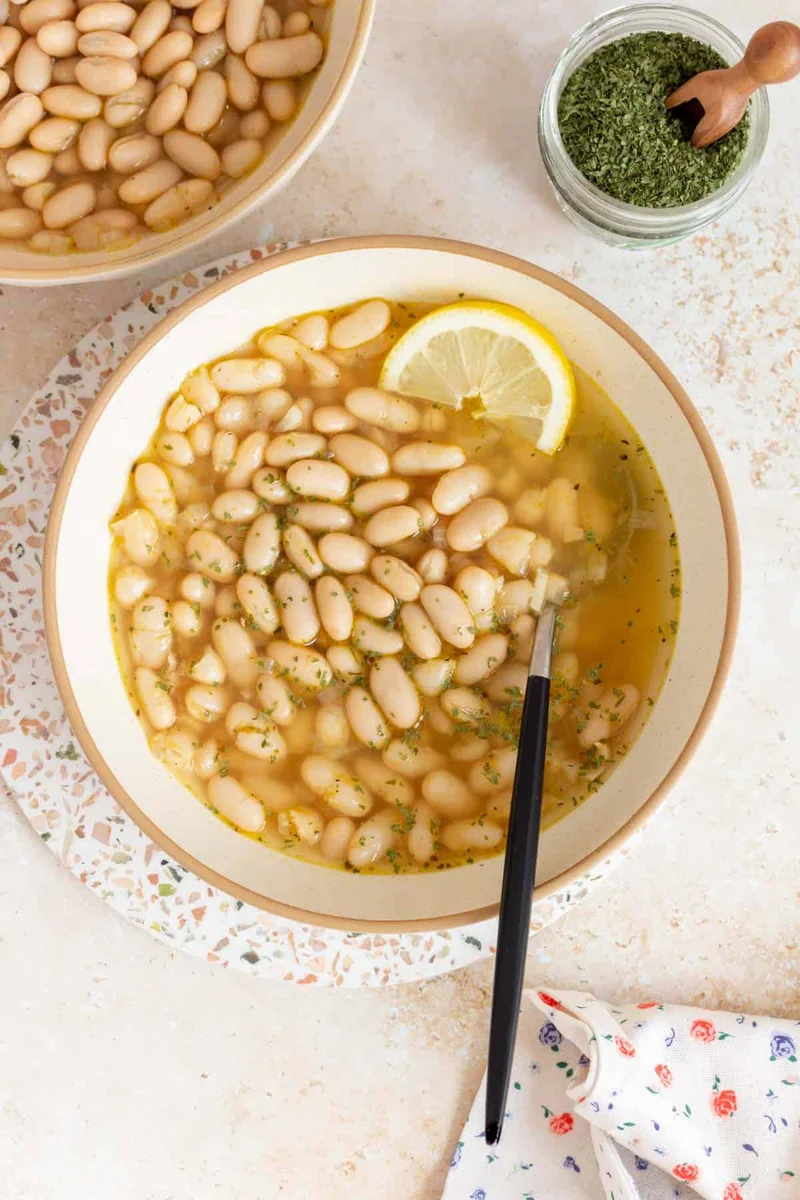
These brothy cannellini beans simmer with onion, garlic, herbs and bay until creamy, with lemon to brighten the rich cooking liquid. Make a pot for a simple bowl with bread or to add to meals through the week.
Ingredients
- 180 gdried cannellini beans (white kidney beans)
- 15 mlolive oil
- 1yellow onion, finely diced
- 3 to 4 clovesgarlic, roughly chopped
- 1 teaspoon (5 ml)Italian seasoning
- 1.44 litres, plus more if neededvegetable or chicken stock
- 2dried bay leaves
- 1/2lemon
Instructions
- 1
Soak the beans
Rinse the dried beans and check for dust or debris. Put them in a bowl and cover with water, using 720 ml water for the 180 g beans. Leave to soak for 8 to 24 hours; they will absorb water and expand.
- 2
Drain and rinse
After soaking, discard any beans that have floated to the top. Drain the soaking water and rinse the beans again.
- 3
Soften the onion
Heat the olive oil in a large Dutch oven or heavy-based pot over medium heat. Add the diced onion and cook for 2 to 3 minutes, until softened.
- 4
Add garlic
Stir in the roughly chopped garlic and cook for 1 minute.
- 5
Simmer the beans
Add the Italian seasoning, beans, stock and bay leaves. Bring to the boil, then reduce the heat to medium-low, cover and simmer for 1 hour. Leave the lid slightly ajar and simmer for a further 1½ to 2 hours, checking the beans every 30 minutes. Skim off foam if desired and add more water if needed.
- 6
Finish with lemon
When the beans are cooked, remove and discard the bay leaves and squeeze in fresh lemon juice. Serve with the broth or use the beans in another recipe.
What are brothy beans?
Brothy beans are dried beans cooked slowly in seasoned liquid until tender, served with some of that liquid rather than drained. The idea is found in many home-cooking traditions, where beans and their cooking broth make a simple, filling dish.
This version uses cannellini beans, onion, garlic and Italian seasoning, with lemon added at the end. The long, gentle simmer gives the beans time to turn creamy while the broth takes on their flavour.
Nutrition and macros by portion
The nutrition label shows one serving as written: 236 calories, 12g protein, 40g carbs, 4g fat.
| Portion | Adjustment | kcal | Protein | Carbs | Fat |
|---|---|---|---|---|---|
| Lighter | More broth, smaller serving | 165 kcal | 8g | 28g | 3g |
| This serving | As written | 236 kcal | 12g | 40g | 4g |
| Hungry | Larger bowl with bread | 354 kcal | 18g | 60g | 6g |
The beans provide most of the carbohydrates and protein, while the olive oil contributes most of the fat. Serve a bowl with greens or another vegetable for a more balanced plate, or add bread if you want a more substantial meal.
Why soak the beans?
Overnight soak: covering the beans with plenty of water gives them time to absorb moisture and expand before cooking. The recipe allows 8 to 24 hours, so you can soak them ahead.
Build flavour in the pot
Onion and garlic: soften the onion in olive oil first, then add the garlic for just a minute. This starts the broth with a mellow savoury base without letting the garlic scorch.
Herbs and bay: Italian seasoning and bay leaves infuse the stock as the beans simmer. Remove the bay leaves before serving.
Keep the simmer gentle
Heat: bring the stock to a boil, then lower it to medium-low for the covered first hour. A steady simmer cooks the beans without making them tumble vigorously.
Liquid: check the pot every 30 minutes once the lid is ajar. Add water if the beans are no longer surrounded by enough liquid, and skim off foam if you prefer a clearer broth.
Check for tenderness
The recipe gives a total simmering time of 2½ to 3 hours after the boil: 1 hour covered, then 1½ to 2 hours with the lid slightly ajar. Start checking the beans as they cook, since the key cue is tenderness rather than the clock alone.
Taste a bean from the centre of the pot. It should be soft and creamy throughout, without a firm or chalky centre.
Finish and serve
Lemon: squeeze it in after cooking, once the bay leaves are out. Its fresh acidity lifts the savoury broth.
Serving: ladle the beans with plenty of broth for a bowl on its own, or use the beans and liquid as a base for another meal. Bread is a natural accompaniment for soaking up the broth.
Recipe notes & tips
- Use a bowl large enough to leave room for the beans to expand during soaking.
- Check the pot regularly during the uncovered simmer so the beans stay in liquid.
- Add extra water gradually if the broth reduces more than you want.
- Squeeze in the lemon only after the beans are cooked.
- Taste a few beans from different parts of the pot to check that they are tender throughout.
Variations
- Use chicken stock: choose it instead of vegetable stock for a different savoury base.
- Use vegetable stock: keep the broth meat-free by choosing vegetable stock.
- Add greens: stir leafy greens into the hot beans near the end of cooking.
- Serve with bread: add toasted or crusty bread for dipping into the broth.
- Make it more lemony: squeeze in extra lemon juice to taste when serving.
Common mistakes to avoid
- Too little soaking water: the beans expand as they soak, so cover them generously.
- Boiling hard: lower the heat after bringing the stock to a boil so the beans simmer gently.
- Letting the pot dry out: check every 30 minutes and add water if needed.
- Adding lemon too early: wait until the beans are cooked, then finish with lemon juice.
- Skipping the tenderness check: taste a bean before serving and continue simmering if it is still firm.
How to store
Cool the beans and broth, then store them in an airtight container in the fridge for up to 3 to 4 days. Reheat gently in a saucepan, adding a splash of water if the broth has thickened.
Frequently asked questions
How long should I soak the cannellini beans?
Soak them for 8 to 24 hours, using plenty of water because they expand as they absorb it.
Can I use tinned cannellini beans?
This method is written for dried beans, which need soaking and a long simmer. Tinned beans are already cooked, so they would need a different, much shorter method.
How do I know when the beans are done?
Taste one: it should be soft and creamy inside, with no firm or chalky centre. If needed, keep simmering and check again.
What if the broth gets too low?
Add more water as needed during cooking so the beans remain surrounded by liquid.
Can I make these beans ahead?
Yes. Cook them, cool them and refrigerate with their broth; reheat gently when you are ready to serve.
Cook it from the original
This recipe comes from carmyy.com. Their page has the author’s own photos, notes and tips — the best place to cook it from.
Open the recipe on carmyy.com