
Papa a la Huancaina
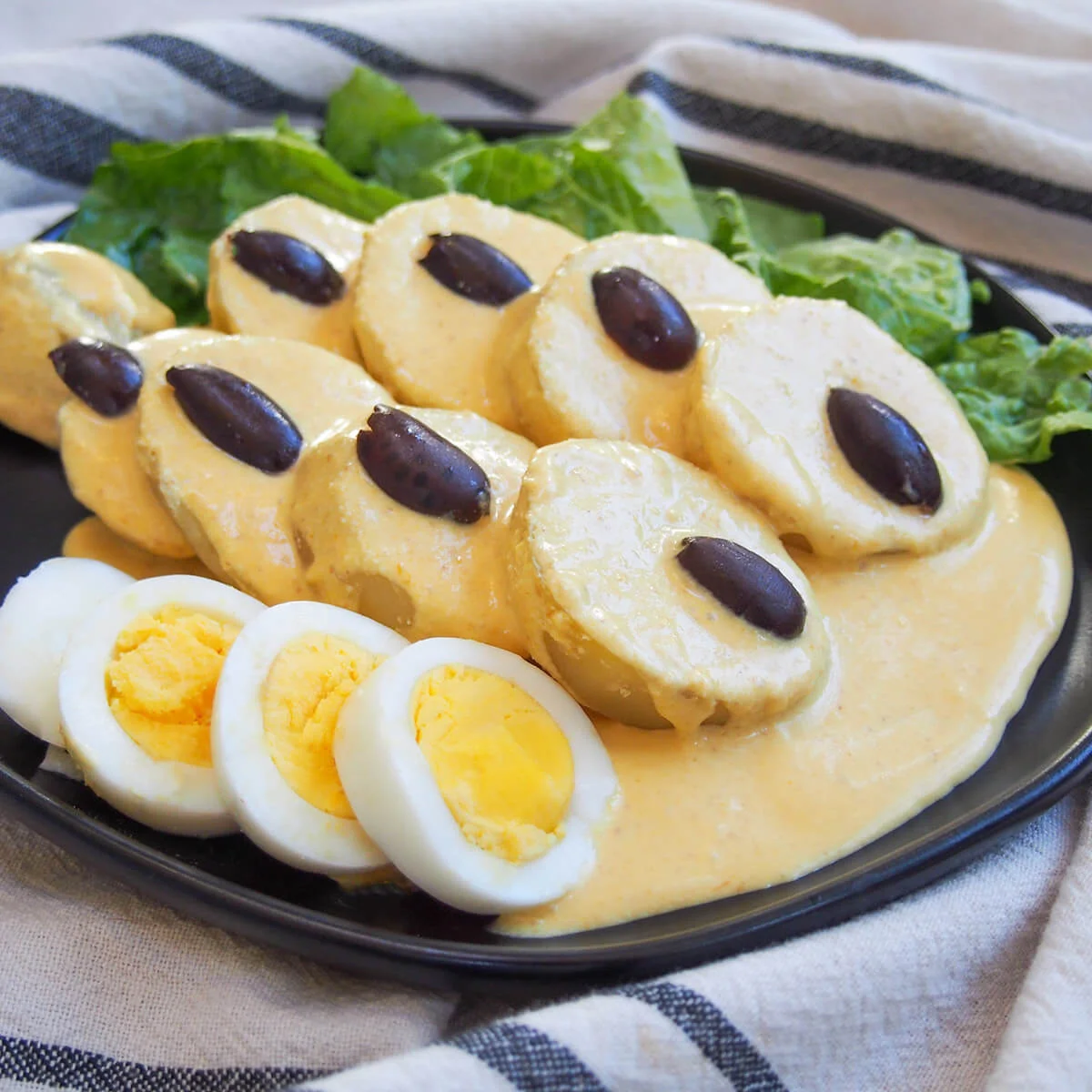
Papa a la Huancaína is a Peruvian dish of tender potato slices covered with a creamy, mildly spicy cheese sauce. It is quick to make and works well as a starter, side dish or light meal.
Ingredients
- 454 g (1 lb; about 4 medium potatoes)yellow potatoes
- 120 ml (½ cup)evaporated milk
- 113 g (4 oz)queso fresco
- 2plain wheat crackers, such as saltines
- 15 ml (1 tbsp)vegetable oil
- 15 ml (1 tbsp)ají amarillo chilli paste
- 2, or more to tastehard-boiled eggs
- About 8black olives
- About 4 leavesiceberg lettuce
Instructions
- 1
Cook the potatoes
Put the potatoes in a saucepan and cover them with water. Cover the pan and bring the water to the boil, then lower the heat and simmer for about 10 minutes, until a knife enters the potatoes easily but they are not too soft. Drain, let them cool until safe to handle, then peel and cut into thick slices.
- 2
Blend the sauce
While the potatoes cook, put the evaporated milk, queso fresco, crackers, oil and ají amarillo paste in a blender or food processor. Blend until smooth.
- 3
Assemble the plates
Arrange lettuce on serving plates and place the potato slices on top. Pour over as much sauce as you like, then serve with sliced olives and slices of hard-boiled egg on the side.
What is Papa a la Huancaína?
Papa a la Huancaína is a well-known Peruvian dish of boiled potatoes served with a creamy cheese and chilli sauce. Its name refers to Huancayo, though it is now enjoyed throughout Peru.
This version uses queso fresco, evaporated milk, crackers and ají amarillo for a smooth, savoury sauce, with lettuce, egg and olives to finish.
Nutrition and macros by portion
The nutrition label shows one serving as written: 341 calories, 16g protein, 33g carbs, 17g fat.
| Portion | Adjustment | kcal | Protein | Carbs | Fat |
|---|---|---|---|---|---|
| Lighter | Use less sauce | 239 kcal | 11g | 23g | 12g |
| This serving | As written | 341 kcal | 16g | 33g | 17g |
| Hungry | Add another potato | 512 kcal | 24g | 50g | 26g |
The potatoes supply most of the carbohydrates, while the queso fresco, evaporated milk and oil contribute much of the fat; the cheese and eggs provide protein. For a more balanced plate, serve a moderate portion with a generous side of non-starchy vegetables.
Choosing the potatoes
Yellow potatoes: these are a traditional-feeling choice for the dish and become tender while holding their shape when cooked carefully.
Even slices: cut the cooked potatoes into thick pieces so they are easy to lift and hold enough sauce.
Getting the sauce smooth
Queso fresco: its mild, fresh flavour gives the sauce its cheesy base without overwhelming the chilli.
Crackers: blending them with the milk and cheese helps thicken the sauce. Blend until no noticeable cracker pieces remain.
Managing the chilli
Ají amarillo: this paste brings the characteristic chilli flavour and colour. The recipe uses a tablespoon; adjust the amount to suit the paste and your preferred heat.
Taste the blended sauce before serving. Its texture should be pourable enough to coat the potatoes rather than sit in a stiff mound.
Checking potato doneness
Knife test: after about 10 minutes of simmering, a knife should enter the potatoes easily. Check a larger potato, as the pieces may not all cook at exactly the same rate.
Stop before they turn very soft; overcooked potatoes can break apart when peeled and sliced.
Serving the dish
Lettuce base: arrange the leaves on the plates before adding the potato, so they form a fresh bed beneath the warm slices.
Finishing touches: spoon over the sauce, then add the olives and hard-boiled egg. Serve as a starter or alongside other dishes.
Recipe notes & tips
- Choose potatoes of a similar size so they are more likely to finish cooking together.
- Begin checking the potatoes at around 10 minutes and drain them as soon as they are tender.
- Let the potatoes cool enough to handle before peeling and slicing.
- Blend the sauce thoroughly to break down the crackers and cheese.
- Add the sauce gradually at the table if you prefer the potatoes less heavily coated.
Variations
- Adjust the heat: use a little less ají amarillo paste for a milder sauce.
- Add extra egg: serve more sliced hard-boiled egg alongside the potatoes.
- Change the potatoes: use another waxy or yellow-fleshed potato that holds its shape when boiled.
- Make it ahead: prepare the sauce in advance and refrigerate it separately from the potatoes.
- Serve as a side: pair the sauced potatoes with a simple salad or other main dish.
Common mistakes to avoid
- Overcooking the potatoes: check them with a knife and drain as soon as they are tender so they do not fall apart.
- Cutting the potatoes too thin: use thick slices so they keep their shape under the sauce.
- Leaving cracker pieces in the sauce: blend until the mixture is smooth.
- Pouring on all the sauce at once: add it to taste, then keep any extra separate for serving.
- Peeling the potatoes while too hot: let them cool until they are comfortable to handle.
How to store
Refrigerate leftover potatoes and sauce in separate airtight containers and use within 2–3 days. Serve chilled or let them come towards room temperature; if warming the potatoes, do so gently and add the sauce afterwards.
Frequently asked questions
Can I make the sauce ahead?
Yes. Blend it ahead and keep it covered in the refrigerator, separate from the potatoes. Stir it before serving if it has thickened.
Can I serve Papa a la Huancaína cold?
Yes. The cooked potatoes and sauce can be served chilled or at room temperature, which makes this a convenient dish to prepare in advance.
How can I tell when the potatoes are cooked?
A knife should pass into a potato easily, while the potato still holds its shape. Start checking at about 10 minutes.
What can I use instead of queso fresco?
A mild, fresh, crumbly cheese is the closest sort of substitute. The flavour and texture of the sauce may differ depending on the cheese.
Is the sauce very spicy?
The heat depends on the ají amarillo paste. Use less than the stated tablespoon if you want a milder sauce, and taste it before serving.
Cook it from the original
This recipe comes from carolinescooking.com. Their page has the author’s own photos, notes and tips — the best place to cook it from.
Open the recipe on carolinescooking.com