
Basic white bread
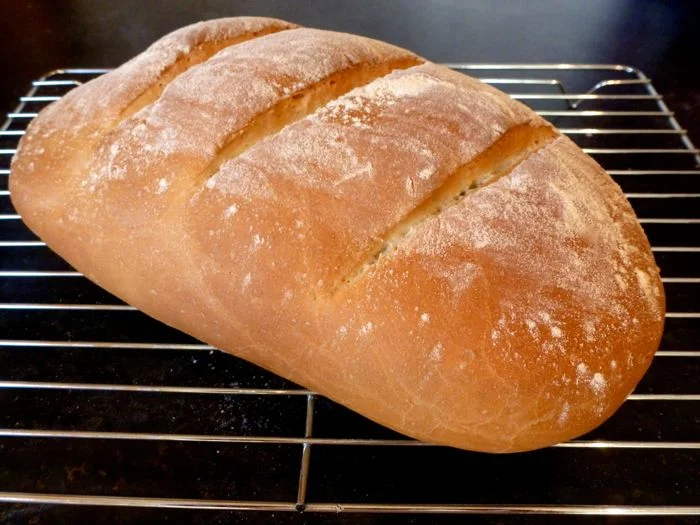
This straightforward white loaf uses strong bread flour, yeast, water, salt and olive oil to make a soft, everyday bread. Allow time for two proving stages, and use the dough’s size and feel rather than the clock alone to judge when it is ready.
Ingredients
- 300 gstrong white bread flour
- 150 ml (approx.)tepid water
- 1 tspfast-action dried yeast
- 1 tspsalt
- 1 tbspolive oil
Instructions
- 1
Combine dry ingredients
Put the 300 g flour in a large bowl with the 1 tsp yeast and 1 tsp salt. Keep the salt and yeast on opposite sides of the bowl.
- 2
Add some water
Make a well in the middle of the flour mixture, pour in 75 ml water and mix with your hands.
- 3
Form the dough
Add the remaining water gradually, mixing as you go, until all the flour is incorporated. You may not need the full 150 ml; aim for dough that is slightly sticky but not sloppy. If it becomes too wet, add a small sprinkle of flour and mix it in.
- 4
Knead with oil
Spread a little olive oil over a clear work surface and knead the dough on it, adding the rest of the 1 tbsp gradually until incorporated. The dough may feel sticky at first; keep kneading rather than adding extra flour.
- 5
Develop the dough
Continue kneading until the dough is smooth and springy. When stretched in front of a light source, it should become thin enough for light to show through without tearing.
- 6
First prove
Put the dough in a lightly oiled bowl and cover with cling film. Leave it for 1–1½ hours, or overnight in the fridge, until doubled in size. If it has not doubled, leave it longer.
- 7
Knock back dough
Once doubled, take the dough out of the bowl and knead it a couple of times to release the air.
- 8
Shape the loaf
Shape the dough into an oval and place it on the tin you plan to bake the loaf on.
- 9
Second prove
Cover the loaf loosely with a tea towel and leave it for about 1 hour, until doubled in size.
- 10
Heat the oven
Preheat the oven to 220°C, or 200°C for a fan oven.
- 11
Slash the top
When the loaf has doubled, dust it with a little flour. Use a very sharp knife to make a few shallow diagonal cuts across the top, taking care not to deflate the dough.
- 12
Bake the bread
Bake for roughly 30 minutes. Turn the loaf over and tap its base; it should sound hollow when cooked.
- 13
Cool the loaf
Transfer the baked loaf to a wire rack and leave it to cool.
What is basic white bread?
This is an everyday yeasted loaf made from white bread flour, water, salt, yeast and a little oil. Its simple dough and oval shape make it a useful starting point for home bread-making.
The method relies on kneading and two rises to build structure and lift. A slow rise in the fridge is also an option when you want to fit the first prove around your schedule.
Nutrition and macros by portion
The nutrition label shows one serving as written: 81 calories, 2g protein, 14g carbs, 1g fat.
| Portion | Adjustment | kcal | Protein | Carbs | Fat |
|---|---|---|---|---|---|
| Lighter | Thinner bread slices | 57 kcal | 1g | 10g | 1g |
| This serving | As written | 81 kcal | 2g | 14g | 1g |
| Hungry | Larger bread portion | 122 kcal | 3g | 21g | 2g |
The flour provides most of the carbohydrates and some of the protein, while the olive oil contributes most of the fat. Serve a slice with eggs, beans or another protein-rich topping, alongside fruit or vegetables for a more balanced plate.
Choosing and mixing the ingredients
Bread flour: strong white flour gives the dough the structure it needs to stretch and rise. Measure the water as a guide, then add it gradually because the dough may not need every drop.
Yeast and salt: keeping them apart in the bowl at first avoids direct contact before mixing. The olive oil is worked in during kneading, helping the dough handle more easily and adding flavour.
Kneading for a springy dough
Sticky dough: a slightly tacky feel is expected, especially at the beginning. Knead with the oil on the work surface and resist adding extra flour, which can make the baked loaf heavy.
Ready to prove: the dough should become smooth and springy. The light-through test is a useful cue that it has been stretched enough to form a strong, thin membrane.
Judging the proves
First rise: cover the dough and wait until it has doubled, which may take 1–1½ hours at room temperature or overnight in the fridge. Room temperature affects the timing, so size is a more useful guide than the clock.
Second rise: after knocking back and shaping, let the loaf double again under a loose tea towel. Keep the cover loose so it does not press on the risen dough.
Scoring and baking
Shallow cuts: slash the top just before baking, using a sharp knife and a light touch. The cuts give the expanding loaf places to open as it bakes.
Doneness: bake at 220°C, or 200°C fan, for roughly 30 minutes. A hollow sound when you tap the underside is the method’s cue that the loaf is cooked.
Serving and storing
Let the loaf cool on a wire rack before slicing so the crumb can settle. It is good with butter, cheese or soup, and also works well for sandwiches and toast.
Keep the cooled bread in a bread bin or sealed bag at room temperature and use it within a few days. Freeze slices or portions if you want to keep them longer.
Recipe notes & tips
- Add the water gradually because flour can absorb different amounts.
- Use oil on the work surface instead of extra flour when kneading sticky dough.
- Check that the dough has doubled before moving on, even if that takes longer than expected.
- Keep the knife shallow when scoring so you do not deflate the loaf.
- Cool the bread on a wire rack before slicing.
Variations
- Seeded crust: Sprinkle seeds over the top after dusting with flour.
- Herb loaf: Knead dried herbs into the dough for a savoury note.
- Garlic flavour: Work a little garlic into the dough with the oil.
- Shaped rolls: Divide the dough into smaller portions and shorten the bake, checking for doneness.
- Fridge prove: Leave the covered dough in the fridge overnight for its first rise.
Common mistakes to avoid
- Adding all the water at once: the dough may turn sloppy; pour it in gradually and stop when the flour is incorporated.
- Adding extra flour while kneading: this can make the loaf dry and heavy; use a lightly oiled surface instead.
- Relying only on the clock: proving speed varies with room temperature; wait for the dough to double.
- Skipping the cuts: the loaf may crack unpredictably; make a few shallow diagonal slashes before baking.
- Cutting the loaf while hot: the crumb may not have settled; cool it on a wire rack first.
How to store
Keep the completely cooled loaf in a bread bin or sealed bag at room temperature and use within a few days. Freeze the loaf or individual slices for longer storage, then defrost before serving or toast slices from frozen.
Frequently asked questions
Do I have to use all 150 ml of water?
No. Add it gradually and stop once all the flour is incorporated and the dough is slightly sticky but not sloppy.
How can I tell when the dough has proved enough?
It should have doubled in size. The timing can change with the temperature of the room, so use the dough’s size rather than the stated time alone.
Can I leave the dough in the fridge overnight?
Yes. The first prove can be done overnight in the fridge; wait until the dough has doubled before shaping it.
Why should the salt and yeast start on opposite sides of the bowl?
This keeps them from sitting directly together before you mix the dough. Combine them with the flour as you begin mixing.
How do I know the loaf is baked?
Bake it for roughly 30 minutes, then turn it over and tap the base. It should sound hollow.
Can I freeze this bread?
Yes. Once cool, freeze the loaf or slices in a sealed bag and defrost as needed.
Cook it from the original
This recipe comes from charlotteslivelykitchen.com. Their page has the author’s own photos, notes and tips — the best place to cook it from.
Open the recipe on charlotteslivelykitchen.com