
Japchae
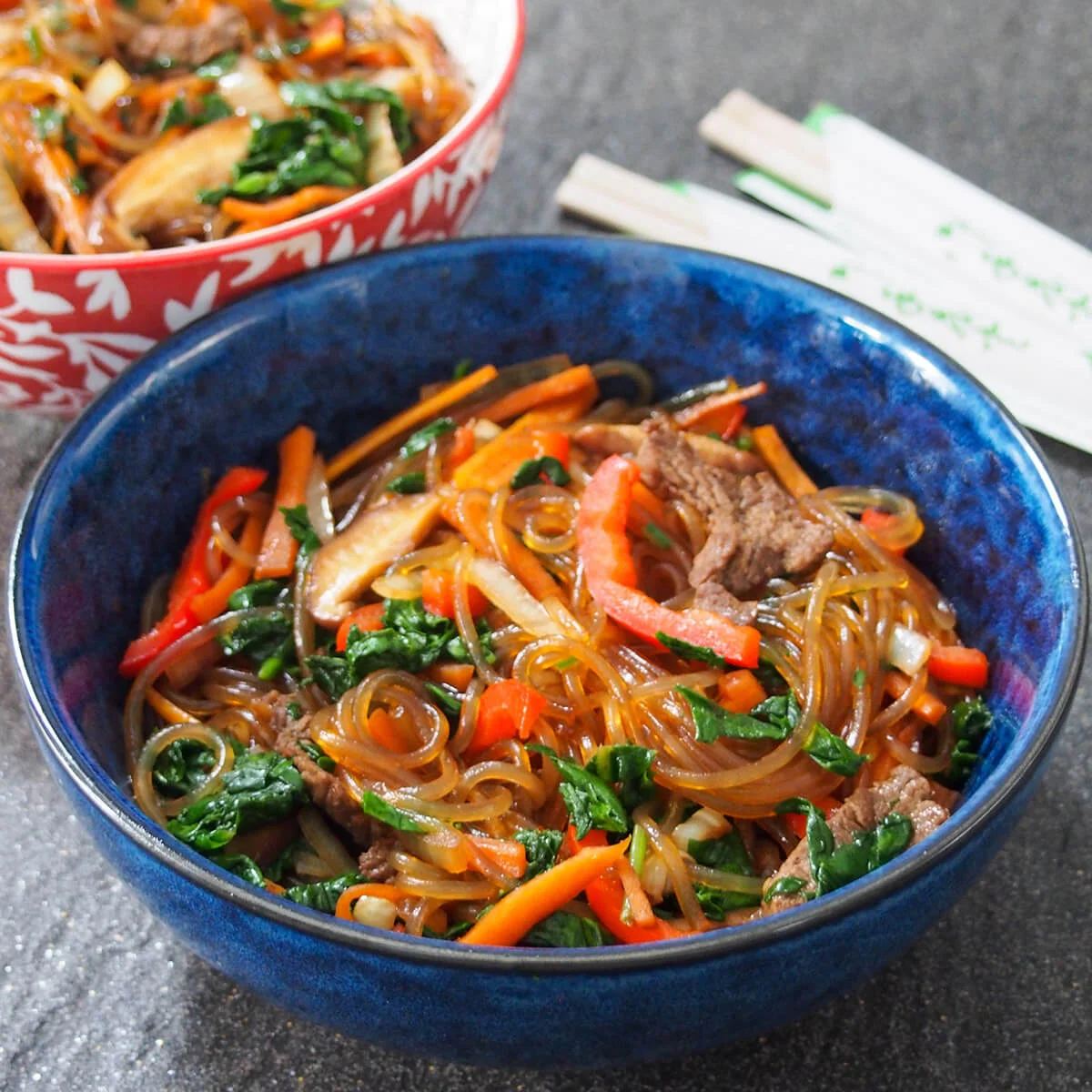
Japchae is a Korean stir-fry of springy sweet potato starch noodles, vegetables and savoury-sweet sauce. This version cooks the beef and vegetables separately before tossing everything together, making it a colourful, comforting meal for two.
Ingredients
- 55 g (2 oz)beef fillet or sirloin, a lean, tender cut
- 1 tspsoy sauce
- 1 tspsesame oil
- ¼ tspsugar
- ½ tspcrushed garlic
- 100 g (3.5 oz)sweet potato starch noodles
- 90 g (3 oz)spinach
- ½carrot
- ½ smallonion
- 3, approximately, depending on sizeshiitake mushrooms
- ½red or orange pepper
- 1 tbspvegetable oil or other neutral oil
- 1½ tbspsoy sauce
- 1 tbspbrown sugar
- 1 tspsesame oil
Instructions
- 1
Marinate the beef
Slice the beef thinly across the grain. Put it in a small bowl with 1 tsp soy sauce, 1 tsp sesame oil, ¼ tsp sugar and ½ tsp crushed garlic, then leave it to marinate while you prepare the noodles and vegetables.
- 2
Cook the noodles
Cook the noodles according to the packet instructions; this typically means boiling them for 6–7 minutes. Rinse them in cold water to stop the cooking, then set aside.
- 3
Prepare the vegetables
Put the spinach in a bowl, pour over boiling water and press the leaves under the water. Once softened, after about 1 minute, drain it. Let it cool briefly, squeeze it well and chop it finely. Peel the carrot and onion; cut the carrot into thin batons and the onion into thin slices. Slice the mushrooms and pepper.
- 4
Mix the sauce
Stir together 1½ tbsp soy sauce, 1 tbsp brown sugar and 1 tsp sesame oil in a small bowl. Set the sauce aside.
- 5
Brown the beef
Warm the vegetable oil in a wok or large frying pan over a medium-high heat. Add the beef and cook for 1–2 minutes on each side, until browned, then remove it from the pan.
- 6
Cook the vegetables
Add the vegetables except for the spinach to the pan. Cook, stirring regularly, for a couple of minutes until they begin to soften. Remove them from the pan and set aside with the beef.
- 7
Toss and serve
Add the drained noodles and sauce to the pan and cook for 1–2 minutes to warm through. Return the beef and vegetables to the pan, add the chopped spinach and mix until evenly combined and hot. Divide between two bowls and serve.
What is japchae?
Japchae is a Korean noodle dish made with sweet potato starch noodles, vegetables and a seasoned sauce. Its name is associated with a mix of ingredients, and the dish is often served at celebrations as well as everyday meals.
This version keeps the ingredient list manageable and cooks the beef and vegetables in batches. That helps each component retain its character before the noodles bring everything together.
Nutrition and macros by portion
The nutrition label shows one serving as written: 426 calories, 9g protein, 59g carbs, 18g fat.
| Portion | Adjustment | kcal | Protein | Carbs | Fat |
|---|---|---|---|---|---|
| Lighter | Use less oil | 298 kcal | 6g | 41g | 13g |
| This serving | As written | 426 kcal | 9g | 59g | 18g |
| Hungry | Add more noodles | 639 kcal | 14g | 89g | 27g |
Most of the carbohydrates come from the sweet potato starch noodles and brown sugar; the vegetable oil and sesame oil contribute much of the fat. Beef provides most of the protein, with smaller amounts from the noodles and vegetables. To balance the plate, add a side of extra non-starchy vegetables.
Choose the right noodles
Noodle choice: Sweet potato starch noodles, often sold as glass noodles, become translucent and pleasantly chewy when cooked. Follow the packet timing because brands and thicknesses can vary.
After cooking: Rinsing in cold water halts the cooking and washes away excess surface starch. Drain them well so the sauce can coat the noodles rather than turn watery.
Keep the beef tender
Cut: Slice across the grain into thin pieces so the beef is easier to bite. Fillet or sirloin suits the quick cooking time.
Sear: Use a properly heated pan and cook the beef briefly, just until browned. Removing it before cooking the vegetables helps avoid overcooking it during the final toss.
Prepare the vegetables well
Spinach: Briefly blanch the leaves, then squeeze them firmly after cooling. Removing excess water keeps the noodles and sauce from becoming diluted.
Even pieces: Thin carrot batons and onion slices cook quickly, while slicing the mushrooms and pepper to a similar size makes the final mixture easier to eat.
Get the pan timing right
Cook in batches: Brown the beef first, then soften the vegetables, and warm the noodles with the sauce. This sequence gives each ingredient enough contact with the hot pan.
Final toss: Add the cooked ingredients back only at the end, mixing until warmed through. The noodles should be supple and coated, while the vegetables still have a little bite.
Serve it while warm
Japchae works as a filling bowl on its own, with a mix of chewy noodles, beef and vegetables in each serving. For a fuller meal, serve it with a simple Korean-style side such as kimchi or another lightly dressed vegetable.
Recipe notes & tips
- Slice the beef across the grain for a more tender bite.
- Have the vegetables and sauce ready before heating the wok, as the cooking stages move quickly.
- Drain the noodles thoroughly after rinsing so they do not water down the sauce.
- Squeeze the blanched spinach well before chopping it.
- Stir the vegetables regularly so they soften without losing all their texture.
Variations
- Swap the beef: Use thinly sliced chicken or firm tofu, adjusting the cooking time until cooked through.
- Add more vegetables: Include thinly sliced courgette or extra pepper, cooking until just tender.
- Make it meat-free: Leave out the beef and use tofu in its place.
- Adjust the sweetness: Reduce the brown sugar slightly for a less sweet sauce.
- Add heat: Serve with chilli flakes or a Korean chilli paste on the side.
Common mistakes to avoid
- Overcooking the noodles: They can turn too soft; check the packet timing and rinse them in cold water promptly.
- Skipping the spinach squeeze: Excess water can dilute the sauce; press the leaves firmly before chopping.
- Cutting the beef with the grain: This can make it chewier; slice across the visible fibres.
- Crowding the pan: Ingredients may steam instead of browning; use a large pan and cook in the stated batches.
- Leaving the noodles undrained: Water left clinging to them can make the finished dish watery; drain them well after rinsing.
How to store
Refrigerate leftovers in a covered container for up to 3 days. Reheat in a frying pan over a medium heat, stirring until hot; add a small splash of water if the noodles have tightened up.
Frequently asked questions
Can I use a different type of noodle?
Sweet potato starch noodles give japchae its characteristic chewy texture. Other noodles can work, but follow their packet instructions and expect a different result.
Can I prepare any of this ahead?
You can slice the beef and vegetables and mix the sauce ahead of time, keeping them covered in the fridge. For the best texture, cook and combine the noodles close to serving.
How do I know when the vegetables are done?
They should begin to soften but still have some bite. The short stir-fry keeps them from becoming limp before the final toss.
Can I make japchae without beef?
Yes. Leave out the beef or replace it with tofu; the vegetables, noodles and sauce still make a satisfying dish.
Why rinse the noodles after boiling?
Cold water stops them cooking further and removes surface starch. Drain them well afterwards so the sauce stays concentrated.
Cook it from the original
This recipe comes from carolinescooking.com. Their page has the author’s own photos, notes and tips — the best place to cook it from.
Open the recipe on carolinescooking.com