
Char kway teow
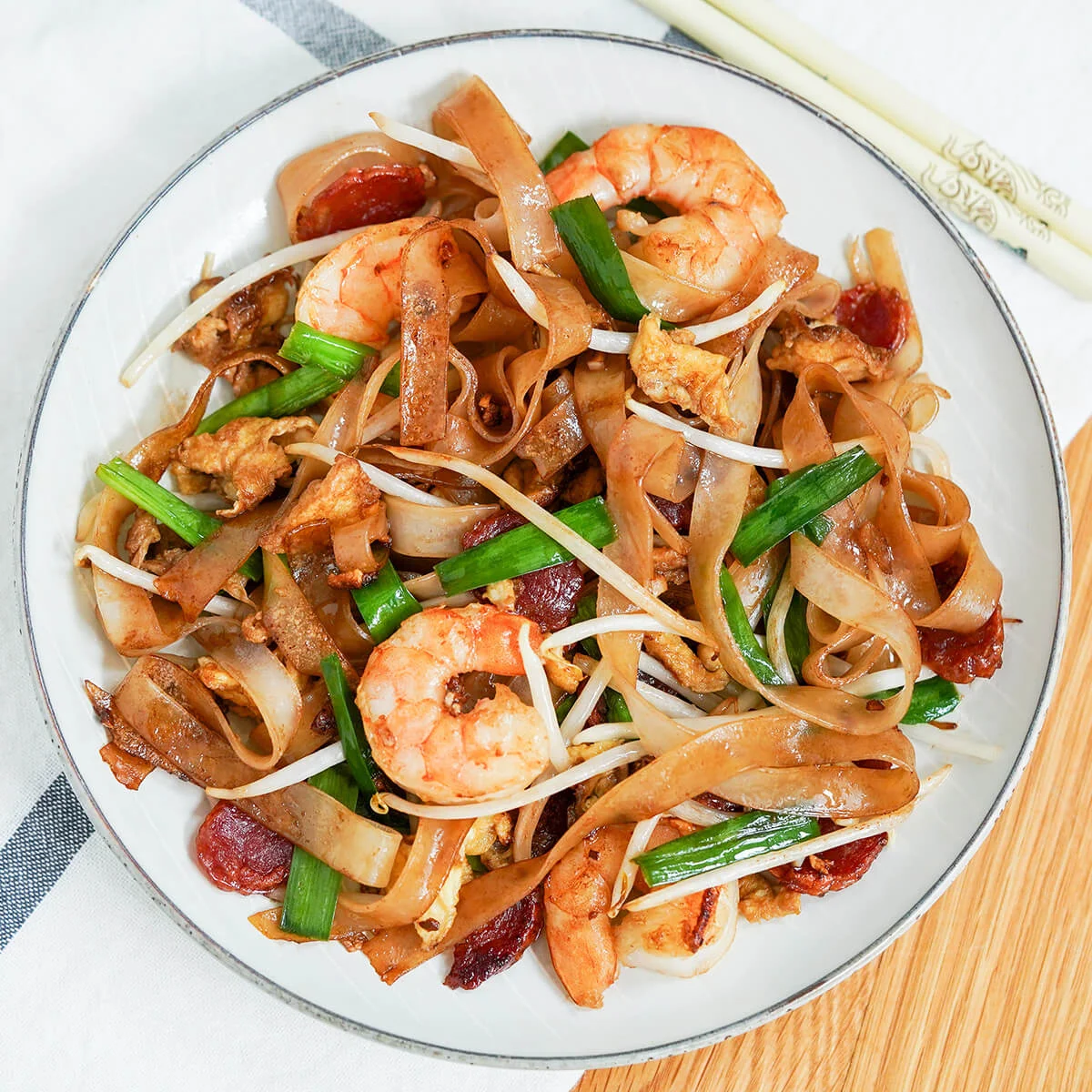
Char kway teow is a Malaysian stir-fry of flat rice noodles with prawns, Chinese sausage, egg and a savoury soy-based sauce. It cooks in minutes, so have everything chopped and ready before heating the wok.
Ingredients
- 1/2 tbspdark soy sauce
- 1 tbsplight soy sauce
- 1/2 tbspfish sauce
- 2 tspoyster sauce
- 1/2 tspsugar
- 1 pinchwhite pepper
- 227 g (8 oz), or approximately half the weight if using dried noodlesfresh flat rice noodles
- 2 stemsgarlic chives (Chinese chives)
- 2 clovesgarlic
- 1Chinese sausage (lap cheong)
- 1egg
- 1 tbspvegetable oil
- 113 g (4 oz), weighed without shell and headprawns
- 57 g (2 oz)bean sprouts
Instructions
- 1
Prepare everything
Get all the ingredients ready before cooking, as the stir-fry comes together quickly. Mix the dark and light soy sauces, fish sauce, oyster sauce, sugar and white pepper in a small bowl. If using dried noodles, soak them in very hot, not quite boiling, water until pliable; they do not need to be cooked through. Trim the chives and cut them into lengths of about 2.5 cm (1 inch). Finely chop the garlic, thinly slice the sausage, preferably on the diagonal, and lightly beat the egg in a small bowl.
- 2
Warm the noodles
Heat the oil in a wok or wide frying pan over medium-high heat. If using dried noodles, give them a brief pre-cook in the pan, adding a little water if needed. Cover and cook for 1 minute, then remove the noodles and set them aside. Fresh noodles can skip this step and be added later; with dried noodles, you may need to add a little more oil after removing them.
- 3
Cook the prawns
Add the garlic to the wok or pan and stir constantly for a short time, just until fragrant; do not let it burn. Add the sausage and prawns, stirring regularly until the prawns are cooked through, opaque and changed in colour. Take care not to overcook them.
- 4
Finish the stir-fry
Push the ingredients to one side and pour the egg into the clear space. Let it cook briefly, then stir to break it up and cook it through. Add the noodles and sauce, mixing until everything is well distributed. Stir in the bean sprouts and chives until softened; it is fine if some noodles turn crisp in places. Serve immediately.
What is char kway teow?
Char kway teow is a Malaysian dish of flat rice noodles stir-fried over high heat with a savoury sauce and a mix of seafood, egg and other additions. Its name refers to fried flat rice noodles, and the dish is closely associated with Chinese-Malaysian cooking.
This version pairs prawns and Chinese sausage for a contrast of delicate seafood and rich, savoury bites. Garlic chives, bean sprouts and a quick soy-based sauce round out the pan.
Nutrition and macros by portion
The nutrition label shows one serving as written: 305 calories, 15g protein, 34g carbs, 11g fat.
| Portion | Adjustment | kcal | Protein | Carbs | Fat |
|---|---|---|---|---|---|
| Lighter | Less sausage, more sprouts | 214 kcal | 11g | 24g | 8g |
| This serving | As written | 305 kcal | 15g | 34g | 11g |
| Hungry | Larger noodle portion | 458 kcal | 23g | 51g | 17g |
The rice noodles provide most of the carbohydrates, while the vegetable oil, egg and Chinese sausage contribute much of the fat. Prawns and egg supply protein, with additional protein from the sauces and sausage. Add a serving of vegetables on the side to make the plate more substantial.
Get set before you stir-fry
Sauce: mix the soy sauces, fish sauce, oyster sauce, sugar and white pepper before the wok is hot. The noodles and other ingredients cook quickly, so having the sauce ready prevents pauses at the crucial stage.
Chopping: trim and cut the chives, finely chop the garlic and slice the sausage in advance. Lightly beat the egg and keep the prawns ready to add.
Fresh or dried noodles
Fresh noodles: add them straight to the stir-fry later, as directed. Handle them gently so the flat strands stay intact as you mix in the sauce.
Dried noodles: soak them in very hot water until pliable, then briefly pre-cook them in the pan. A little water helps if they need it, and the covered minute gives them time to soften before they go back into the stir-fry.
Build flavour without burning the garlic
Garlic: stir it constantly and cook only until aromatic. It can burn quickly in a hot pan, so add the sausage and prawns promptly.
Sauce: pour it over the noodles and mix thoroughly so the strands and other ingredients are seasoned evenly. The sugar balances the savoury sauces, while white pepper adds gentle warmth.
Look for these doneness cues
Prawns: cook until they have changed colour and are opaque throughout, then stop to avoid making them tough. Their quick cooking is one reason to keep the other ingredients close at hand.
Egg and vegetables: the egg should be fully cooked after you break it into pieces. Add the bean sprouts and chives near the end so they soften but retain some texture.
Serve straight from the pan
Char kway teow is best served immediately, while the noodles are hot and the sprouts and chives still have a little bite. The recipe notes that some crisping on the noodles is fine, so avoid stirring constantly once they are in the pan.
For a simple meal, serve it on its own or alongside a light vegetable dish. Keep any accompaniments uncomplicated so they do not compete with the savoury noodles.
Recipe notes & tips
- Prepare and arrange all the ingredients before heating the pan.
- Use a wide pan or wok so the ingredients can be stirred and distributed easily.
- Stir the garlic constantly and move on as soon as it smells fragrant.
- If dried noodles need loosening, add a little water rather than letting them stick.
- Cook the prawns only until opaque and changed in colour.
- Serve as soon as the noodles and vegetables are mixed through.
Variations
- Add chilli: stir in sliced fresh chilli for extra heat.
- Use chicken: replace the prawns with thinly sliced chicken and cook it through before adding the egg.
- Add more greens: include a handful of leafy greens with the bean sprouts.
- Skip the sausage: leave it out for a less rich version and keep the prawns.
- Make it vegetarian: omit the prawns and sausage and use vegetarian alternatives to the fish and oyster sauces.
Common mistakes to avoid
- Starting without prep: the pan moves quickly, so chop everything and mix the sauce before cooking.
- Burning the garlic: stir it constantly and add the sausage and prawns as soon as it smells aromatic.
- Overcooking the prawns: remove them from the heat once opaque and changed in colour.
- Adding dry noodles too soon: soak them until pliable and briefly pre-cook them before the final stir-fry.
- Overcooking the sprouts: add them with the chives at the end so they soften without losing all their bite.
How to store
Refrigerate leftovers in an airtight container and eat within 2 days. Reheat in a frying pan until piping hot, adding a small splash of water if the noodles seem dry.
Frequently asked questions
Can I use dried rice noodles?
Yes. Use approximately half the weight of dried noodles, soak them in very hot water until pliable, then briefly pre-cook them in the pan as described.
Can I make the dish without a wok?
Yes, use a wide frying pan. A broad cooking surface makes it easier to stir the noodles and distribute the sauce.
How do I know when the prawns are cooked?
They should change colour and become opaque throughout. Take care not to leave them cooking longer than needed.
Why prepare everything before heating the pan?
The ingredients cook quickly, leaving little time for chopping or measuring once you start. Prepping first also helps prevent the garlic from burning while you get other ingredients ready.
Can I prepare char kway teow ahead?
It is best cooked just before serving so the noodles and vegetables retain their texture. You can chop the ingredients and mix the sauce in advance.
What can I serve with char kway teow?
Serve it on its own or with a light vegetable side. The noodles already include prawns, sausage, egg and sprouts, so a simple accompaniment works well.
Cook it from the original
This recipe comes from carolinescooking.com. Their page has the author’s own photos, notes and tips — the best place to cook it from.
Open the recipe on carolinescooking.com