
Homemade Ricotta (Small-Curd Cottage Cheese)
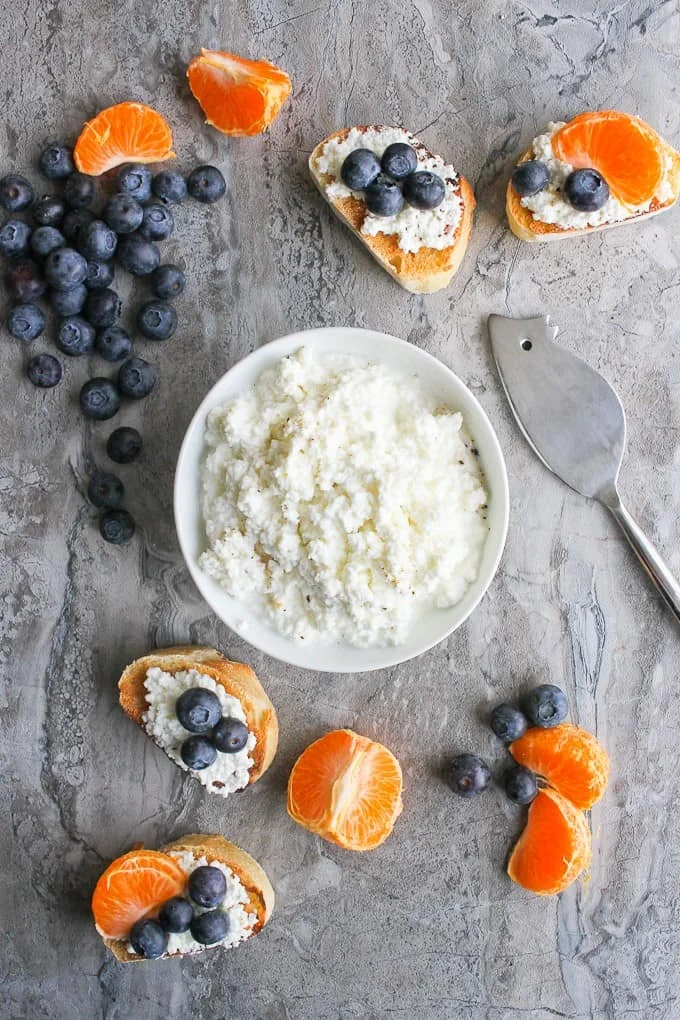
This quick ricotta-style cheese is made by curdling milk with lemon juice or vinegar, then draining the curds. It takes about 30 minutes and needs only a few simple ingredients.
Ingredients
- 950 ml (4 cups)whole milk, preferably (not ultra-pasteurised)
- 1 teaspoonsalt
- 80 ml (1/3 cup)freshly squeezed lemon juice
- 80 ml (1/3 cup)distilled white vinegar
- 60 ml (1/4 cup)double cream
- to tastesalt and pepper
Instructions
- 1
Heat the milk
Bring the milk to a simmer or gentle boil, about 82°C. For a quicker option with less washing up, microwave it for about 9 minutes instead.
- 2
Add the acid
Stir lemon juice or vinegar into the hot milk; it should start to curdle straight away. Lemon juice gives the cheese a sweeter, ricotta-like taste, while white vinegar makes it more neutral.
- 3
Cool the mixture
Leave the mixture to cool for about 10 minutes, while the solid curds begin to separate from the watery whey.
- 4
Drain the curds
Pour the mixture through a fine-mesh sieve and leave it to drain for at least 5 minutes, or up to an hour for a drier cheese. If you do not have a fine-mesh sieve, line a colander with butter muslin or several layers of cheesecloth or muslin.
- 5
Season and enrich
Add the salt, then taste and add more if you like. For a creamier cheese, stir in the double cream.
- 6
Chill the cheese
Transfer the cheese to a sealed container and store it in the fridge. Use within a week.
What is homemade ricotta?
Ricotta is an Italian cheese traditionally made by reheating whey left over from cheesemaking. This home method instead curdles milk directly, producing a fresh, ricotta-style cheese with soft curds.
The choice of acid and the length of draining shape the result: lemon gives a sweeter flavour, while vinegar is more neutral, and a longer drain makes firmer curds.
Nutrition and macros by portion
The nutrition label shows one serving as written: 205 calories, 8g protein, 13g carbs, 13g fat.
| Portion | Adjustment | kcal | Protein | Carbs | Fat |
|---|---|---|---|---|---|
| Lighter | Use less double cream | 144 kcal | 6g | 9g | 9g |
| This serving | As written | 205 kcal | 8g | 13g | 13g |
| Hungry | Serve a larger portion | 308 kcal | 12g | 20g | 20g |
The milk and double cream contribute most of the fat, while the milk also supplies protein; the milk's natural sugars provide most of the carbohydrates. Serve a portion with vegetables and a modest amount of bread or another grain for a more balanced plate.
Choosing the milk and acid
Milk: Whole milk is preferred for a richer result, and the recipe advises avoiding ultra-pasteurised milk because it may not curdle as expected.
Acid: The method calls for lemon juice or vinegar. The ingredient list gives a quantity for each, so use the option that suits the flavour you want.
Getting the curds to form
Heat: Bring the milk to a simmer or gentle boil, around 82°C, before adding the acid. The hot milk should begin to separate into curds and whey promptly.
Stir gently after adding the acid, then allow the mixture to cool for about 10 minutes so the separation can continue.
Adjusting the texture
Draining: Leave the curds in a fine-mesh sieve for at least 5 minutes for a softer cheese. Drain for up to an hour if you prefer a drier, firmer texture.
Cream: Stir in the double cream after draining for a creamier finish. Add it gradually and stop when the texture suits you.
Seasoning the cheese
Salt: Begin with the listed teaspoon, then taste and add more if needed. A little pepper can be added to taste as well.
Flavour: Lemon-curdled cheese has a sweeter character, while vinegar gives a more neutral base that is easy to season for savoury uses.
Serving ideas
Serve the fresh cheese on toast, with tomatoes or alongside roasted vegetables. It also works as a soft filling or topping for pasta dishes.
For a simple plate, pair it with vegetables and bread or another grain-based accompaniment; the cheese brings richness while the sides add variety.
Recipe notes & tips
- Use whole milk that is not ultra-pasteurised for the best chance of getting curds.
- Choose lemon juice for a sweeter flavour or white vinegar for a more neutral one.
- Let the curds drain longer if you want a drier cheese.
- Line a colander with muslin or several layers of cheesecloth if you do not have a fine-mesh sieve.
- Taste the cheese before adding extra salt.
Variations
- Lemon flavour: Use lemon juice for the sweeter, more ricotta-like result described in the method.
- Neutral flavour: Choose white vinegar for a less pronounced taste.
- Creamier curds: Stir in the double cream after draining.
- Pepper finish: Add black pepper to taste when seasoning.
- Drier cheese: Leave the curds to drain for up to an hour.
Common mistakes to avoid
- Using ultra-pasteurised milk: Choose milk that is not ultra-pasteurised, as the recipe advises.
- Adding acid before heating: Bring the milk to a simmer or gentle boil first.
- Expecting immediate draining: Allow the mixture to cool for about 10 minutes so the curds can separate.
- Stopping the drain too soon: Leave the curds for at least 5 minutes, or longer for a drier texture.
- Over-seasoning: Add extra salt and pepper gradually, tasting as you go.
How to store
Keep the cheese in a sealed container in the fridge and use it within a week. Serve it chilled, or gently warm it as part of another dish.
Frequently asked questions
Can I use lemon juice instead of vinegar?
Yes. The method says to use lemon juice or vinegar; lemon gives a sweeter, ricotta-like flavour, while vinegar is more neutral.
How long should I drain the curds?
Drain for at least 5 minutes for a softer cheese, or up to an hour for a drier result.
What can I use without a fine-mesh sieve?
Line a colander with butter muslin, cheesecloth or regular muslin. The method suggests using multiple layers of regular cloth.
Can I make the cheese creamier?
Yes. Stir in the listed double cream after draining to make the cheese creamier.
How long does homemade ricotta-style cheese keep?
Store it in a sealed container in the fridge and use it within a week.
Cook it from the original
This recipe comes from champagne-tastes.com. Their page has the author’s own photos, notes and tips — the best place to cook it from.
Open the recipe on champagne-tastes.com