
Oven Baked Salmon
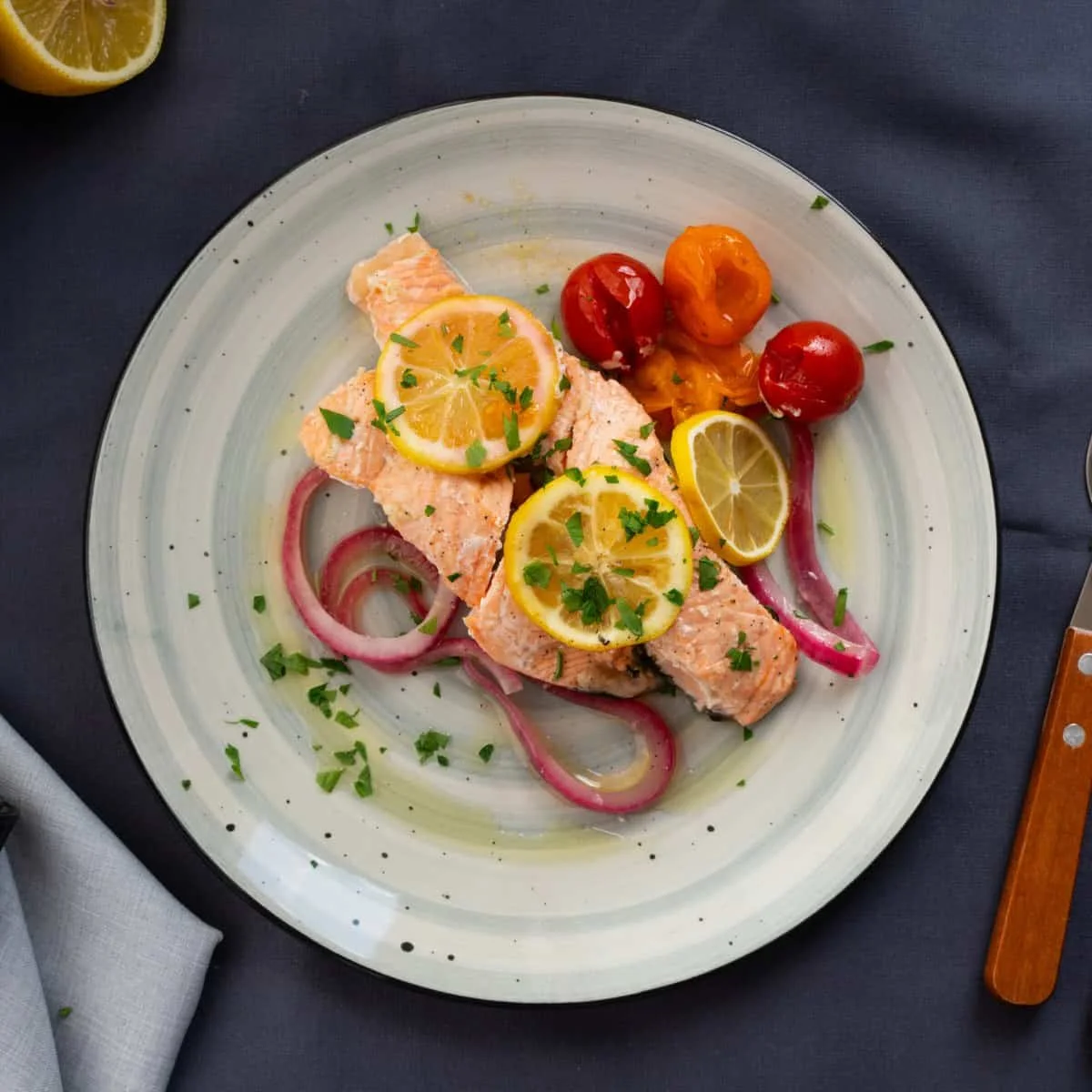
Oven-baked salmon cooks in a parchment parcel with lemon, tomatoes, red onion, garlic and herbs. It is a straightforward Mediterranean-style dinner, and the enclosed parcel helps keep the fish moist while the vegetables soften.
Ingredients
- 454 g (1 pound)salmon fillet
- 1lemon, sliced into 6 mm (¼-inch) rounds
- 1lemon, juiced
- 2 sprigsfresh thyme
- 30 ml (2 tablespoons)olive oil
- 8–10cherry tomatoes
- 1red onion, sliced into rings
- 2 clovesgarlic, minced
- 2bay leaves
- to tastesea salt
- to tastefreshly ground black pepper
Instructions
- 1
Prepare the lemons
Slice one lemon into 6 mm (¼-inch) rounds. Squeeze the juice from the other lemon into a small bowl.
- 2
Mix the dressing
In a small mixing bowl, combine the olive oil and freshly squeezed lemon juice. Add the minced garlic, sea salt and black pepper, then mix until evenly combined.
- 3
Heat the oven
Preheat the oven to 180°C (355°F).
- 4
Arrange the vegetables
Scatter the cherry tomatoes and sliced red onion over the bottom of a sheet of parchment paper.
- 5
Add the salmon
Set the salmon fillets on top of the tomatoes and onion.
- 6
Add herbs and lemon
Place the thyme sprigs and bay leaves on the fillets, then add the lemon rounds.
- 7
Dress the fish
Drizzle the olive oil and lemon juice mixture over the salmon, distributing it evenly.
- 8
Seal the parcel
Fold the parchment over the salmon and crimp the edges tightly to trap the steam.
- 9
Bake the salmon
Put the parcel on a baking sheet and bake in the preheated oven for approximately 20 minutes.
- 10
Rest and serve
Carefully remove the baking sheet from the oven and leave the parcel to rest for a few minutes. Open it carefully, then transfer the salmon and baked vegetables to a serving plate.
What is oven-baked salmon?
This dish pairs salmon with lemon, olive oil, tomatoes, red onion and herbs, then cooks everything together in a parchment parcel. The ingredients reflect familiar Mediterranean-style flavours, though the recipe is a simple home-cooking preparation rather than a claim to one specific regional tradition.
The method works because the sealed parcel holds in steam as the fish bakes. Lemon juice and olive oil season the salmon while the vegetables cook underneath it.
Nutrition and macros by portion
The nutrition label shows one serving as written: 505 calories, 47g protein, 15g carbs, 29g fat.
| Portion | Adjustment | kcal | Protein | Carbs | Fat |
|---|---|---|---|---|---|
| Lighter | Use less olive oil | 354 kcal | 33g | 11g | 20g |
| This serving | As written | 505 kcal | 47g | 15g | 29g |
| Hungry | Add potatoes on the side | 758 kcal | 71g | 23g | 44g |
The salmon provides most of the protein, while olive oil contributes much of the fat. The tomatoes, onion and lemon account for some of the carbohydrates. To balance the plate, pair a portion with green vegetables or a salad.
The lemon and oil dressing
Fresh lemon juice: mixing it with olive oil makes a quick dressing that can be poured evenly over the fish. The sliced lemon adds another layer of citrus as it bakes.
Garlic and seasoning: minced garlic, sea salt and black pepper go into the dressing, so they coat the salmon rather than sitting in one spot. Season to taste, keeping in mind that the fish and vegetables will cook together.
Build the parcel carefully
Vegetable base: spread the tomatoes and onion on the parchment first, then place the salmon on top. This gives the fish a bed of vegetables and keeps it from resting directly on the paper.
Tight folds: crimp the parchment edges firmly to keep steam inside during baking. Take care when opening the finished parcel, as the trapped steam can be hot.
Check the texture
Salmon: the stated baking time is approximately 20 minutes at 180°C (355°F). Thickness affects how quickly a fillet cooks, so check that the centre is cooked to your preference rather than relying on time alone.
Vegetables: the tomatoes should soften and the onion should become tender. A few minutes of resting after baking lets the parcel settle before you open it.
Making the timing work
Allow 35 minutes in total, including preparation and baking. Slice the lemon, juice the second one and mix the dressing before arranging the ingredients, so the parcel is ready to go into the preheated oven.
Keep the salmon in one layer and fold the parchment without pressing it tightly against the fish. The parcel needs to be sealed, but should still leave room for steam to circulate.
What to serve alongside
The salmon and baked vegetables can be served straight from the parcel onto plates. Spoon any juices from the parchment over the fish for extra lemon and olive oil flavour.
For a more filling meal, serve it with potatoes, rice or bread. A green salad or steamed greens make a lighter accompaniment.
Recipe notes & tips
- Pat the salmon dry before arranging it if the surface is very wet.
- Keep the lemon rounds in a single layer so their flavour is spread across the fish.
- Use parchment large enough to fold and crimp securely around the ingredients.
- Pour the dressing over the salmon just before sealing the parcel.
- Open the parcel away from your face to avoid the hot steam.
Variations
- Add olives: tuck a few pitted olives among the tomatoes for a briny note.
- Use oregano: replace the thyme with fresh oregano for a different herbal flavour.
- Add courgette: slice it thinly and arrange it with the tomatoes and onion.
- Bring the heat: add a pinch of chilli flakes to the olive oil and lemon dressing.
- Try orange: replace some of the lemon rounds with orange slices for a milder citrus flavour.
Common mistakes to avoid
- Loose parcel: steam escapes and the fish may cook less evenly; crimp the parchment edges firmly.
- Overcooking the salmon: the fish can turn dry; start checking it around the stated 20-minute mark, especially if the fillets are thin.
- Uneven seasoning: one part may taste bland; mix the salt, pepper and garlic thoroughly into the dressing.
- Crowded parcel: stacked ingredients may cook unevenly; arrange the fish and vegetables in a single layer.
- Rushed opening: hot steam can escape suddenly; let the parcel rest briefly and open it carefully.
How to store
Refrigerate leftovers in a covered container within 2 hours and eat within 2 days. Reheat gently in the oven or microwave until hot throughout; the salmon may become firmer on reheating.
Frequently asked questions
Can I use frozen salmon?
Thaw it fully in the refrigerator first, then pat it dry before assembling the parcel. Frozen fish can release extra water and affect the texture.
How do I know when the salmon is cooked?
Check the thickest part: it should be opaque and separate into flakes when gently tested with a fork. Fillet thickness can change the cooking time.
Can I use foil instead of parchment?
Yes, foil can be folded into a sealed parcel. Handle it carefully after baking, as it will be hot.
Can I prepare the parcel ahead?
You can assemble it shortly before baking and keep it covered in the fridge. For the best texture, bake it soon after assembly rather than storing it for a long time uncooked.
What can I serve with the salmon?
Try potatoes, rice or bread for a more substantial meal, or serve it with a green salad or steamed greens.
Cook it from the original
This recipe comes from castironketo.net. Their page has the author’s own photos, notes and tips — the best place to cook it from.
Open the recipe on castironketo.net