
Waterblommetjie Bredie Rercipe
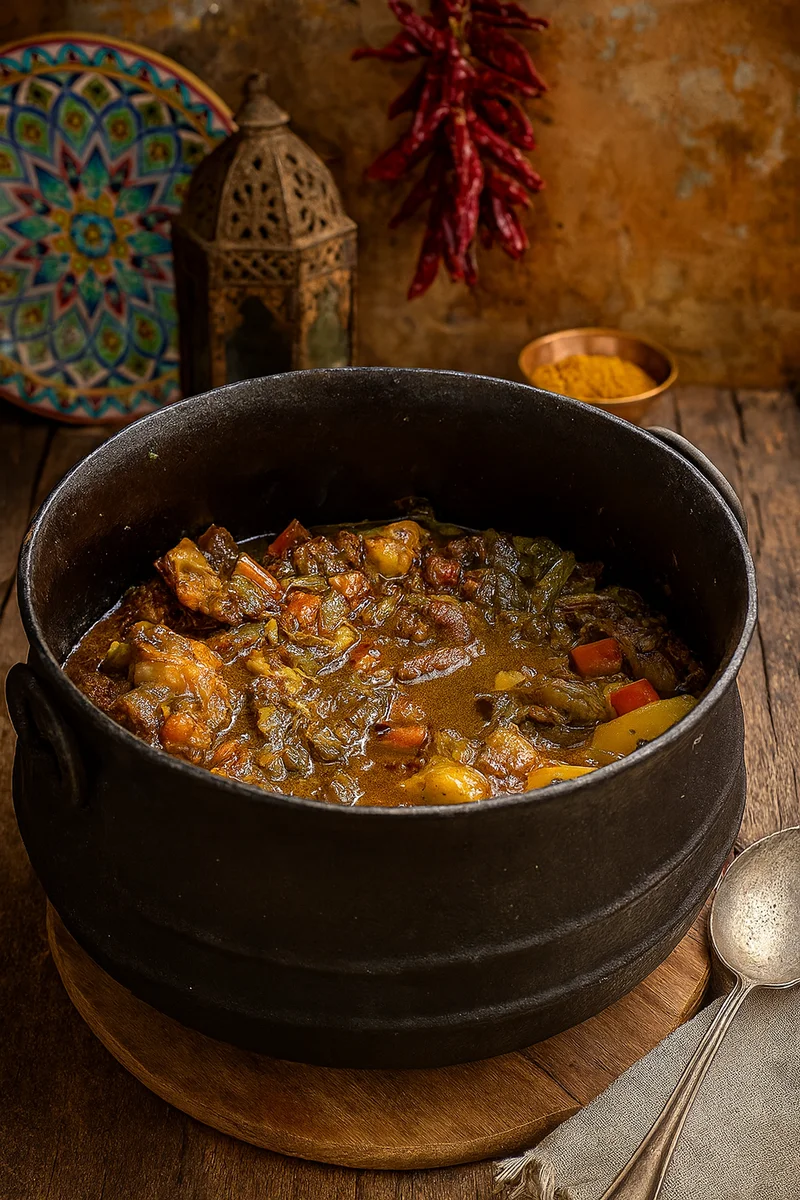
Waterblommetjie bredie is a slow-cooked South African lamb stew with waterblommetjies, potatoes and fragrant spices. It is a warming one-pot meal with a distinctive tang from the flowers and lemon, suited to sharing with rice or bread.
Ingredients
- 2 kglamb or mutton knuckles
- 2 kgfresh waterblommetjies, cleaned and trimmed
- 4onions, chopped
- 75 g (½ cup)celery, chopped
- 4carrots
- 4 clovesgarlic, minced
- 4 largepotatoes, peeled and quartered
- 2 tbspvegetable oil
- 2 tspcoriander seeds
- 1 tspcumin seeds
- 6cloves
- 1 tspblack pepper
- 2 tbsplemon juice
- 500 mlmutton, chicken or vegetable broth
- to tastesalt
Instructions
- 1
Soak the flowers
Soak the waterblommetjies in salted water for 1 hour to help draw out any hidden insects. Rinse them thoroughly, then gently break the flowers into smaller pieces.
- 2
Blanch briefly
Bring a large pot of water to the boil. Add the waterblommetjies and boil for 3 minutes, then drain well and set aside.
- 3
Brown the meat
Heat a heavy cast-iron pot until hot. Brown the meat in batches to build a deep sear, then lift it out with a slotted spoon and set aside.
- 4
Soften the vegetables
Add the onions, garlic and celery to the pot and cook gently, stirring occasionally, until soft and translucent.
- 5
Fry the spices
Add the cumin, cloves, coriander and black pepper. Fry for 2 to 3 minutes, stirring gently, until fragrant.
- 6
Simmer the lamb
Return the browned meat to the pot and stir it through the onion mixture. Pour in the broth and bring everything to a gentle simmer.
- 7
Add the flowers
Add the waterblommetjies, cover the pot and simmer gently for 1 hour.
- 8
Cook the potatoes
After 1 hour, arrange the potatoes on top without stirring. Replace the lid and continue simmering gently until the potatoes are tender and the meat is soft enough to fall apart.
- 9
Thicken if needed
Check the stew and thicken it if necessary. It should rarely need much; the original method suggests using a small amount of Bisto for extra richness.
- 10
Finish with lemon
Squeeze the lemon juice over the stew and stir very gently, just enough to mingle the flavours without breaking up the tender meat and vegetables.
- 11
Serve the stew
Serve with fluffy rice, crusty bread or creamy polenta to soak up the gravy.
- 12
Read the background
For additional tips and history, consult the publisher’s accompanying blog post.
What is waterblommetjie bredie?
Waterblommetjie bredie is a South African stew traditionally associated with the Western Cape, where waterblommetjies are gathered in winter. The flowers give the dish its name and a distinctive earthy, tangy character.
This version pairs them with lamb or mutton, potatoes and warm spices. Browning the meat first and adding the potatoes later helps build flavour while keeping the potatoes intact.
Nutrition and macros by portion
The nutrition label shows one serving as written: 625 calories, 0g protein, 0g carbs, 0g fat.
| Portion | Adjustment | kcal | Protein | Carbs | Fat |
|---|---|---|---|---|---|
| Lighter | Smaller serving, extra vegetables | 438 kcal | 0g | 0g | 0g |
| This serving | As written | 625 kcal | 0g | 0g | 0g |
| Hungry | Larger serving with rice | 938 kcal | 0g | 0g | 0g |
The lamb provides most of the protein and contributes much of the fat, while the potatoes and vegetables supply the carbohydrates. Serve a moderate helping with extra vegetables or a simple salad to balance the plate.
Preparing the waterblommetjies
Soaking: The recipe calls for a one-hour soak in salted water, followed by a thorough rinse, to remove any hidden insects.
Blanching: A brief 3-minute boil comes before the flowers go into the stew. Drain them well so they do not bring excess water into the pot.
Building flavour in the pot
Browning: Sear the meat in batches rather than crowding the pot. This gives the pieces room to brown instead of steaming in their own moisture.
Spices: Let the onions, garlic and celery soften first, then fry the cumin, cloves, coriander and pepper for 2 to 3 minutes until fragrant.
Getting the slow simmer right
Gentle heat: Once the broth reaches a simmer, keep it gentle and cover the pot while the meat and flowers cook for 1 hour. A hard boil can break up the ingredients before they become tender.
Doneness: After the potatoes go on top, continue cooking until they are tender and the meat is fall-apart soft. The method gives no fixed time for this final stage, so check the texture rather than relying on the clock.
Why the potatoes go on top
Layering: Add the quartered potatoes after the first hour and leave them on top without stirring. This lets them cook in the steam and gravy while helping them hold their shape.
Finishing: Stir in the lemon juice with a light hand at the end. The meat and vegetables should remain tender rather than being mashed into the gravy.
What to serve alongside
Rice: Fluffy rice is a simple partner for the rich gravy and makes the stew easy to serve as a full meal.
Bread or polenta: Crusty bread or creamy polenta also works well for soaking up the sauce. Choose whichever suits the meal and your table.
Recipe notes & tips
- Brown the meat in batches so the pieces sear rather than steam.
- Rinse and drain the waterblommetjies thoroughly after soaking and blanching.
- Keep the pot at a gentle simmer once the broth is added.
- Add the potatoes only after the first hour and avoid stirring them into the stew.
- Check the potatoes and meat for tenderness before finishing with lemon.
- Stir gently after adding the lemon juice to keep the meat and vegetables intact.
Variations
- Broth choice: Use mutton, chicken or vegetable broth as listed, depending on what you have.
- Serving starch: Serve with rice, crusty bread or creamy polenta to catch the gravy.
- Thicker gravy: If needed, follow the original method’s suggestion to add a small amount of Bisto.
- Meat choice: Use lamb or mutton knuckles as the recipe allows.
- Seasoning: Adjust the salt to taste, keeping in mind that the broth may already be seasoned.
Common mistakes to avoid
- Crowding the pot: The meat may steam instead of browning; sear it in batches.
- Skipping the soak: Hidden insects may remain; soak the flowers in salted water for 1 hour, then rinse well.
- Overboiling the flowers: They can lose their shape; blanch for 3 minutes, then drain.
- Stirring in the potatoes: They may break apart; layer them on top and leave them undisturbed.
- Boiling too vigorously: The meat and vegetables can break up; keep the stew at a gentle simmer.
- Stirring too firmly at the end: Tender pieces may fall apart; fold in the lemon juice gently.
How to store
Cool leftovers promptly and store them covered in the fridge for up to 3 days. Reheat gently in a covered saucepan until hot throughout, adding a little water or broth if the gravy has thickened.
Frequently asked questions
What are waterblommetjies?
They are edible aquatic flowers associated with South Africa’s Western Cape. In this stew they bring an earthy, tangy flavour.
Do I need to soak the waterblommetjies?
The recipe recommends soaking them in salted water for 1 hour to help remove any hidden insects. Rinse them thoroughly afterwards.
Can I use a different broth?
Yes. The ingredient list allows mutton, chicken or vegetable broth.
When should I add the potatoes?
Add them after the waterblommetjies and meat have simmered for 1 hour. Layer them on top without stirring.
How do I know when the bredie is ready?
The potatoes should be tender and the meat soft enough to fall apart. Keep simmering gently until both reach that point.
What can I serve with waterblommetjie bredie?
The recipe suggests fluffy rice, crusty bread or creamy polenta, all of which are good for soaking up the gravy.
Cook it from the original
This recipe comes from cheflouisnel.co.za. Their page has the author’s own photos, notes and tips — the best place to cook it from.
Open the recipe on cheflouisnel.co.za