
Paneer Payasam | Easy Paneer Kheer
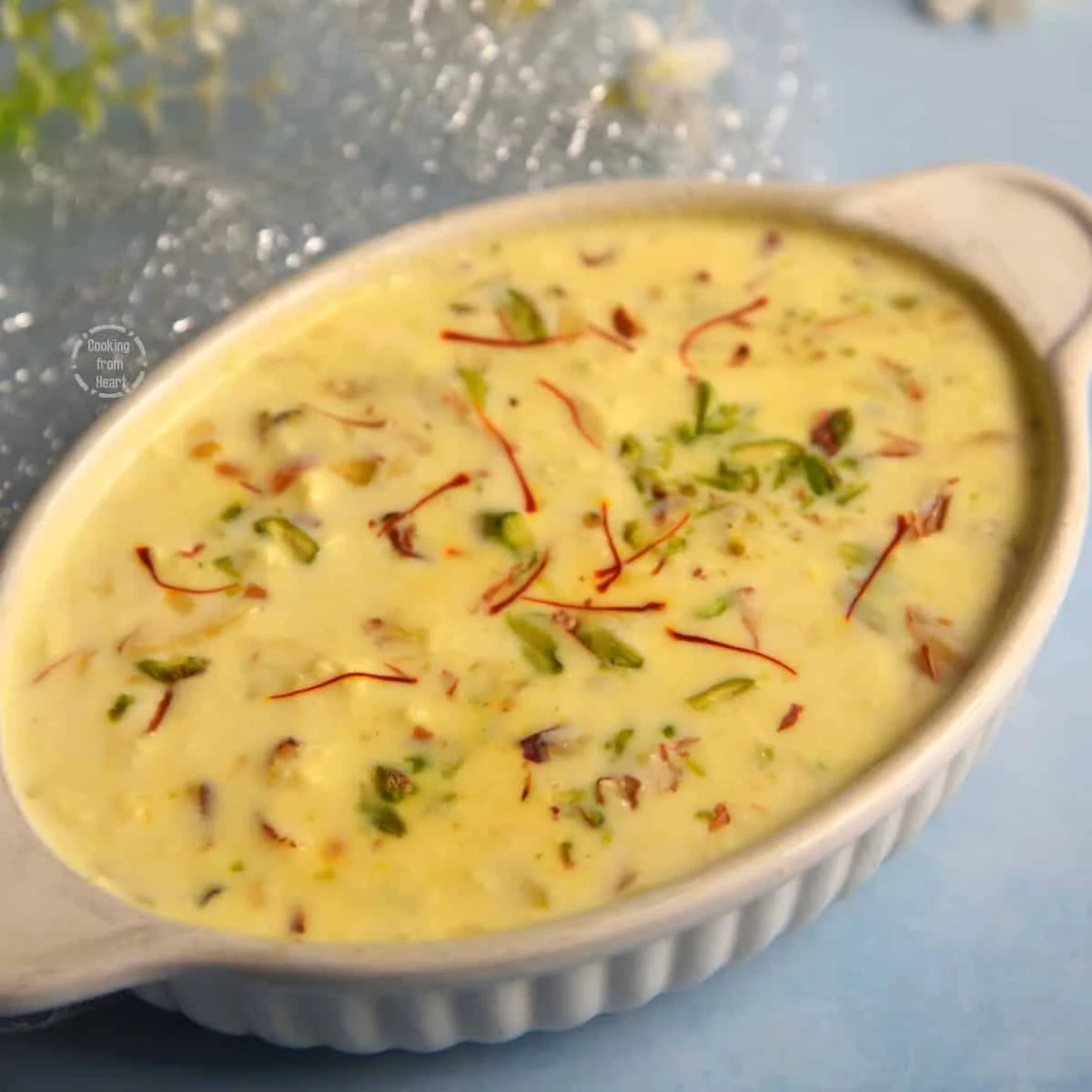
Paneer payasam is a creamy Indian milk pudding flavoured with saffron and cardamom, with grated paneer adding a soft, rich texture. It is quick to make and works as a warm dessert or a chilled one for celebrations and everyday meals.
Ingredients
- 720 ml (3 cups)milk
- About 225 g (1 cup)paneer or cottage cheese, grated
- 50 g (1/4 cup)sugar
- 1.25 ml (1/4 tsp)ground cardamom
- A large pinchsaffron
- About 16 g (2 tbsp)slivered pistachios
- About 14 g (2 tbsp)slivered almonds
Instructions
- 1
Reduce the milk
Warm 720 ml milk in a heavy-based pan over medium-low heat. As a thin layer forms around the edges, scrape it into the centre and stir gently. Continue cooking until the milk has reduced and thickened, about 10–12 minutes.
- 2
Add the spices
Stir in a large pinch of saffron and 1/4 tsp ground cardamom. Cook over a low heat for 2–3 minutes.
- 3
Melt the sugar
Add 50 g sugar and keep cooking gently until it has completely dissolved.
- 4
Stir in paneer
Add 1 cup grated paneer or cottage cheese and mix thoroughly.
- 5
Add the nuts
When the mixture starts to thicken, stir in 2 tbsp slivered pistachios and 2 tbsp slivered almonds.
- 6
Simmer briefly
Let the payasam simmer gently for 2–3 minutes, then take the pan off the heat.
- 7
Garnish and serve
Transfer the payasam to a serving bowl and garnish with slivered pistachios, almonds and saffron strands. Serve warm, or cool it and refrigerate to serve chilled.
What is paneer payasam?
Payasam is a family of Indian milk-based puddings, often served at festivals and special meals. This version is also known as paneer kheer, with grated paneer stirred into sweetened, reduced milk.
Slowly thickening the milk gives the pudding its creamy base, while saffron and cardamom bring fragrance. The paneer and nuts add a soft, slightly textured finish.
Nutrition and macros by portion
The nutrition label shows one serving as written: 274 calories, 12g protein, 18g carbs, 18g fat.
| Portion | Adjustment | kcal | Protein | Carbs | Fat |
|---|---|---|---|---|---|
| Lighter | Smaller dessert portion | 192 kcal | 8g | 13g | 13g |
| This serving | As written | 274 kcal | 12g | 18g | 18g |
| Hungry | Larger dessert portion | 411 kcal | 18g | 27g | 27g |
The milk and paneer provide much of the protein and fat, while the sugar supplies most of the carbohydrates. The nuts contribute additional fat and some protein. To balance the plate, serve a modest bowl after a savoury meal and add fresh fruit alongside it.
The milk sets the texture
Steady heat: warm the milk over medium-low heat rather than rushing it over a high flame. This gives it time to reduce without scorching.
Scraped milk solids: gently move the thin skin that forms at the edges back into the milk as directed. This helps incorporate it into the pudding as it thickens.
Use finely grated paneer
Grated paneer: fine shreds disperse through the milk more evenly than large chunks. Add it after the sugar has dissolved so it can be mixed into the sweetened base.
Freshness: paneer should smell mild and feel moist, not sour or dry. If using cottage cheese, choose a firm style and grate it if possible.
Let the spices infuse
Saffron: add a large pinch to the warm milk so its colour and aroma can spread through the pudding. Keep the heat low while it cooks.
Cardamom: ground cardamom is stirred in with the saffron and cooked for 2–3 minutes. Its sweet, floral flavour complements the richness of the milk.
Watch the consistency
Before adding paneer: the milk should look reduced and thicker after its 10–12-minute simmer. Stir gently and keep scraping the edges so the base cooks evenly.
At the end: the pudding thickens further as the paneer and nuts are added and it simmers for 2–3 minutes. It will also become thicker as it cools.
Serve it warm or chilled
Warm: serve soon after cooking for a loose, creamy pudding. Add the garnish just before bringing it to the table.
Chilled: let it cool, then refrigerate it before serving. The colder pudding will be thicker, so allow for that change when judging the consistency in the pan.
Make it part of a meal
This is a rich dessert, so a modest bowl can finish a meal of savoury dishes without needing another sweet accompaniment. Fresh fruit on the side adds a cool, contrasting flavour.
For a celebratory spread, serve it after a savoury Indian meal. The pistachio, almond and saffron garnish makes each bowl feel special without changing the simple method.
Recipe notes & tips
- Use a heavy-based pan to help the milk heat evenly.
- Keep the milk at a gentle simmer and stir regularly to prevent it catching on the bottom.
- Scrape the milk solids from the edges back into the pan as they form.
- Grate the paneer finely for a more even texture.
- Add the garnish just before serving so the nuts stay distinct.
- Remember that the pudding will thicken as it cools.
Variations
- Extra saffron: add a few more strands for a more pronounced aroma and colour.
- Nut-free garnish: leave out the slivered nuts and finish with saffron strands instead.
- More cardamom: add a little extra ground cardamom for a stronger spice note.
- Chilled kheer: cool the pudding and refrigerate it before serving for a firmer texture.
- Coarser paneer: use a less finely grated paneer for more noticeable soft curds.
Common mistakes to avoid
- High heat: the milk can catch on the bottom; reduce the heat and stir gently.
- Ignoring the pan edges: milk solids can accumulate there; scrape them into the centre as they form.
- Adding paneer too early: it can be harder to mix evenly; stir it in after the sugar has dissolved.
- Overcooking after adding paneer: the mixture may become too thick; keep the final simmer to 2–3 minutes.
- Judging it only while hot: the pudding thickens as it cools; account for that before simmering it longer.
How to store
Cool the payasam and refrigerate it in a covered container for up to 2–3 days. Reheat gently in a pan, stirring; if it has become too thick, loosen it with a small splash of milk. It can also be served cold from the fridge.
Frequently asked questions
Can I serve paneer payasam cold?
Yes. Cool it, refrigerate it, then serve chilled. It will be thicker when cold than when freshly cooked.
How do I stop the milk from sticking?
Use a heavy-based pan, keep the heat at medium-low and stir gently as the milk reduces. Scrape any film from the edges back into the centre.
Can I use cottage cheese instead of paneer?
Yes, the ingredient list allows cottage cheese as an alternative. A firm cottage cheese that can be grated will blend more like paneer.
How thick should the payasam be?
It should be creamy and beginning to thicken after the paneer and nuts are added. It becomes thicker still as it cools.
Can I make it ahead?
Yes. Prepare it ahead, cool it and store it covered in the fridge. Serve chilled or reheat it gently before serving.
Cook it from the original
This recipe comes from cookingfromheart.com. Their page has the author’s own photos, notes and tips — the best place to cook it from.
Open the recipe on cookingfromheart.com